ADAMAS
Protected Area
Agioi Pantes Lasithiou
Why dive here
ADAMAS is a wreck dive where divers can encounter sea turtles. Water ranges 17-27°C, warmest July, August, September.
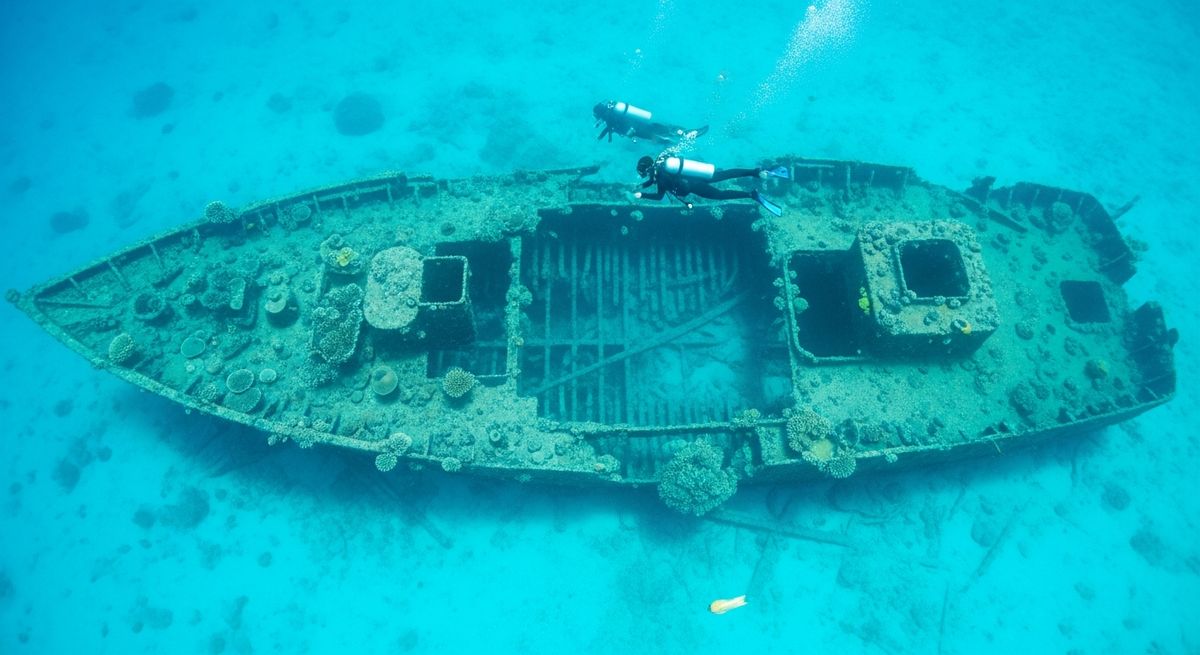
Adamas, grounded near Heraklion back in 1980, isn't a deep dive. In fact, it's barely a dive at all, with a maximum depth of two metres. But don't let that fool you. We love this site for its sheer accessibility and the way it introduces you to a proper wreck, right there in the shallows. What you'll find here is a motor vessel, its bow poking out of the water like a sleepy whale. The stern section is submerged, offering an easy exploration. It's a fantastic spot for snorkelers or freedivers, but for scuba divers, it’s a brilliant training ground for wreck penetration without the overhead. You can swim right into the hold, through what used to be the engine room, and along the deck. Sunlight streams in, illuminating schools of tiny damselfish darting between rusted bulkheads. We often see octopus tucked into crevices, their eyes watching you with mild curiosity. Look out for the nudibranchs inching across the metal, adding splashes of colour. The best time to visit is on a calm morning, before the day boats stir up the sand. It’s perfect for practicing buoyancy, getting comfortable in confined spaces, and just generally enjoying a historical piece of the Mediterranean without the pressure of depth or currents. It’s our pick for a relaxing afternoon dip with a fascinating twist.
Typical ADAMAS Dive Profile
Illustrative profile based on site depth and type. Actual dive profiles vary - always follow your dive computer and training.
Safety Notes
Wreck site - avoid penetration without wreck diving certification. Watch for sharp metal and entanglement hazards.
ADAMAS Wreck History
Year Sunk
1980
Vessel Type
motor vessel
Cause
grounding
The story of the ADAMAS is a simple one of misadventure. On February 20, 1980, the motor vessel ran aground near Heraklion on the island of Crete. The damage was severe, and the ship was declared a total loss, left to be claimed by the sea. Today, its misfortune is a boon for divers and snorkelers visiting the Greek island.
Resting in just two metres of water, the ADAMAS is an incredibly accessible wreck, with portions of its hull and superstructure breaking the surface. It serves as a perfect introduction to wreck exploration for novice divers, freedivers, and even snorkelers. The clear, warm waters of the Mediterranean provide excellent visibility, allowing for easy navigation and observation of the marine life that has colonized the wreck in the decades since it sank. It's a fantastic and effortless underwater playground, offering a glimpse into the world of shipwrecks without the need for deep-water certification.
Nearest Dive Centres to ADAMAS
Dive shops near ADAMAS
Horizon Diving - Βάση σκαφους
HORIZON DIVING CENTER
Heraklion diving center
DISCOVERY DIVING CENTER
ECO DIVING CENTER
SCUBAKRETA DIVING HOLIDAYS - G.GEORGANTAS KAI SIA
Reviews for ADAMAS
Conditions
Ocean conditions, forecast and tides for ADAMAS
ADAMAS Ocean Conditions
Monthly averages for ADAMAS, sourced from Open-Meteo marine data + Copernicus Marine (EU) - nearest station: Open-Meteo marine grid (35.42, 24.79) (35km away)
October Averages
Sea Temperature
24°C
75°F · Range: 22.3–25.7°C
Current Speed
4 cm/s
Direction: S (180°)
Chlorophyll-a
0.086 mg/m³
Very clear (oligotrophic)
Salinity
39.3 PSU
Based on 4 years of monitoring data · Data sources: Open-Meteo marine data + Copernicus Marine (EU)
Plan & book
Ways to dive Crete, from day trips to liveaboards.
Day trips & courses
via GetYourGuideGuided dives, courses and snorkel trips with instant booking.
Find dive trips in CretePlaces to stay
via Booking.comHotels and dive resorts near Crete.
Search stays in CreteDive insurance
Most travel insurance excludes or limits scuba. Check what you need before you go.
Dive insurance explainedPartner links: we may earn a commission if you book, at no extra cost to you. How we make money
Where to Stay near ADAMAS
Prices from Booking.com. We may earn a commission at no extra cost to you.