ADRIAS
Protected Area
NISIDES MYRTOOU PELAGOUS: FALKONERA,VELOPOULA, ANANES KAI THALASSIA ZONI
Why dive here
ADRIAS is a wreck dive where divers can encounter sea turtles. Water ranges 17-27°C, warmest July, August, September.
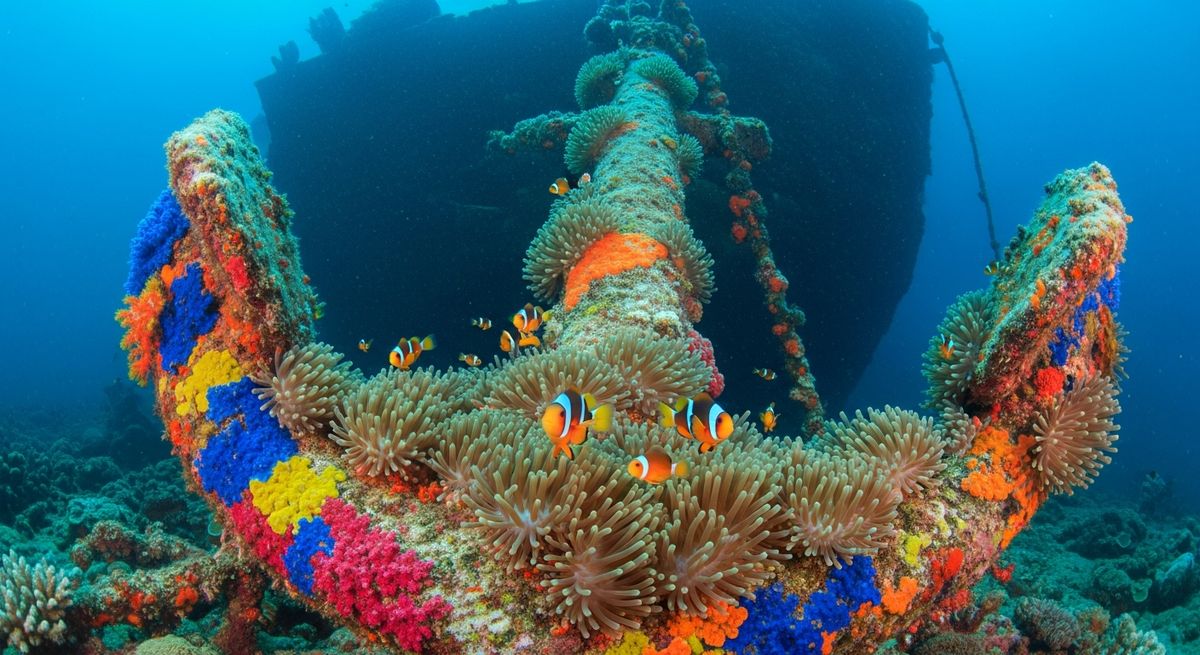
We love a good wreck, and the Adria, off Crete, delivers. She’s a proper old steamer, built way back in 1893, and you can feel that history as you descend. At 25 metres, she’s well within recreational limits, but still feels like a deep exploration. The Adria split in two when she went down in '51, so you’ve got two distinct sections to navigate, which we always appreciate – keeps things interesting. Visibility here can be brilliant, especially in late summer, giving you clear views of her massive propeller and the intricate machinery. We often find schools of damselfish flitting through the beams, and octopus are regulars in the deeper crevices. Our favourite part has to be the stern section; there’s an almost cathedral-like feel as you peer into the cargo holds, now home to moray eels. It’s a dive that rewards careful exploration, perfect for those who like to take their time and soak in the atmosphere of a truly historic vessel.
Typical ADRIAS Dive Profile
Illustrative profile based on site depth and type. Actual dive profiles vary - always follow your dive computer and training.
Safety Notes
Depth of 25m - Advanced Open Water certification recommended.
Wreck site - avoid penetration without wreck diving certification. Watch for sharp metal and entanglement hazards.
Always perform a 3-minute safety stop at 5m before surfacing.
ADRIAS Wreck History
Year Sunk
1951
Vessel Type
steamship
Cause
storm
The steamship ADRIAS had a long and storied career before its dramatic end. Built in 1893 by the legendary Harland & Wolff shipyard-the same builders as the Titanic-this vessel sailed the seas for nearly six decades. At the time of its loss, it was owned by the Epirotiki Steamship Navigation Company, a veteran of countless voyages.
On October 6, 1951, the ADRIAS was caught in a severe storm while navigating near the eastern end of Falconera Island in Greece. The aging ship fought valiantly against the heavy weather, but the relentless sea proved to be too powerful. It was wrecked against the island, finally succumbing to the elements after a lifetime of service.
Today, the ADRIAS rests at a comfortable depth of 25 meters, making it an accessible and fascinating site for recreational divers. Exploring the remains offers a tangible connection to early 20th-century maritime history. While time and the sea have taken their toll, the wreck's structure provides an excellent habitat for local marine life, adding vibrant color to this historic underwater monument.
Reviews for ADRIAS
Conditions
Ocean conditions, forecast and tides for ADRIAS
ADRIAS Ocean Conditions
Monthly averages for ADRIAS, sourced from Open-Meteo marine data + Copernicus Marine (EU) - nearest station: Open-Meteo marine grid (35.42, 24.79) (35km away)
October Averages
Sea Temperature
24°C
75°F · Range: 22.3–25.7°C
Current Speed
4 cm/s
Direction: S (180°)
Chlorophyll-a
0.086 mg/m³
Very clear (oligotrophic)
Salinity
39.3 PSU
Based on 4 years of monitoring data · Data sources: Open-Meteo marine data + Copernicus Marine (EU)
Plan & book
Ways to dive Crete, from day trips to liveaboards.
Day trips & courses
via GetYourGuideGuided dives, courses and snorkel trips with instant booking.
Find dive trips in CretePlaces to stay
via Booking.comHotels and dive resorts near Crete.
Search stays in CreteDive insurance
Most travel insurance excludes or limits scuba. Check what you need before you go.
Dive insurance explainedPartner links: we may earn a commission if you book, at no extra cost to you. How we make money
Where to Stay near ADRIAS
Prices from Booking.com. We may earn a commission at no extra cost to you.