CLAM
Protected Area
Eldey
Why dive here
CLAM is a wreck dive where divers can encounter dwarf minke whales, humpback whales, orcas and seals & sea lions. Water ranges 2-13°C, warmest July, August, September.
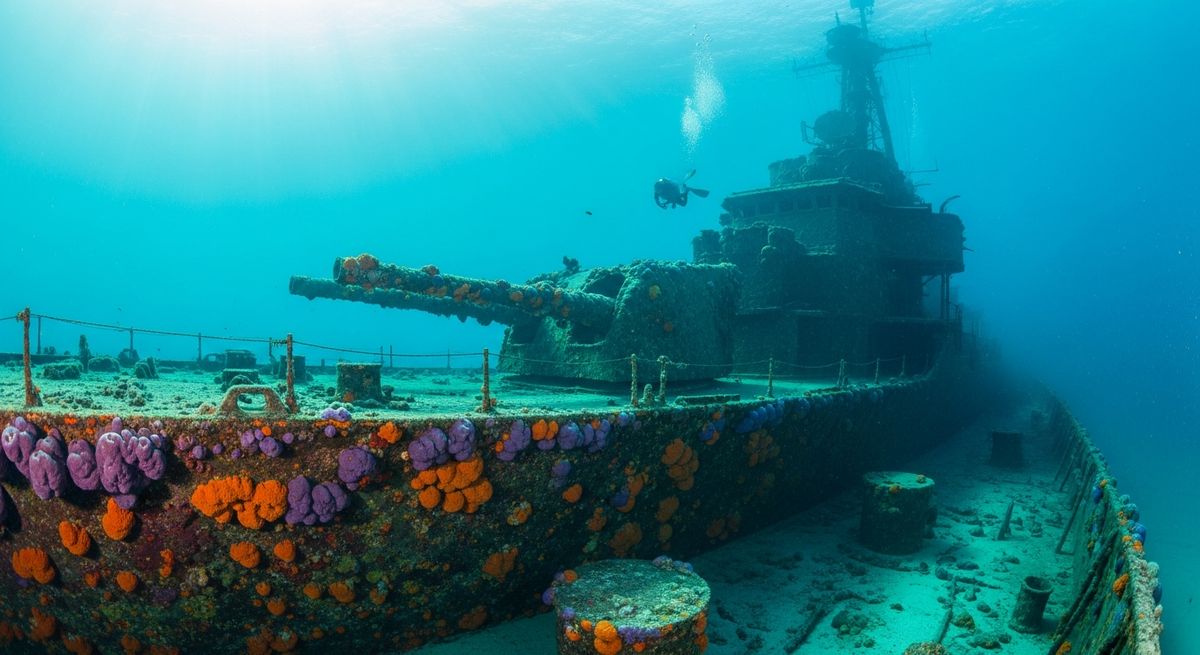
Forget everything you think you know about diving in Iceland. CLAM isn't Silfra’s crystal clarity; this is a proper wreck dive, and it’s a big one. The tanker, sunk back in 1950, stretches out at 134 metres, offering plenty of structure to explore. We’ve found the stern section particularly interesting, with some of the plating collapsing inwards, creating cool swim-throughs if you're comfortable with overhead environments. The currents here can be a bit frisky, so check the conditions before you go, but the rewards are worth it, with decent visibility on good days revealing the scale of this maritime relic.
Typical CLAM Dive Profile
Illustrative profile based on site depth and type. Actual dive profiles vary - always follow your dive computer and training.
Safety Notes
Maximum depth 50m exceeds recreational limits (40m). Technical diving certification and equipment required.
Wreck site - avoid penetration without wreck diving certification. Watch for sharp metal and entanglement hazards.
Cold water this month (avg 8°C). Drysuit or thick wetsuit (7mm+) recommended.
Always perform a 3-minute safety stop at 5m before surfacing.
Nearest Dive Centres to CLAM
Dive shops near CLAM
View all dive centres in Silfra & ThingvellirReviews for CLAM
Conditions
Ocean conditions, forecast and tides for CLAM
CLAM Ocean Conditions
Monthly averages for CLAM, sourced from Open-Meteo marine data + Copernicus Marine (EU) - nearest station: Open-Meteo marine grid (64.16, -21.83) (32km away)
October Averages
Sea Temperature
8°C
46°F · Range: 6–10.3°C
Current Speed
5.1 cm/s
Direction: W (281.3°)
Salinity
33.3 PSU
Based on 4 years of monitoring data · Data sources: Open-Meteo marine data + Copernicus Marine (EU)
Plan & book
Ways to dive Silfra & Thingvellir, from day trips to liveaboards.
Day trips & courses
via GetYourGuideGuided dives, courses and snorkel trips with instant booking.
Find dive trips in Silfra & ThingvellirPlaces to stay
via Booking.comHotels and dive resorts near Silfra & Thingvellir.
Search stays in Silfra & ThingvellirDive insurance
Most travel insurance excludes or limits scuba. Check what you need before you go.
Dive insurance explainedPartner links: we may earn a commission if you book, at no extra cost to you. How we make money
Where to Stay near CLAM
Prices from Booking.com. We may earn a commission at no extra cost to you.