KOPANES
Protected Area
Eldey
Why dive here
KOPANES is a wreck dive where divers can encounter dwarf minke whales, humpback whales, orcas and seals & sea lions. Water ranges 2-13°C, warmest July, August, September.
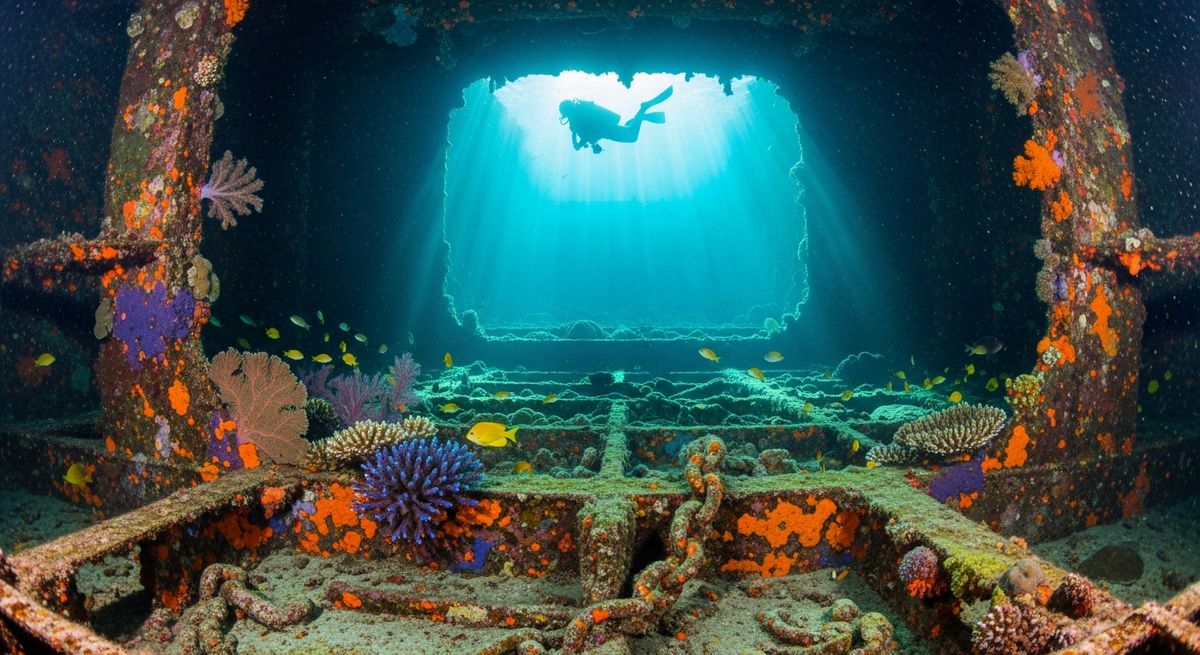
Okay, let's talk Kopanes. Forget what you think you know about Icelandic diving. This isn't about pelagics or volcanic vents. Kopanes is a pure wreck dive, sitting in the approaches to Grindavik Harbour, just 2 metres down. We love it because it’s so accessible, a true piece of maritime history you can practically walk to from shore. The fishing vessel went down in 1973 after its tow wire snapped, and it’s been weathering the North Atlantic ever since. What you get now is a skeletal hull, 26.5 metres long, broken open in places, offering plenty of nooks and crannies to peer into. We’ve spent whole dives just poking around the engine room, or what’s left of it, imagining the life that played out on its decks. Visibility here can vary, but on a good day, the light plays through the gaps in the hull, giving the whole wreck an ethereal, almost stained-glass quality. It’s a shallow, easy dive, perfect for photographers or anyone who just wants to spend a relaxed hour with a piece of history.
Typical KOPANES Dive Profile
Illustrative profile based on site depth and type. Actual dive profiles vary - always follow your dive computer and training.
Safety Notes
Wreck site - avoid penetration without wreck diving certification. Watch for sharp metal and entanglement hazards.
Cold water this month (avg 8°C). Drysuit or thick wetsuit (7mm+) recommended.
Nearest Dive Centres to KOPANES
Dive shops near KOPANES
DIVEICELAND.COM
Sportkafarafélag Íslands
DIVE.IS - PADI 5 Star Dive Center Iceland
Reviews for KOPANES
Conditions
Ocean conditions, forecast and tides for KOPANES
KOPANES Ocean Conditions
Monthly averages for KOPANES, sourced from Open-Meteo marine data + Copernicus Marine (EU) - nearest station: Open-Meteo marine grid (64.16, -21.83) (32km away)
October Averages
Sea Temperature
8°C
46°F · Range: 6–10.3°C
Current Speed
5.1 cm/s
Direction: W (281.3°)
Salinity
33.3 PSU
Based on 4 years of monitoring data · Data sources: Open-Meteo marine data + Copernicus Marine (EU)
Plan & book
Ways to dive Silfra & Thingvellir, from day trips to liveaboards.
Day trips & courses
via GetYourGuideGuided dives, courses and snorkel trips with instant booking.
Find dive trips in Silfra & ThingvellirPlaces to stay
via Booking.comHotels and dive resorts near Silfra & Thingvellir.
Search stays in Silfra & ThingvellirDive insurance
Most travel insurance excludes or limits scuba. Check what you need before you go.
Dive insurance explainedPartner links: we may earn a commission if you book, at no extra cost to you. How we make money
Where to Stay near KOPANES
Prices from Booking.com. We may earn a commission at no extra cost to you.