Wildcat
Why dive here
With 77+ marine species recorded in the area - including blue sharks, dolphins, ocean sunfish (mola mola), octopuses and sea turtles - Wildcat offers some of Medes Islands's richest reef diving. Water ranges 14-24°C, warmest July, August, September.
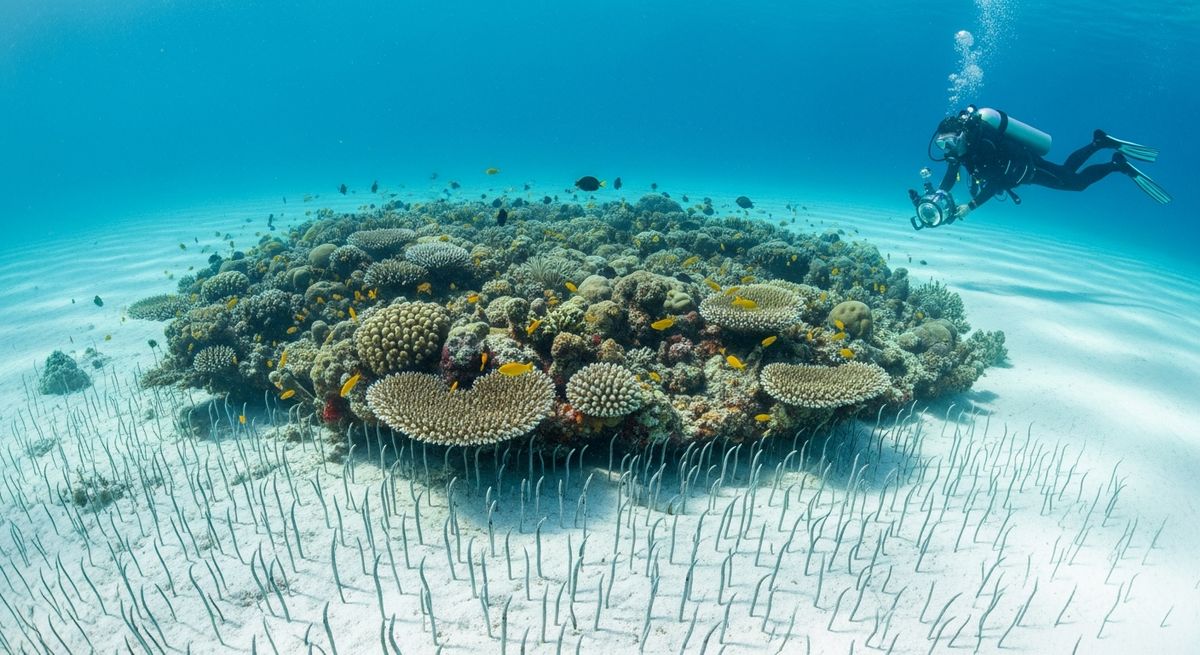
Wildcat, in the Medes Islands, is one of those sites that just feels… alive. You drop down into this labyrinth of rock formations and instantly feel the cooler thermoclines brushing past your face. We love how the light plays through the cracks, revealing massive schools of damselfish that scatter as you approach. Keep an eye out for the yellow clusters of Devonshire cup coral, they’re everywhere and provide a real pop of colour against the grey rock. Our favourite spot is usually around the deeper swim-throughs, where we often find nursehounds tucked away, their spotted skin blending in perfectly. It’s not a site for spotting big pelagics often, but the macro life, like those peculiar Hooded Shrimps, keeps us coming back. We’d suggest going early in the morning before the day boats crowd the area; it’s a much more peaceful experience. It’s a fantastic dive for anyone who enjoys exploring crevices and isn’t in a hurry to get anywhere fast.
Typical Wildcat Dive Profile
Illustrative profile based on site depth and type. Actual dive profiles vary - always follow your dive computer and training.
Nearest Dive Centres to Wildcat
Dive shops near Wildcat
Toulon Plongée
Evasion Plongée
École de plongée
Saint-Mandrier Plongée
Hippocampe
Bubble Diving
Reviews for Wildcat
Conditions
Ocean conditions, forecast and tides for Wildcat
Wildcat Ocean Conditions
Monthly averages for Wildcat, sourced from Open-Meteo marine data + Copernicus Marine (EU) - nearest station: Open-Meteo marine grid (43.2, 5.22) (37km away)
October Averages
Sea Temperature
20°C
69°F · Range: 17.4–22.8°C
Current Speed
9.85 cm/s
Direction: SW (246°)
Chlorophyll-a
0.182 mg/m³
Clear water
Salinity
38.21 PSU
Based on 4 years of monitoring data · Data sources: Open-Meteo marine data + Copernicus Marine (EU)
Plan & book
Ways to dive Medes Islands, from day trips to liveaboards.
Day trips & courses
via GetYourGuideGuided dives, courses and snorkel trips with instant booking.
Find dive trips in Medes IslandsPlaces to stay
via Booking.comHotels and dive resorts near Medes Islands.
Search stays in Medes IslandsDive insurance
Most travel insurance excludes or limits scuba. Check what you need before you go.
Dive insurance explainedPartner links: we may earn a commission if you book, at no extra cost to you. How we make money
Where to Stay near Wildcat
Prices from Booking.com. We may earn a commission at no extra cost to you.