MARINE TRANSPORT (POSSIBLY)
Protected Area
Mistaken Point
Why dive here
With 65+ marine species recorded in the area - including blue sharks, blue whales, dwarf minke whales, humpback whales and ocean sunfish (mola mola) - MARINE TRANSPORT (POSSIBLY) offers some of Newfoundland's richest wreck diving. Water ranges 0-14°C, warmest July, August, September.
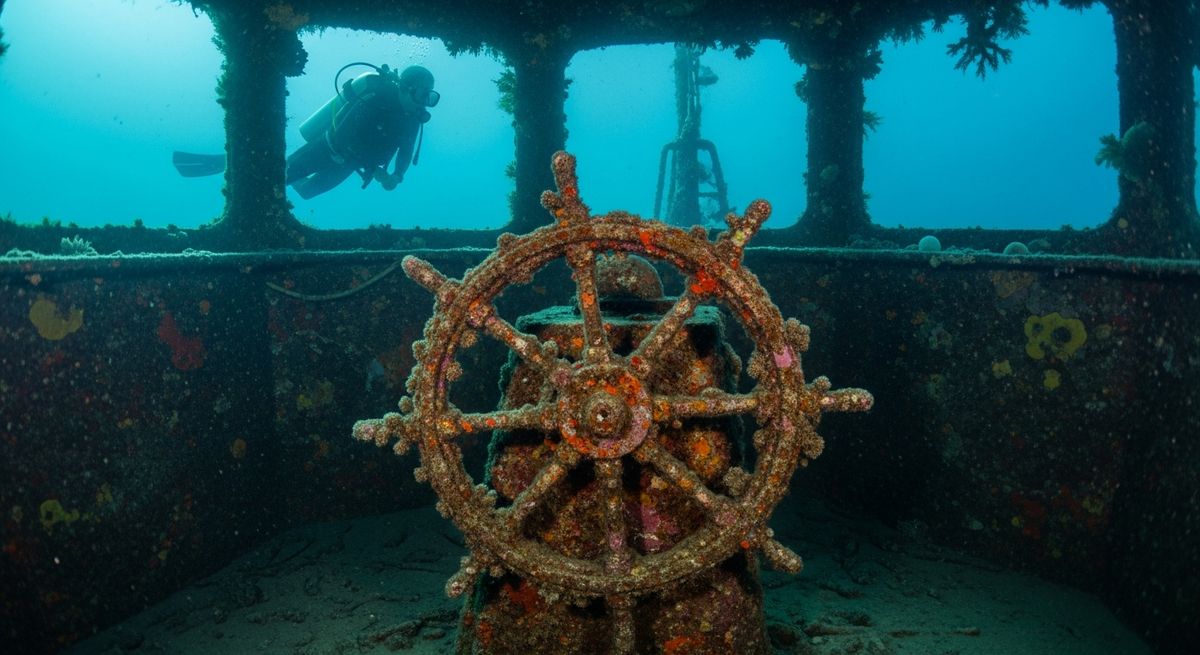
Forget everything you think you know about Canadian wrecks. The Marine Transport, lost off Newfoundland in '91, isn't just another hull on the seabed. This 64-metre carrier sits upright, a proper, solid piece of engineering, beckoning you down to 55 metres. We love how the deck structures, though collapsed in places, still give a real sense of her working life. The visibility here can be superb, cutting through that cold North Atlantic water. We'd suggest checking forecasts for calm seas, because the surface conditions can be a beast. Once you descend, the sheer size of the wreck starts to hit you. Look for the massive propeller, often silhouetted against the ambient light filtering down. Inside, if you're qualified and careful, the hold opens up like a vast, dark cavern, but it's the superstructure we find ourselves drawn to repeatedly. Colourful anemones cling to every surface, catching detritus in the current. You’ll spot the occasional cod or wolfish eyeing you from a shadowy corner, too. This is a dive for experienced deep wreck divers who appreciate history and the silent power of the ocean claiming its own.
Typical MARINE TRANSPORT (POSSIBLY) Dive Profile
Illustrative profile based on site depth and type. Actual dive profiles vary - always follow your dive computer and training.
Safety Notes
Maximum depth 55m exceeds recreational limits (40m). Technical diving certification and equipment required.
Wreck site - avoid penetration without wreck diving certification. Watch for sharp metal and entanglement hazards.
Cold water this month (avg 11°C). Drysuit or thick wetsuit (7mm+) recommended.
Always perform a 3-minute safety stop at 5m before surfacing.
Reviews for MARINE TRANSPORT (POSSIBLY)
Conditions
Ocean conditions, forecast and tides for MARINE TRANSPORT (POSSIBLY)
MARINE TRANSPORT (POSSIBLY) Ocean Conditions
Monthly averages for MARINE TRANSPORT (POSSIBLY), sourced from Open-Meteo marine data + Copernicus Marine (EU) - nearest station: Open-Meteo marine grid (47.85, -53.09) (38km away)
October Averages
Sea Temperature
11°C
51°F · Range: 8.4–13.7°C
Current Speed
1 cm/s
Direction: E (90°)
Salinity
30.75 PSU
Based on 4 years of monitoring data · Data sources: Open-Meteo marine data + Copernicus Marine (EU)
Plan & book
Ways to dive Newfoundland, from day trips to liveaboards.
Day trips & courses
via GetYourGuideGuided dives, courses and snorkel trips with instant booking.
Find dive trips in NewfoundlandPlaces to stay
via Booking.comHotels and dive resorts near Newfoundland.
Search stays in NewfoundlandDive insurance
Most travel insurance excludes or limits scuba. Check what you need before you go.
Dive insurance explainedPartner links: we may earn a commission if you book, at no extra cost to you. How we make money
Where to Stay near MARINE TRANSPORT (POSSIBLY)
Prices from Booking.com. We may earn a commission at no extra cost to you.