MARVALE
Protected Area
Mistaken Point
Why dive here
With 65+ marine species recorded in the area - including blue sharks, blue whales, dwarf minke whales, humpback whales and ocean sunfish (mola mola) - MARVALE offers some of Newfoundland's richest wreck diving. Water ranges 0-14°C, warmest July, August, September.
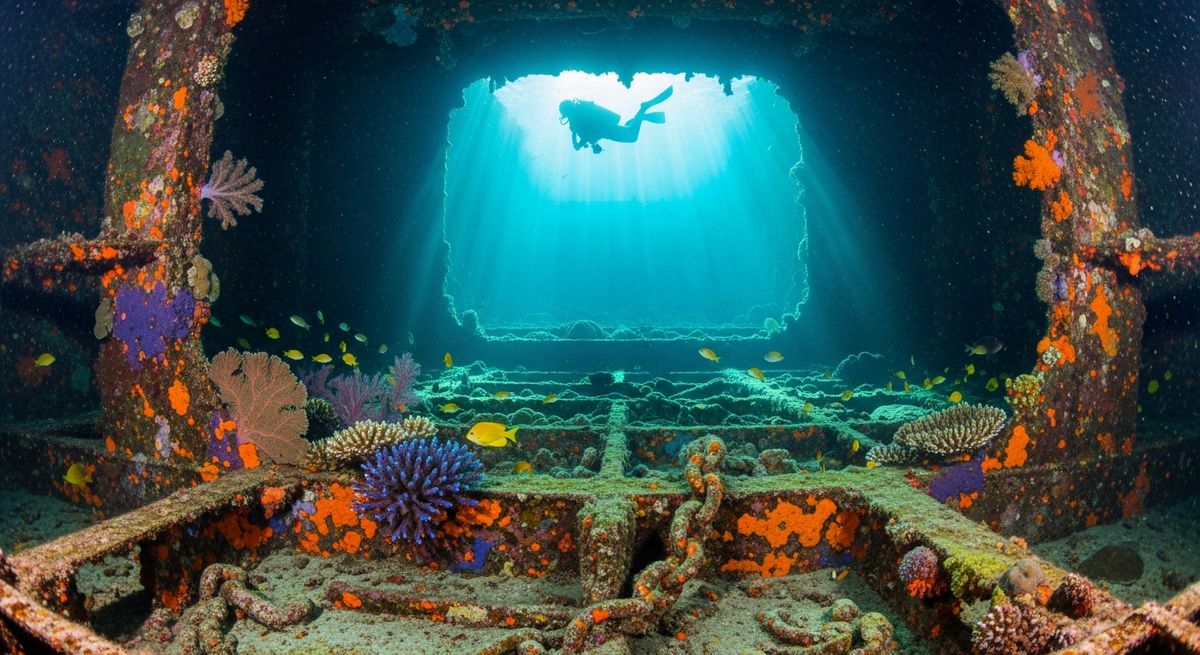
The Marvale, she’s a beast. A proper steamship, 152 meters of history laid out shallow, just 9 metres below the surface off Cape Freels. We love how accessible she is, not just in depth but in her sheer scale. You can spend an entire dive just mapping out the deck, or drifting over the massive triple-expansion engine, the gears still surprisingly intact for a wreck that went down in 1923. It’s a humbling sight, seeing the sheer engineering from over a century ago now home to sculpins tucked into crevices and schools of cod weaving through the collapsed superstructure. Visibility can be a bit of a lottery here; we've had days where the sun cuts through like a knife, illuminating the entire bow, and others where it's a moody 5-meter affair, adding to the wreck's ghostly charm. Our favourite moments are usually spent poking around the cargo holds, imagining the passage from Quebec to Glasgow. This isn’t a delicate coral reef dive, this is a genuine piece of maritime history, a solid steel skeleton that makes you feel small and connected to the past. Bring a good torch, even in bright conditions, to peer into the deeper shadows of her interior.
Typical MARVALE Dive Profile
Illustrative profile based on site depth and type. Actual dive profiles vary - always follow your dive computer and training.
Safety Notes
Wreck site - avoid penetration without wreck diving certification. Watch for sharp metal and entanglement hazards.
Cold water this month (avg 11°C). Drysuit or thick wetsuit (7mm+) recommended.
Reviews for MARVALE
Conditions
Ocean conditions, forecast and tides for MARVALE
MARVALE Ocean Conditions
Monthly averages for MARVALE, sourced from Open-Meteo marine data + Copernicus Marine (EU) - nearest station: Open-Meteo marine grid (47.85, -53.09) (38km away)
October Averages
Sea Temperature
11°C
51°F · Range: 8.4–13.7°C
Current Speed
1 cm/s
Direction: E (90°)
Salinity
30.75 PSU
Based on 4 years of monitoring data · Data sources: Open-Meteo marine data + Copernicus Marine (EU)
Plan & book
Ways to dive Newfoundland, from day trips to liveaboards.
Day trips & courses
via GetYourGuideGuided dives, courses and snorkel trips with instant booking.
Find dive trips in NewfoundlandPlaces to stay
via Booking.comHotels and dive resorts near Newfoundland.
Search stays in NewfoundlandDive insurance
Most travel insurance excludes or limits scuba. Check what you need before you go.
Dive insurance explainedPartner links: we may earn a commission if you book, at no extra cost to you. How we make money
Where to Stay near MARVALE
Prices from Booking.com. We may earn a commission at no extra cost to you.