The Ulysses Wreck
Why dive here
With 42+ marine species recorded in the area - including dolphins, humpback whales, seahorses, spinner dolphins and whale sharks - The Ulysses Wreck offers some of Hurghada's richest wreck diving. Water ranges 21-29°C, warmest July, August, September.
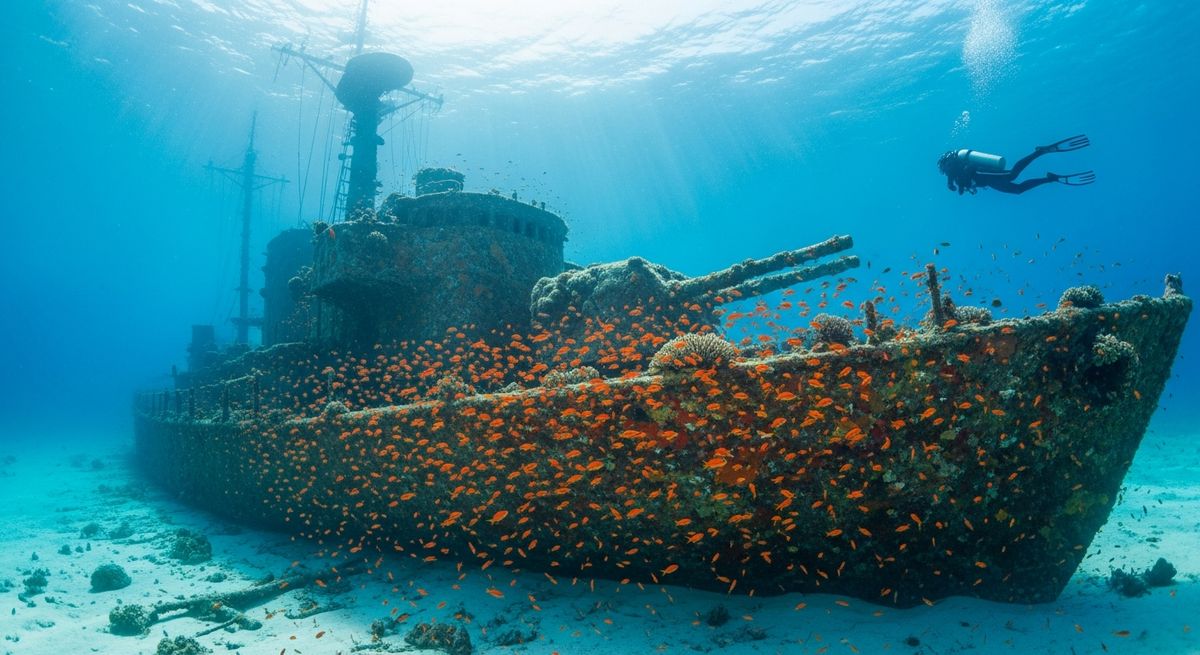
The Ulysses Wreck, a cargo vessel from 1871, sits quietly on the reef of Gobul Seghir, a short zodiac ride from Hurghada. It’s a good example of how time turns wreckage into reef. Down at a bit over 30m at its deepest, the 95m hull is now thoroughly encrusted with hard corals, almost blending into the seabed. You can still make out the ship’s structure, but it’s the way the marine life has taken over that makes it interesting. Schools of anthias shimmer above the decks, and we’ve often spotted lionfish tucked into its shadowy corners. It’s a solid dive for those who enjoy older wrecks that have become part of the natural environment, rather than just an artificial structure.
Safety Notes
Wreck site - avoid penetration without wreck diving certification. Watch for sharp metal and entanglement hazards.
Nearest Dive Centres to The Ulysses Wreck
Dive shops near The Ulysses Wreck
Blue Water Dive Resort
Redsea-Divers Annette und Robbi Tauchbasis
Sea Serpent Fleet
Tauchen unter Freunden
Tauchen Hurghada
Swiss Wellness Dive Resort
Reviews for The Ulysses Wreck
Conditions
Ocean conditions, forecast and tides for The Ulysses Wreck
The Ulysses Wreck Ocean Conditions
Monthly averages for The Ulysses Wreck, sourced from Open-Meteo marine data + Copernicus Marine (EU) - nearest station: Open-Meteo marine grid (27.25, 33.89) (1km away)
October Averages
Sea Temperature
27°C
80°F · Range: 25.2–28°C
Current Speed
29.43 cm/s
Direction: S (170.2°)
Chlorophyll-a
0.069 mg/m³
Very clear (oligotrophic)
Salinity
38.69 PSU
Based on 4 years of monitoring data · Data sources: Open-Meteo marine data + Copernicus Marine (EU)
Plan & book
Ways to dive Hurghada, from day trips to liveaboards.
Day trips & courses
via GetYourGuideGuided dives, courses and snorkel trips with instant booking.
Find dive trips in HurghadaPlaces to stay
via Booking.comHotels and dive resorts near Hurghada.
Search stays in HurghadaDive insurance
Most travel insurance excludes or limits scuba. Check what you need before you go.
Dive insurance explainedPartner links: we may earn a commission if you book, at no extra cost to you. How we make money
Where to Stay near The Ulysses Wreck
Prices from Booking.com. We may earn a commission at no extra cost to you.