DUNRAVEN
Protected Area
محمية رأس محمد
Why dive here
DUNRAVEN is a wreck dive where divers can encounter dolphins, spinner dolphins and whale sharks. Water ranges 23-30°C, warmest July, August, September.
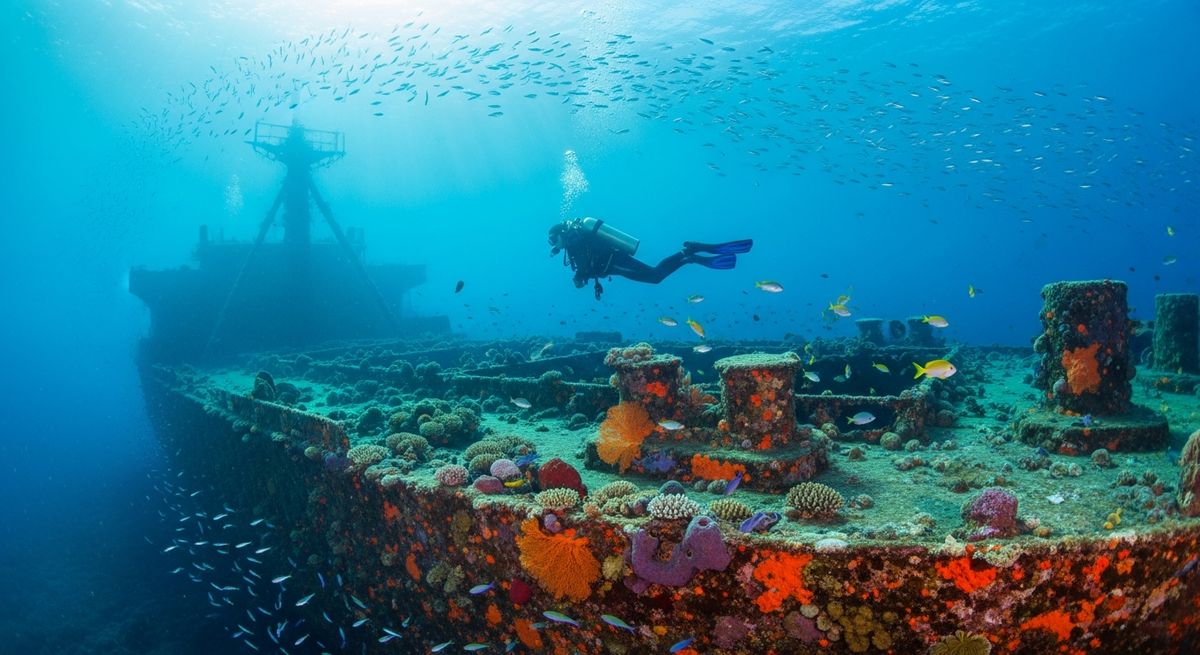
The Dunraven, for us, is one of those wrecks you keep coming back to. We’re talking about an 82-metre steamship that went down in 1876, lying inverted at 30 metres. What we really love about this site is the way the wreck has become a living reef. You drop down, and the first thing you notice is the massive, copper propeller, often swarming with glassfish. Swim along the hull, and you’ll find cracks and openings everywhere. We usually head for the stern, where you can actually poke your head inside some of the larger gaps – just be mindful of your buoyancy and any surge. Inside, the light filters through the hull, catching schools of batfish that seem to hang suspended. Don't forget to look for the resident moray eels peeking out from behind corroded beams. The corals here, soft and hard, are doing incredibly well, painting the metal a surprising range of colours. For us, it’s not just a wreck dive; it’s a masterclass in how marine life reclaims and transforms. Keep an eye on your bottom time; 30 metres flies by down here.
Typical DUNRAVEN Dive Profile
Illustrative profile based on site depth and type. Actual dive profiles vary - always follow your dive computer and training.
Safety Notes
Depth of 30m - Advanced Open Water certification recommended.
Wreck site - avoid penetration without wreck diving certification. Watch for sharp metal and entanglement hazards.
Always perform a 3-minute safety stop at 5m before surfacing.
Nearest Dive Centres to DUNRAVEN
Dive shops near DUNRAVEN
Black Pearl - Red Sea
BLUEFORCE 2
Story Divers
Reef Oasis Dive Club - Reef Beach
Sunshine Divers Mary & Klaus
Divers United (Elite Diving)
Reviews for DUNRAVEN
Conditions
Ocean conditions, forecast and tides for DUNRAVEN
DUNRAVEN Ocean Conditions
Monthly averages for DUNRAVEN, sourced from Open-Meteo marine data + Copernicus Marine (EU) - nearest station: Open-Meteo marine grid (27.85, 34.27) (8km away)
October Averages
Sea Temperature
28°C
82°F · Range: 26.1–29°C
Current Speed
15.26 cm/s
Direction: SW (211.6°)
Chlorophyll-a
0.073 mg/m³
Very clear (oligotrophic)
Salinity
38.63 PSU
Based on 4 years of monitoring data · Data sources: Open-Meteo marine data + Copernicus Marine (EU)
Plan & book
Ways to dive Sharm el-Sheikh, from day trips to liveaboards.
Day trips & courses
via GetYourGuideGuided dives, courses and snorkel trips with instant booking.
Find dive trips in Sharm el-SheikhPlaces to stay
via Booking.comHotels and dive resorts near Sharm el-Sheikh.
Search stays in Sharm el-SheikhDive insurance
Most travel insurance excludes or limits scuba. Check what you need before you go.
Dive insurance explainedPartner links: we may earn a commission if you book, at no extra cost to you. How we make money
Where to Stay near DUNRAVEN
Prices from Booking.com. We may earn a commission at no extra cost to you.