ANGEL COAST
Protected Area
محمية شاطئ العباسية الطبيعية
Why dive here
ANGEL COAST is a wreck dive in Tyre, Lebanon.
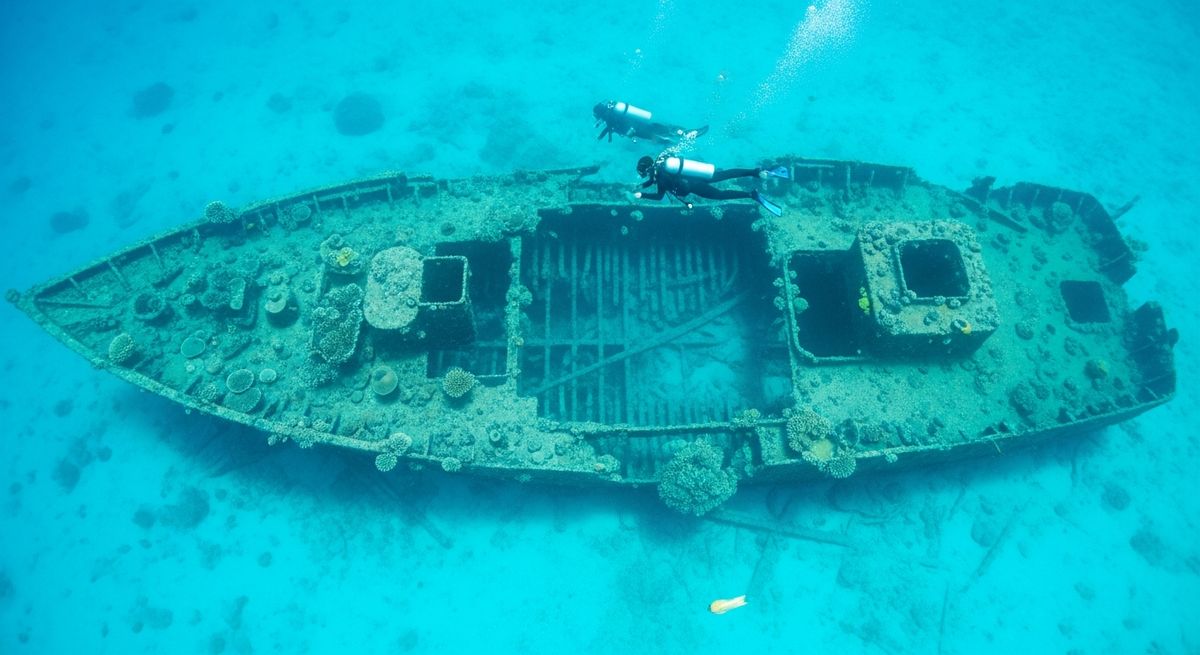
Angel Coast is one of those wrecks that really grows on you. It’s a proper ship, grounded hard in a storm back in '83, not some artificial reef sunk on purpose. You get a real sense of its struggle against the weather out there. We love how shallow it is. This isn’t a deep, dark wreck dive, which means more bottom time and plenty of light flooding into the spaces. What’s left of the superstructure breaks the surface, even on a flat day, making for an easy descent. It’s really more of a shipwreck trail than a single monolithic object. You'll spend your dive exploring fragmented sections of hull, twisted metal, and machinery strewn across the seabed. Think huge propeller blades half-buried in the sand and massive winches colonised by colourful sponges. The marine life here is surprisingly good given the depth. Shoals of shimmering silversides often blanket whole sections of the wreck, swirling around the more intact pieces. We’ve spotted large groupers hunkering down in crevices, and plenty of nudibranchs crawling along the rusty plating. It’s an ideal site for photographers wanting to play with ambient light on a wreck, or for newer wreck divers who want to get a feel for a big vessel without the depth challenges. The shallow nature means it’s also fantastic for snorkelers and freedivers, especially when the visibility stretches out beyond 20 metres, which it often does here in the summer months. Go early to avoid any afternoon chop.
Safety Notes
Wreck site - avoid penetration without wreck diving certification. Watch for sharp metal and entanglement hazards.
ANGEL COAST Wreck History
Year Sunk
1983
Vessel Type
cargo ship
Cause
grounding
The Angel Coast was on a voyage in the Eastern Mediterranean, sailing in ballast (without cargo) from Lebanon towards Alexandria, Egypt. An empty ship can be more difficult to handle in rough seas, riding high on the water and being more susceptible to wind and waves. This vulnerability would prove to be its undoing.
On the afternoon of February 18, 1983, the vessel was caught in a severe storm. Overwhelmed by the heavy weather, the crew was unable to prevent the ship from being driven ashore. The Angel Coast grounded at Khaizaran, approximately 8 kilometers south of the historic city of Sidon. The force of the impact sealed her fate, and the ship was declared a total loss, left to be dismantled by the sea.
Resting at a depth of 0 meters, the Angel Coast is more of a coastal feature than a dive site. Its skeletal remains are often visible above the waves, a stark silhouette against the Lebanese coastline. For snorkelers and beach explorers, the wreckage offers a chance to see the power of the sea up close on a calm day. The scattered steel plates and decaying hull lie in the shallows, providing a habitat for small marine life and a dramatic subject for photographers.
Nearest Dive Centres to ANGEL COAST
Dive shops near ANGEL COAST
ONE
TYRE DIVING CENTER
Stingray Divers
Scuba Diving Lovers Lebanon
كيرياكوس
Diving In Lebanon
Reviews for ANGEL COAST
Conditions
Ocean conditions, forecast and tides for ANGEL COAST
Plan & book
Ways to dive Tyre, from day trips to liveaboards.
Day trips & courses
via GetYourGuideGuided dives, courses and snorkel trips with instant booking.
Find dive trips in TyrePlaces to stay
via Booking.comHotels and dive resorts near Tyre.
Search stays in TyreDive insurance
Most travel insurance excludes or limits scuba. Check what you need before you go.
Dive insurance explainedPartner links: we may earn a commission if you book, at no extra cost to you. How we make money
Where to Stay near ANGEL COAST
Prices from Booking.com. We may earn a commission at no extra cost to you.