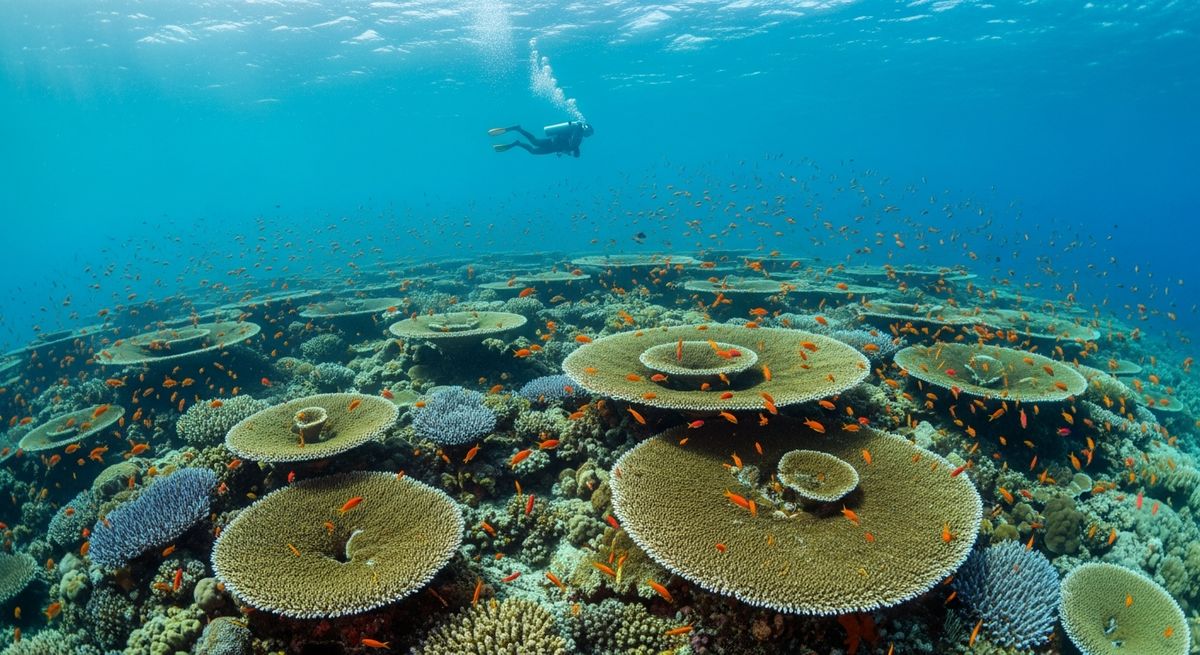
Abington Reef
Protected Area
Parc national marin de Sanganeb et parc national marin de la baie de Dungonab - île de Mukkawar
Why dive here
With 55+ marine species recorded in the area - including pufferfish - Abington Reef offers some of Port Sudan & Sanganeb's richest reef diving. Water ranges 25-32°C, warmest July, August, September.
Abington Reef, way up north in Sudan, is one of those true Red Sea pinnacles that just screams "action." We usually drop in on the northern side, heading a bit deeper first, looking for the grey reefs and the occasional hammerhead cruising in the blue. As you slowly work your way shallower, the schools start to thicken – we're talking walls of jacks and fusiliers so dense you can barely see past them. The gorgonian fans on the wall are impressive, swaying in the currents, and it’s generally a good spot for pelagics, though the currents can be quite strong here. Definitely one for experienced divers who appreciate big fish action and don't mind a bit of a drift.
Typical Abington Reef Dive Profile
Illustrative profile based on site depth and type. Actual dive profiles vary - always follow your dive computer and training.
Reviews for Abington Reef
Conditions
Ocean conditions, forecast and tides for Abington Reef
Abington Reef Ocean Conditions
Monthly averages for Abington Reef, sourced from Open-Meteo marine data + Copernicus Marine (EU) - nearest station: Open-Meteo marine grid (19.94, 37.4) (17km away)
October Averages
Sea Temperature
31°C
88°F · Range: 29.9–32.3°C
Current Speed
7.07 cm/s
Direction: S (171.9°)
Chlorophyll-a
0.088 mg/m³
Very clear (oligotrophic)
Salinity
37.37 PSU
Based on 4 years of monitoring data · Data sources: Open-Meteo marine data + Copernicus Marine (EU)
Plan & book
Ways to dive Port Sudan & Sanganeb, from day trips to liveaboards.
Day trips & courses
via GetYourGuideGuided dives, courses and snorkel trips with instant booking.
Find dive trips in Port Sudan & SanganebPlaces to stay
via Booking.comHotels and dive resorts near Port Sudan & Sanganeb.
Search stays in Port Sudan & SanganebDive insurance
Most travel insurance excludes or limits scuba. Check what you need before you go.
Dive insurance explainedPartner links: we may earn a commission if you book, at no extra cost to you. How we make money
Where to Stay near Abington Reef
Prices from Booking.com. We may earn a commission at no extra cost to you.