Cousin's Rock
Protected Area
Galápagos
Why dive here
With 131+ marine species recorded in the area - including dolphins, humpback whales, seals & sea lions, sea turtles and sperm whales - Cousin's Rock offers some of Galápagos Islands's richest diving. Water ranges 23-28°C, warmest February, March, April.
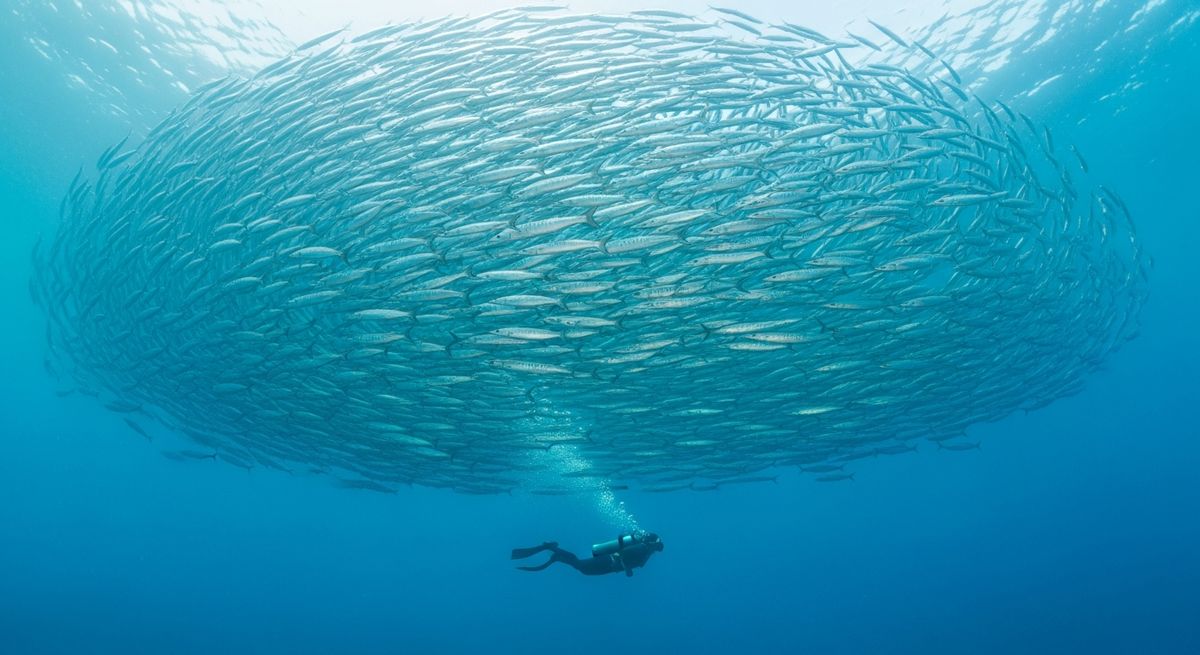
Cousin's Rock is a reliable spot, often a stop on Galápagos liveaboards, sitting off Santiago's east coast. It's really just a triangular rock poking about ten metres out of the water, but what it lacks in grand topography it makes up for in density. We've spent dives here just hovering, watching a parade of mobula rays glide by in the blue, while a Galápagos shark might cruise past the reef edge. The shallows are where we usually find the best action, with sea lions often zipping around, playful and curious. It’s a good choice for divers who appreciate a mix of pelagic encounters and close-up reef critters.
Safety Notes
Strong currents typical this month (avg 36 cm/s). Good buoyancy control essential.
Nearest Dive Centres to Cousin's Rock
Dive shops near Cousin's Rock
View all dive centres in Galápagos IslandsReviews for Cousin's Rock
Conditions
Ocean conditions, forecast and tides for Cousin's Rock
Cousin's Rock Ocean Conditions
Monthly averages for Cousin's Rock, sourced from Open-Meteo marine data + Copernicus Marine (EU) - nearest station: Open-Meteo marine grid (-0.32, -90.55) (15km away)
October Averages
Sea Temperature
23°C
74°F · Range: 20.2–26°C
Current Speed
36.24 cm/s
Direction: SW (230.6°)
Chlorophyll-a
0.886 mg/m³
Moderate productivity
Salinity
33.88 PSU
Based on 4 years of monitoring data · Data sources: Open-Meteo marine data + Copernicus Marine (EU)
Plan & book
Ways to dive Galápagos Islands, from day trips to liveaboards.
Day trips & courses
via GetYourGuideGuided dives, courses and snorkel trips with instant booking.
Find dive trips in Galápagos IslandsPlaces to stay
via Booking.comHotels and dive resorts near Galápagos Islands.
Search stays in Galápagos IslandsDive insurance
Most travel insurance excludes or limits scuba. Check what you need before you go.
Dive insurance explainedPartner links: we may earn a commission if you book, at no extra cost to you. How we make money
Where to Stay near Cousin's Rock
Prices from Booking.com. We may earn a commission at no extra cost to you.