Darwin Island
Protected Area
Hermandad
Why dive here
With 131+ marine species recorded in the area - including dolphins, humpback whales, seals & sea lions, sea turtles and sperm whales - Darwin Island offers some of Galápagos Islands's richest wreck diving. Water ranges 23-28°C, warmest February, March, April.
Darwin Island isn’t just a dive site, it’s a full-throttle marine spectacle. Even without the Arch, the seamount is pure magic. We’ve drifted this spot countless times, and the sheer volume of big animals always resets our expectations. Picture this: you descend into a solid wall of schooling hammerheads, hundreds of them, their silhouettes against the blue. Then a giant comes into view, perhaps a whale shark gliding past, unhurried, just doing its thing from June to November. The currents here are no joke, a constant, powerful push, but that’s precisely why the big pelagics congregate. We’re talking Allison’s tuna zipping by, inquisitive short-beaked common dolphins, and manta rays soaring overhead. It’s an advanced dive, certainly, one for those comfortable in washing machine conditions, but the reward is immense. We always keep an eye out for the smaller stuff too, like the psychedelic blue trim parrotfish darting through the coral patches, or the shy flowery flounder camouflaged on the sand. It’s raw, it’s wild, and honestly, we think it’s one of the best places on earth to truly feel connected to the ocean’s power.
Safety Notes
Wreck site - avoid penetration without wreck diving certification. Watch for sharp metal and entanglement hazards.
Strong currents typical this month (avg 36 cm/s). Good buoyancy control essential.
Darwin Island Wreck History
Vessel Type
barge
Cause
scuttled
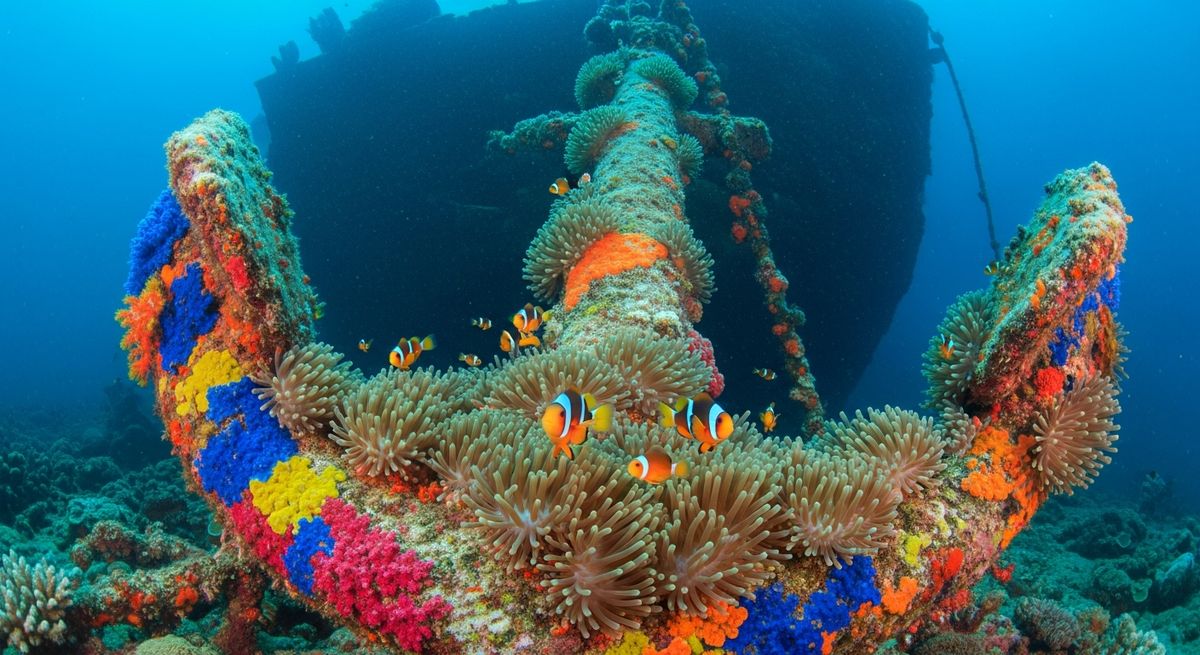
The Belzona Barge is a classic Florida Keys wreck dive, intentionally sunk as an artificial reef to create a habitat for marine life. While its specific history before sinking is sparse, its purpose today is clear: to provide an accessible and rewarding dive site. Sitting upright on the sandy bottom, this steel barge has become completely encrusted with corals and sponges, attracting a vibrant array of reef fish. Divers can expect to encounter large schools of grunts and snapper, resident barracuda, and often a goliath grouper or two hiding in its open cargo hold. Its relatively shallow depth and straightforward structure make it an excellent dive for all skill levels, perfect for a long, relaxed exploration or a second dive of the day.
Reviews for Darwin Island
Conditions
Ocean conditions, forecast and tides for Darwin Island
Darwin Island Ocean Conditions
Monthly averages for Darwin Island, sourced from Open-Meteo marine data + Copernicus Marine (EU) - nearest station: Open-Meteo marine grid (-0.32, -90.55) (15km away)
October Averages
Sea Temperature
23°C
74°F · Range: 20.2–26°C
Current Speed
36.24 cm/s
Direction: SW (230.6°)
Chlorophyll-a
0.886 mg/m³
Moderate productivity
Salinity
33.88 PSU
Based on 4 years of monitoring data · Data sources: Open-Meteo marine data + Copernicus Marine (EU)
Plan & book
Ways to dive Galápagos Islands, from day trips to liveaboards.
Day trips & courses
via GetYourGuideGuided dives, courses and snorkel trips with instant booking.
Find dive trips in Galápagos IslandsPlaces to stay
via Booking.comHotels and dive resorts near Galápagos Islands.
Search stays in Galápagos IslandsDive insurance
Most travel insurance excludes or limits scuba. Check what you need before you go.
Dive insurance explainedPartner links: we may earn a commission if you book, at no extra cost to you. How we make money
Where to Stay near Darwin Island
Prices from Booking.com. We may earn a commission at no extra cost to you.