Galapagos Dive Training & Conservation
Galápagos Islands, Ecuador
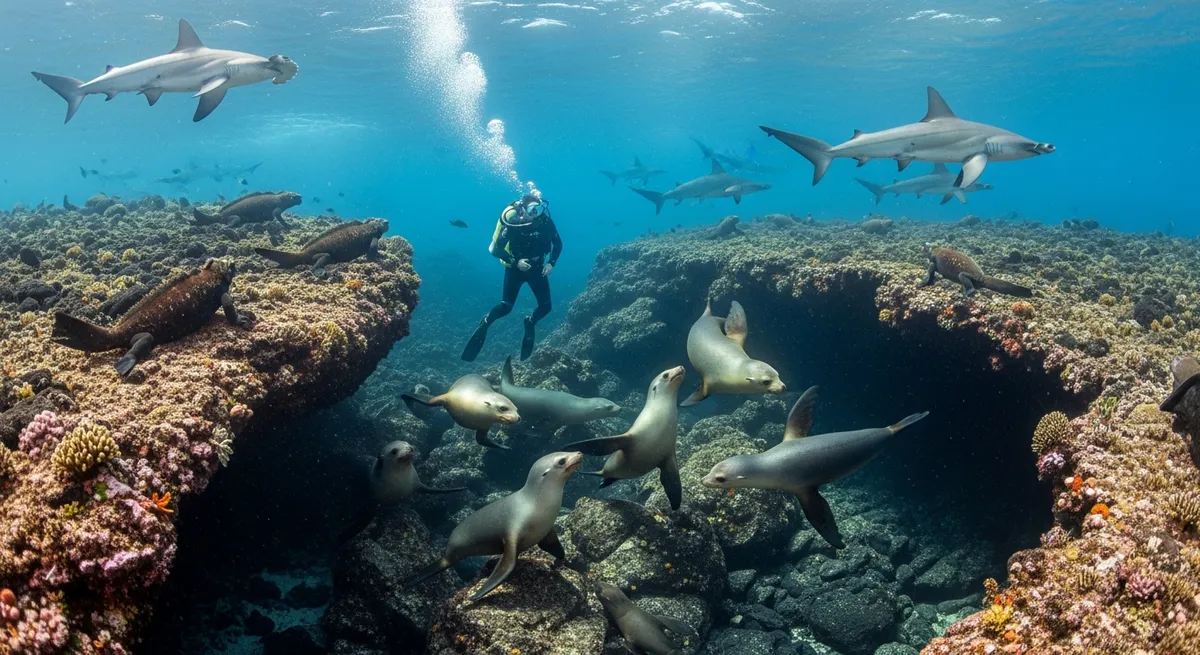
The team at Galapagos Dive Training & Conservation are exactly who you want to learn with when you’re in a place as wild as the Galápagos. They specialise in taking new divers, or those looking to expand their skills, and giving them real confidence in some genuinely challenging conditions. We love that they focus on responsible diving from the get-go, weaving conservation into every PADI course they teach. This is a brilliant choice for divers who want to understand the unique ecosystem they’re diving in, not just see it. Forget placid pools; your open water dives here are likely to involve curious sea lions buzzing past, maybe a marine iguana munching algae on the rocks, and currents that keep you on your toes. It’s hands-on, exhilarating stuff. We’d suggest anyone thinking about their Advanced Open Water or even a specialty like Drift Diver considers doing it here – the real-world application is immediate. The guides are incredibly patient, always pointing out the subtle behaviours of the wildlife, explaining why a particular cleaning station is important, or how to spot a camouflaged seahorse. It’s more than just a certification; it's an education in how to be a better, more aware diver.
Contact Details
Juan Leon Mera Y San Cristobal, Puerto Ayora, 20104, Galapagos, Ecuador
Services & Facilities
PADI Resort [padi:29755]
Diving Capabilities
Dive Sites near Galapagos Dive Training & Conservation
Albany Rock
Bainbridge Rocks
Barranco Cave
Bartolome and Cousins Rock
Beagle Rocks
Cabo Marshall
Café Scuba
Cape Douglas
Cape Marshall
Carawa Shipwreck
Other Dive Centres in Galápagos Islands
Where to Stay near Galapagos Dive Training & Conservation
Prices from Booking.com. We may earn a commission at no extra cost to you.
Reviews for Galapagos Dive Training & Conservation
Run Galapagos Dive Training & Conservation? Get a free dive conditions widget for your website.