M/V Tiburon Explorer
Galápagos Islands, Ecuador
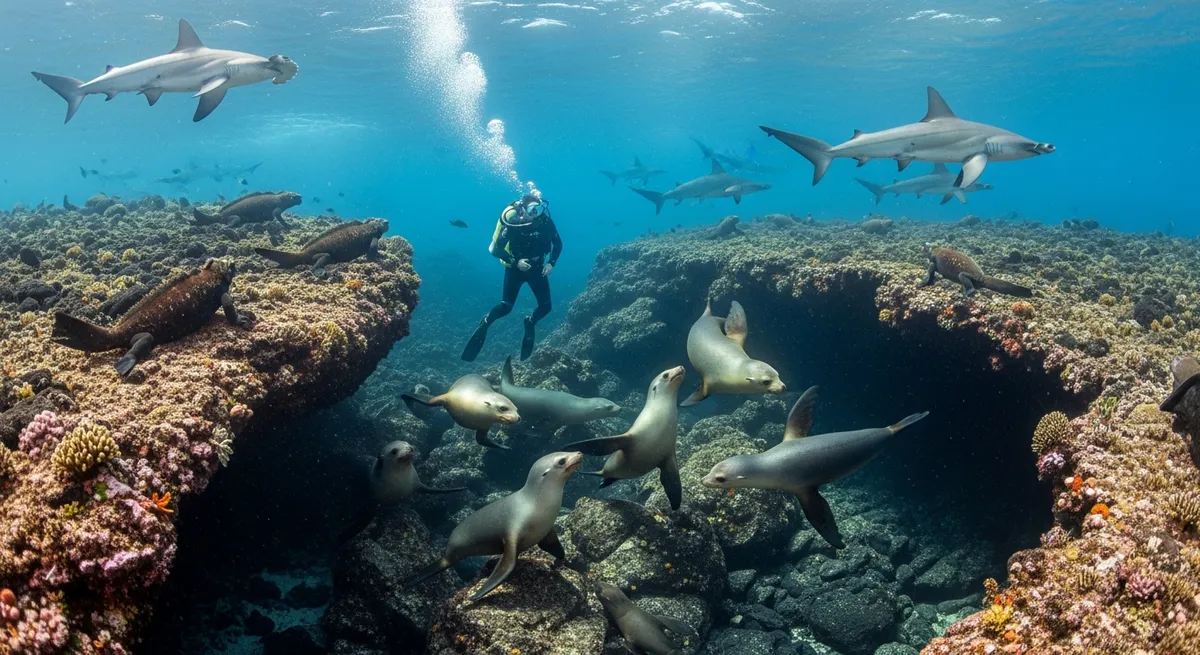
The team on the M/V Tiburon Explorer really understands what it means to dive the Galápagos. They specialise in week-long liveaboard trips that hit all the iconic northern sites, perfect for experienced divers keen to see big pelagics. If you're looking for a serious itinerary that prioritises getting you in the water at the best times, this is a solid pick. We’d choose them for their well-oiled operation and focus on the diving, rather than fancy frills. Our pick for the Galápagos, the Tiburon Explorer is for divers who want to *dive*. Forget spa treatments; you’re here for the hammerheads and manta rays. We’ve found their itineraries hit Wolf and Darwin Islands at prime times, often meaning you’re in the water before other boats arrive. It’s a huge difference when you’re watching hundreds of scalloped hammerheads drift past in the current, rather than jostling with twenty other divers. We love that the dive deck is practical, not pretty – plenty of space to gear up and a solid rinse tank for cameras. Currents can be ripping here, so their briefings are thorough, and the dive guides are excellent at reading the water and keeping groups together. Expect early mornings, long dives, and a crew that genuinely loves these islands. It’s a proper dive boat, and we wouldn’t have it any other way for the Galápagos.
Contact Details
Puerto Ayora, 200350, Santa Cruz, Ecuador
Services & Facilities
PADI Dive Boat [padi:29394]
Diving Capabilities
Dive Sites near M/V Tiburon Explorer
Albany Rock
Bainbridge Rocks
Barranco Cave
Bartolome and Cousins Rock
Beagle Rocks
Cabo Marshall
Café Scuba
Cape Douglas
Cape Marshall
Carawa Shipwreck
Other Dive Centres in Galápagos Islands
Where to Stay near M/V Tiburon Explorer
Prices from Booking.com. We may earn a commission at no extra cost to you.
Reviews for M/V Tiburon Explorer
Run M/V Tiburon Explorer? Get a free dive conditions widget for your website.