Galapagos People
Why dive here
With 131+ marine species recorded in the area - including dolphins, humpback whales, seals & sea lions, sea turtles and sperm whales - Galapagos People offers some of Galápagos Islands's richest diving. Water ranges 23-28°C, warmest February, March, April.
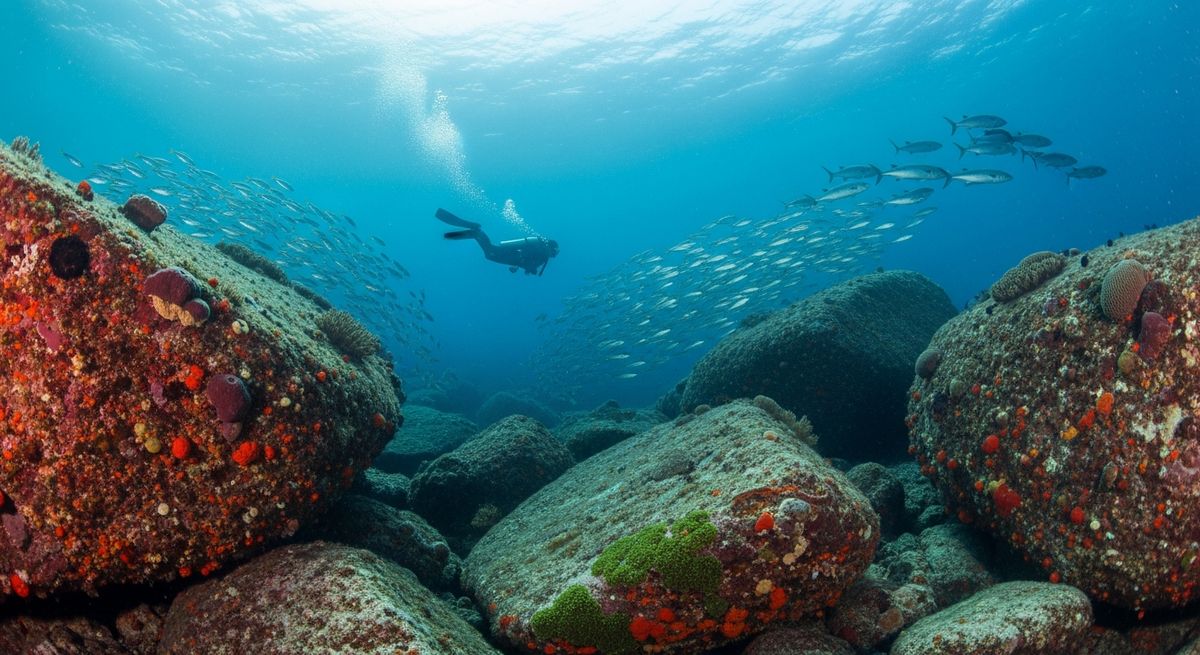
Galapagos People is one of those sites that just feels… different. We find it’s not as dramatic as some of the big-name drifts, but it offers a quieter, more intimate look at the Galápagos ecosystem. You're not going to be hammered by current here, which makes it perfect for really slowing down and observing. We love spotting the little guys – those vibrant Pacific beakfish darting through the rocks, the odd Coral hawkfish perched perfectly, and especially the endemic Galapagos ringtail damselfish, which just pops with colour. Keep an eye out for larger pelagics passing through the blue, too; we’ve seen dorado here on several occasions, and sometimes the sleek outline of a blacktip shark cruising by. It’s a fantastic site for photographers or anyone who wants to appreciate the smaller details without battling a strong push.
Safety Notes
Strong currents typical this month (avg 36 cm/s). Good buoyancy control essential.
Nearest Dive Centres to Galapagos People
Dive shops near Galapagos People
Galapagos People
Macarron Scuba Divers
Dive Center Silberstein
Galápagos Deep
Shark Bay
Eagleray Galapagos Diving
Reviews for Galapagos People
Conditions
Ocean conditions, forecast and tides for Galapagos People
Galapagos People Ocean Conditions
Monthly averages for Galapagos People, sourced from Open-Meteo marine data + Copernicus Marine (EU) - nearest station: Open-Meteo marine grid (-0.32, -90.55) (15km away)
October Averages
Sea Temperature
23°C
74°F · Range: 20.2–26°C
Current Speed
36.24 cm/s
Direction: SW (230.6°)
Chlorophyll-a
0.886 mg/m³
Moderate productivity
Salinity
33.88 PSU
Based on 4 years of monitoring data · Data sources: Open-Meteo marine data + Copernicus Marine (EU)
Plan & book
Ways to dive Galápagos Islands, from day trips to liveaboards.
Day trips & courses
via GetYourGuideGuided dives, courses and snorkel trips with instant booking.
Find dive trips in Galápagos IslandsPlaces to stay
via Booking.comHotels and dive resorts near Galápagos Islands.
Search stays in Galápagos IslandsDive insurance
Most travel insurance excludes or limits scuba. Check what you need before you go.
Dive insurance explainedPartner links: we may earn a commission if you book, at no extra cost to you. How we make money
Where to Stay near Galapagos People
Prices from Booking.com. We may earn a commission at no extra cost to you.