Mosquera
Protected Area
Galápagos
Why dive here
With 131+ marine species recorded in the area - including dolphins, humpback whales, seals & sea lions, sea turtles and sperm whales - Mosquera offers some of Galápagos Islands's richest diving. Water ranges 23-28°C, warmest February, March, April.
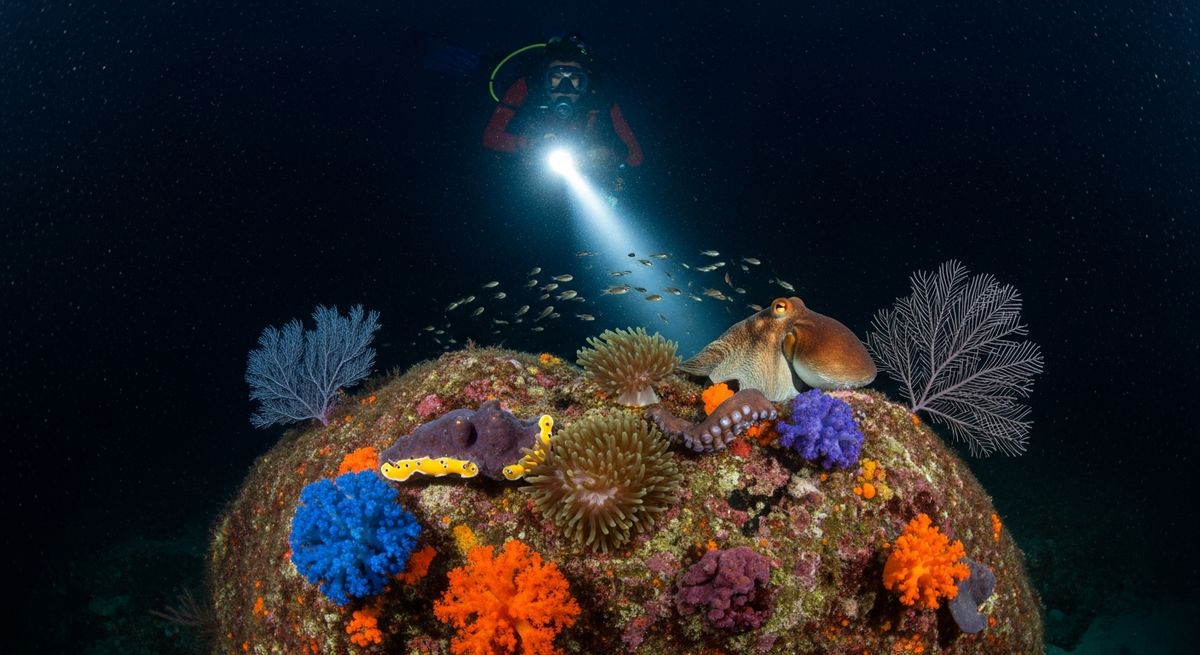
Mosquera is a funny little sliver of sand, more a long shoal than an island, but don’t let its unassuming surface fool you. Underwater, it’s a proper shark party, and one of our favourite spots to just hang out and watch the show. We’ve drifted over the sandy flats here, completely surrounded by dozens of Galapagos sharks, sometimes hundreds. They’re curious, circling close, giving you a good look at their streamlined bodies. Beyond the sharks, we always keep an eye out for the resident morays, particularly the Masked and Hardtail varieties tucked into any rocky outcrops. You might also catch a Batfish shuffling along the bottom, or schools of Black Striped Salema darting past. The currents can pick up here, so it’s often a drift dive, which suits us just fine. Just relax and let the water carry you through the shark patrol. It’s a site that really delivers on that classic Galápagos big animal experience, ideal for divers who appreciate being truly immersed in the action, not just observing it.
Safety Notes
Strong currents typical this month (avg 36 cm/s). Good buoyancy control essential.
Nearest Dive Centres to Mosquera
Dive shops near Mosquera
M/V Tiburon Explorer
GALAPAGOS AGGRESSOR III
Dive Center Silberstein
Galapagos People
Macarron Scuba Divers
Galápagos Deep
Reviews for Mosquera
Conditions
Ocean conditions, forecast and tides for Mosquera
Mosquera Ocean Conditions
Monthly averages for Mosquera, sourced from Open-Meteo marine data + Copernicus Marine (EU) - nearest station: Open-Meteo marine grid (-0.32, -90.55) (15km away)
October Averages
Sea Temperature
23°C
74°F · Range: 20.2–26°C
Current Speed
36.24 cm/s
Direction: SW (230.6°)
Chlorophyll-a
0.886 mg/m³
Moderate productivity
Salinity
33.88 PSU
Based on 4 years of monitoring data · Data sources: Open-Meteo marine data + Copernicus Marine (EU)
Plan & book
Ways to dive Galápagos Islands, from day trips to liveaboards.
Day trips & courses
via GetYourGuideGuided dives, courses and snorkel trips with instant booking.
Find dive trips in Galápagos IslandsPlaces to stay
via Booking.comHotels and dive resorts near Galápagos Islands.
Search stays in Galápagos IslandsDive insurance
Most travel insurance excludes or limits scuba. Check what you need before you go.
Dive insurance explainedPartner links: we may earn a commission if you book, at no extra cost to you. How we make money
Where to Stay near Mosquera
Prices from Booking.com. We may earn a commission at no extra cost to you.