North Seymour
Protected Area
Galápagos
Why dive here
With 131+ marine species recorded in the area - including dolphins, humpback whales, seals & sea lions, sea turtles and sperm whales - North Seymour offers some of Galápagos Islands's richest diving. Water ranges 23-28°C, warmest February, March, April.
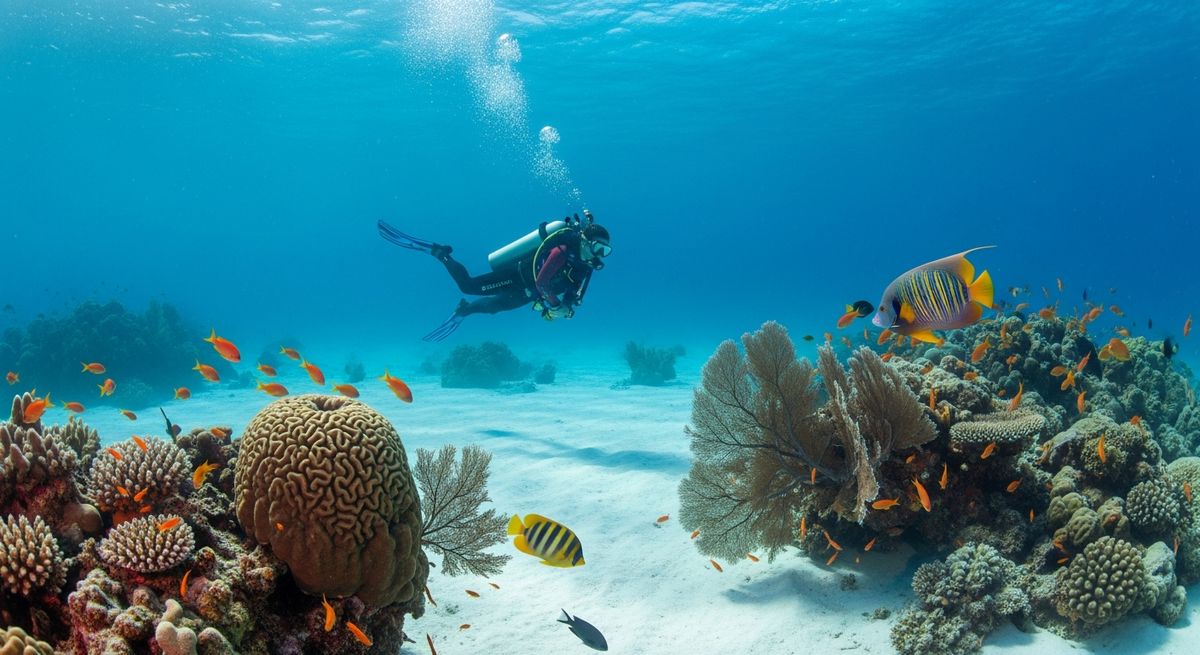
North Seymour is a gentle drift dive, often a good warm-up for a longer Galápagos trip. We drop in near the island, usually finding ourselves carried along a rocky reef that slopes down to a sandy bottom around 18 metres. It’s a pleasant ride, and you'll typically spot white and blacktip reef sharks cruising past, along with the occasional green sea turtle munching on algae. Keep an eye out for schools of spotted eagle rays gliding by in formation; we’ve had some cracking encounters with them here. Barracuda, snapper, and octopi are also common, tucked into the rock crevices. It's a relaxed dive, suitable for most experience levels, especially if you're keen to get comfortable with drift diving.
Typical North Seymour Dive Profile
Illustrative profile based on site depth and type. Actual dive profiles vary - always follow your dive computer and training.
Safety Notes
Strong currents typical this month (avg 36 cm/s). Good buoyancy control essential.
Nearest Dive Centres to North Seymour
Dive shops near North Seymour
M/V Tiburon Explorer
GALAPAGOS AGGRESSOR III
Dive Center Silberstein
Galapagos People
Macarron Scuba Divers
Galápagos Deep
Reviews for North Seymour
Conditions
Ocean conditions, forecast and tides for North Seymour
North Seymour Ocean Conditions
Monthly averages for North Seymour, sourced from Open-Meteo marine data + Copernicus Marine (EU) - nearest station: Open-Meteo marine grid (-0.32, -90.55) (15km away)
October Averages
Sea Temperature
23°C
74°F · Range: 20.2–26°C
Current Speed
36.24 cm/s
Direction: SW (230.6°)
Chlorophyll-a
0.886 mg/m³
Moderate productivity
Salinity
33.88 PSU
Based on 4 years of monitoring data · Data sources: Open-Meteo marine data + Copernicus Marine (EU)
Plan & book
Ways to dive Galápagos Islands, from day trips to liveaboards.
Day trips & courses
via GetYourGuideGuided dives, courses and snorkel trips with instant booking.
Find dive trips in Galápagos IslandsPlaces to stay
via Booking.comHotels and dive resorts near Galápagos Islands.
Search stays in Galápagos IslandsDive insurance
Most travel insurance excludes or limits scuba. Check what you need before you go.
Dive insurance explainedPartner links: we may earn a commission if you book, at no extra cost to you. How we make money
Where to Stay near North Seymour
Prices from Booking.com. We may earn a commission at no extra cost to you.