BP GUAZAR
Protected Area
Puntilla de Santa Elena
Why dive here
With 145+ marine species recorded in the area - including blue whales, dolphins, humpback whales, manta rays and mobula rays (devil rays) - BP GUAZAR offers some of Isla de la Plata's richest wreck diving. Water ranges 25-28°C, warmest February, March, April.
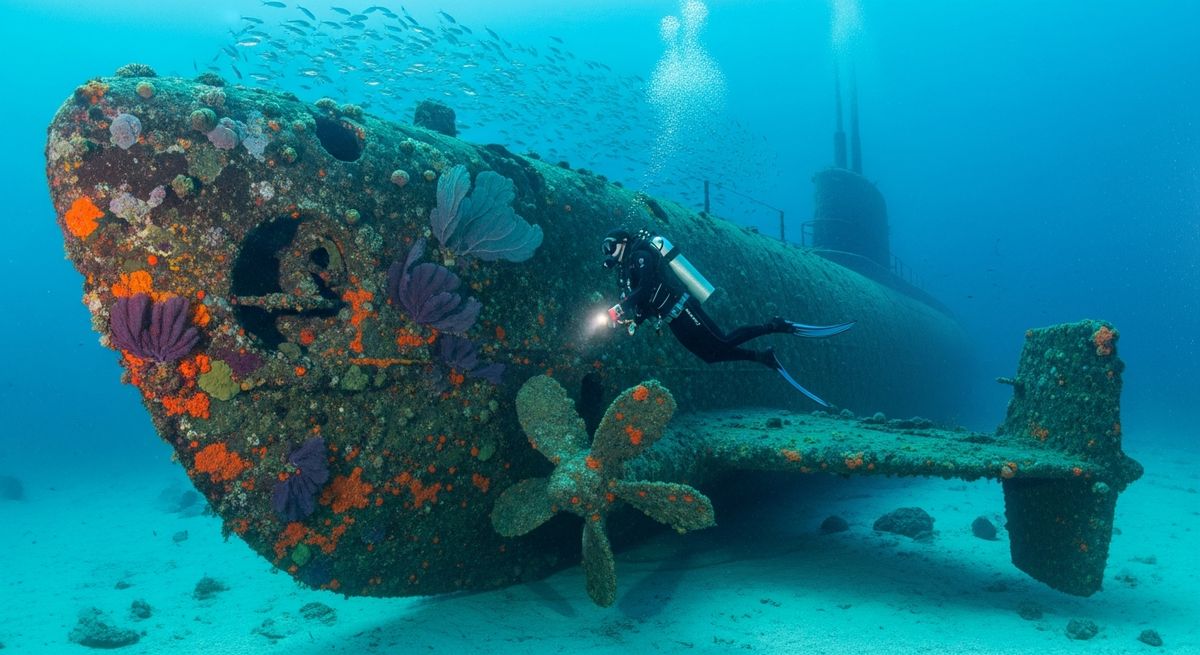
The BP GUAZAR is a wreck that truly tells a story, and we love it for its raw, exposed character. Lying in just 2m of water off Isla de la Plata, it’s less a dive and more a snorkel or free-dive exploration, but don’t let the shallow depth fool you. This isn't some pristine, intact vessel; it’s a skeleton, picked clean by years of waves and weather, with jagged metal ribs reaching for the surface. We find it surprisingly dramatic. You’ll spend your time here exploring the remnants of the hull, watching how the light plays through the gaps and reflects off the sand below. The real magic happens when you spot the marine life that has claimed this wreck. We often see huge schools of grunts and snappers darting between the decaying beams, and the occasional octopus tucked into a shadowy nook. It’s an easy, fascinating spot for snorkelers and freedivers, especially on a calm day when the water is flat and you can really take your time piecing together the ship's past. Our pick for a relaxed afternoon.
Typical BP GUAZAR Dive Profile
Illustrative profile based on site depth and type. Actual dive profiles vary - always follow your dive computer and training.
Safety Notes
Wreck site - avoid penetration without wreck diving certification. Watch for sharp metal and entanglement hazards.
BP GUAZAR Wreck History
Vessel Type
tanker
Cause
unknown
Very little is known about the history of the BP Guazar, which lies in the waters of Isla de la Plata, Ecuador. The name strongly suggests a connection to the oil company British Petroleum (BP), indicating it was likely a tanker or support vessel. How and when it sank remains a mystery. Lying in just two meters of water, the wreck is heavily broken up by constant wave action and has been deemed a navigational hazard, hence its 'Dangerous' classification.
For divers and snorkelers, the BP Guazar offers a unique and accessible experience. Its extreme shallow depth means it can be explored with minimal equipment and bottom time is virtually unlimited. The wreckage is scattered across the seabed, creating an artificial reef that teems with the vibrant marine life for which Isla de la Plata is famous. While not a classic penetration dive, exploring the skeletal remains of this mysterious vessel amidst schools of tropical fish makes for a memorable and unusual underwater adventure.
Nearest Dive Centres to BP GUAZAR
Dive shops near BP GUAZAR
View all dive centres in Isla de la PlataReviews for BP GUAZAR
Conditions
Ocean conditions, forecast and tides for BP GUAZAR
BP GUAZAR Ocean Conditions
Monthly averages for BP GUAZAR, sourced from Open-Meteo marine data + Copernicus Marine (EU) - nearest station: Open-Meteo marine grid (-1.94, -80.79) (26km away)
October Averages
Sea Temperature
25°C
76°F · Range: 23.5–25.9°C
Current Speed
2.24 cm/s
Direction: NE (63.4°)
Chlorophyll-a
0.733 mg/m³
Moderate productivity
Salinity
33.26 PSU
Based on 4 years of monitoring data · Data sources: Open-Meteo marine data + Copernicus Marine (EU)
Plan & book
Ways to dive Isla de la Plata, from day trips to liveaboards.
Day trips & courses
via GetYourGuideGuided dives, courses and snorkel trips with instant booking.
Find dive trips in Isla de la PlataPlaces to stay
via Booking.comHotels and dive resorts near Isla de la Plata.
Search stays in Isla de la PlataDive insurance
Most travel insurance excludes or limits scuba. Check what you need before you go.
Dive insurance explainedPartner links: we may earn a commission if you book, at no extra cost to you. How we make money
Where to Stay near BP GUAZAR
Prices from Booking.com. We may earn a commission at no extra cost to you.