Diving in Isla de la Plata
Why dive here
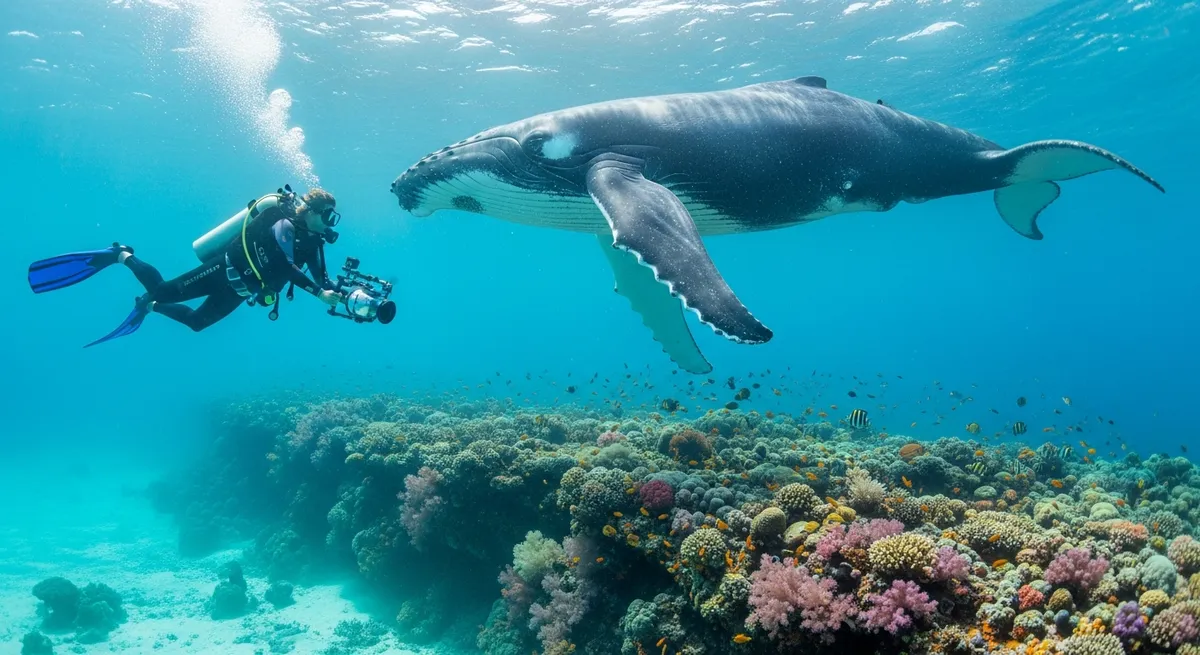
Isla de la Plata offers some of Ecuador's richest diving, with 145+ marine species recorded in the area - including blue whales, dolphins, humpback whales, manta rays and mobula rays (devil rays). Water ranges 25-28°C, warmest February, March, April.
Isla de la Plata, often called the ‘Poor Man’s Galápagos’, absolutely lives up to the nickname. We love it for the sheer abundance, especially between June and October when the humpback whales are migrating. Hearing their songs underwater, sometimes feeling the vibrations through your chest, is something else. Dive sites here are mostly reef, with a few wrecks, and currents can be a factor, so listen to your guide. We’ve had dives where the current just carried us along past massive schools of Cortez chub and blunthead triggerfish. Keep an eye out for the smaller stuff too, like longtailed jawfish peeking out from their burrows. Visibility can vary, but on a good day, you’ll see sea lions playfully spiralling around you. And those manta rays? They’re magnificent, gliding through the blue, often in groups. We’d suggest going early in the morning to beat any potential crowds and to catch the marine life at its most active. It’s a truly wild dive, a proper adventure.
Isla de la Plata Dive Site Map
Dive sites and dive centres in Isla de la Plata
Isla de la Plata Dive Sites
25 dive sites in Isla de la Plata
AZOREANA
The Azoreana wreck at Isla de la Plata is something else, especially if you’re a diver who loves a good story. It’s a fishing vessel, not some grand ocean liner, and it sits in a ridiculously shallow 4 metres of water. We love that it’s right there, practically begging to be explored, and you can spend a solid chunk of a dive just poking around its remains. What you'll find here is a tangled mess of metal, masts, and rigging, all draped in a thick carpet of life. The shallow depth means sunlight penetrates everywhere, illuminating schools of snapper that dart in and out of the hull, and we’ve spotted moray eels peeking from every crevice. Our favourite detail is the way the light filters through the structure, making the whole site feel a bit eerie, a bit magical. It's an ideal spot for those who enjoy taking their time, photographers will have a field day with the ambient light, and it’s perfectly suited for extended bottom times without worrying about deco limits. Just watch for surge on choppier days, it can really move you around in such shallow water.
BLACK SAND I
Black Sand I isn't a colourful reef, but we love it for its moody, almost eerie charm. This is a wreck dive, pure and simple, and it delivers. We’re talking about a bulk carrier, built in the US back in ‘71, now resting easy at 11 metres. It sat at anchor for two years before finally going down, making it more of a gentle sinking than a dramatic end. You’ll find its masts still reaching up, skeletal fingers breaking the surface on calm days. Below, the hull is a dark silhouette against the sand, and it’s surprisingly intact, considering its age. The real magic happens inside, or rather, on what’s left of the structure. The nooks and crannies are packed with life: schools of grunts drift through the cargo holds, and often, we’ve spotted giant hawkfish perched on beams, watching us pass. Look closely at the metal plates and you’ll see delicate nudibranchs, tiny pops of colour against the dark steel. It’s a photographer's dream for wide-angle shots with an atmospheric feel. This site suits divers who appreciate history and don't need a riot of colour to be captivated.
BON BINI
Bon Bini is a wreck dive, pure and simple, and we absolutely love it for that. She’s a steamship, 68 metres long, abandoned and lost years ago near Posorja while trying to enter Guayaquil’s port. Now, she rests upright in a manageable 10 metres of water. We've explored her bow to stern, feeling the rough texture of her rusted hull, the currents gently nudging us along her length. What you get here is atmosphere. The visibility can be a bit variable, sometimes a silty green, other times a clearer blue, but it always adds to the mystique. Sunlight filters down, illuminating schools of grunts and snappers that have made the Bon Bini their home, darting in and out of the skeletal remains of her superstructure. We've often found a green sea turtle or two just hanging out, occasionally a stingray gliding silently over the sand nearby. It’s an easy, rewarding dive for anyone who enjoys history and the way the ocean reclaims things. We’d suggest going early in the morning for the calmest conditions before the winds pick up.
BP GUAZAR
The BP GUAZAR is a wreck that truly tells a story, and we love it for its raw, exposed character. Lying in just 2m of water off Isla de la Plata, it’s less a dive and more a snorkel or free-dive exploration, but don’t let the shallow depth fool you. This isn't some pristine, intact vessel; it’s a skeleton, picked clean by years of waves and weather, with jagged metal ribs reaching for the surface. We find it surprisingly dramatic. You’ll spend your time here exploring the remnants of the hull, watching how the light plays through the gaps and reflects off the sand below. The real magic happens when you spot the marine life that has claimed this wreck. We often see huge schools of grunts and snappers darting between the decaying beams, and the occasional octopus tucked into a shadowy nook. It’s an easy, fascinating spot for snorkelers and freedivers, especially on a calm day when the water is flat and you can really take your time piecing together the ship's past. Our pick for a relaxed afternoon.
DARWIN
Darwin, a wreck sitting in just seven metres of water off Isla de la Plata, is one of our favourite shallow dives in Ecuador. It’s not about grand coral formations here, but the sheer life that’s colonised this old motor vessel. We love dropping onto the deck and seeing schools of grunts and snappers hanging thick over the remains of the superstructure. What makes Darwin so good is how accessible it is. You can spend a whole hour just finning slowly around the engine room, peering into the shadowy spaces where lobsters tuck themselves away. Look closely and you’ll find nudibranchs, often some vibrant colours, inching along the metal. We’ve seen octopuses here too, flattening themselves against the hull, perfectly camouflaged. It’s a site for divers who enjoy taking their time, exploring the nooks and crannies of a historical vessel that’s now a thriving artificial reef. Great for photographers, too, given the good light penetration and the way the fish gather.
Dive and Surf
Dive and Surf, off Isla de la Plata, offers a reliable slice of Eastern Pacific diving. We’ve found it’s a good spot for spotting some of the bigger pelagics, with whale shark encounters not uncommon, especially in the cooler months. You might see a few different turtle species here too, like olive ridleys or green turtles, navigating through schools of lemoneye grunt and Atlantic bumper. It’s a solid dive for those looking for a taste of what Ecuador’s coast has to offer, without the more challenging currents found at other sites.
DON VICTOR
Don Victor isn't your typical wreck dive, but we love it for its quirky charm and shallow accessibility. This is a mast, or what’s left of one, sticking out of the water just off Isla de la Plata, a testament to a ship that met its end here years ago. It’s barely a few metres deep, really, more of a snorkel site than a dive, but it’s fantastic for those looking for something different, especially if you’re into macro life and bird photography. You’ll find yourself floating above the submerged structure, watching sergeant majors dart in and out of the metalwork, their scales glinting in the sunlight. Parrotfish graze lazily on the algae coating the remains. Above water, the mast is a popular perch for blue-footed boobies and frigatebirds, so bring your wide-angle lens for some split shots. It’s a gentle spot, usually without much current, perfect for a relaxed dip after a more demanding dive. We’d suggest going in the morning before the day boats get too busy.
El Pelado
El Pelado, off Isla de la Plata, is a good pick for divers keen to see some bigger stuff. We’ve often spotted mobula rays cruising by, and it’s a reliable spot for green sea turtles munching on the reef. The currents here can be a bit lively, making it more suitable for divers comfortable with drift diving, but the pay-off is usually worth the effort. It’s a solid option if you’re looking for pelagics rather than intricate coral.
El Pelado / Islote El Pelado
El Pelado often brings in the bigger stuff, especially during the plankton blooms. We’ve seen manta rays cruising the walls here, and sometimes schools of hammerheads pass through deeper. It’s a drift dive, so good buoyancy helps, and it’s best for divers comfortable with some current looking for pelagics.
Isla Salango
Isla Salango, near Isla de la Plata, offers a look at coastal Ecuadorian diving. We've seen large schools of jacks here, often with green sea turtles cruising by. The currents can pick up, making it a better spot for divers comfortable with a drift, but it’s generally a relaxed outing. It's a solid choice for an afternoon dive if you’re already in the area.
Isla Salango
Isla Salango often gets overshadowed by its larger neighbour, Isla de la Plata, but we think that’s a mistake. This little island packs a surprising punch, especially for those of us who appreciate the smaller, more unusual stuff. We’ve had some truly fantastic dives here, the kind where you spend an hour in one spot just watching the rock crevices. Our favourite part is the sheer density of fish life in the nooks and crannies. You’ll spot Cortez Angelfish zipping around the rocks, and if you’re patient, a Beaubrummel or two peeking out. We’ve found the Pacific Mutton Hamlet here more often than anywhere else, and the Cominate Sea Catfish are always a curious sight. The reef isn’t about huge dramatic drop-offs; it’s more about intricate rock formations and swim-throughs, perfect for macro enthusiasts and photographers. Look for the Hourglass Morays tucked away, and keep an eye out for a Flat Tivela on the sandy patches. We’ve even been lucky enough to spot a Leatherback Sea Turtle cruising past the shallows. Currents here can be mild to moderate, making it a good spot for divers comfortable with a bit of a drift. The visibility can vary, but on a good day, it’s a vibrant, buzzing environment. It’s a great choice if you’re looking for something a bit quieter, away from the bigger boats, and you enjoy really taking your time to explore the details.
Islas Los Ahorcados
Islas Los Ahorcados, just off Isla de la Plata, is one of those places that genuinely surprises you. We've always found the visibility here to be better than expected, often pushing 15-20 meters on a good day, especially in the late morning. It’s a series of rocky islets that drop down, creating channels and small overhangs, giving you plenty to explore. What really gets us excited about Los Ahorcados is the sheer density of fish. We're talking about huge schools of barberfish and surgeonfish that just swirl around you, almost blocking out the sun at times. Keep an eye on the bottom for those rarer finds; we've spotted Pacific Fat Sleepers tucked into crevices and even a Chilean Angel Shark resting on the sand – a real treat. We also love looking for the Hawksbill Turtles here, often just cruising by. This site is a great pick for divers who appreciate a busy, lively reef and don't mind a little current to keep things interesting.
Show all 25 dive sites in Isla de la Plata
Isla de la Plata Dive Centres
5 dive shops and operators in Isla de la Plata
Ocean Wildlife in Isla de la Plata
145 species recorded in Isla de la Plata
Isla de la Plata Daylight & Sunrise/Sunset
Sunrise and sunset times for Isla de la Plata, calculated from coordinates
Today - Sunday 11 October
Sunrise
06:06
Sunset
18:14
Daylight
12h 9m
Golden Hour
17:47
First light (dawn) at 05:45 · Last light (dusk) at 18:35
Monthly Averages
| Month | Sunrise | Sunset | Daylight |
|---|---|---|---|
| Jan | 06:25 | 18:39 | 12h 13m |
| Feb | 06:32 | 18:43 | 12h 11m |
| Mar | 06:29 | 18:36 | 12h 7m |
| Apr | 06:21 | 18:25 | 12h 4m |
| May | 06:19 | 18:20 | 12h 2m |
| JunShortest | 06:23 | 18:24 | 12h 0m |
| Jul | 06:28 | 18:29 | 12h 1m |
| Aug | 06:26 | 18:29 | 12h 3m |
| Sep | 06:16 | 18:22 | 12h 6m |
| OctNow | 06:04 | 18:13 | 12h 9m |
| Nov | 06:01 | 18:14 | 12h 12m |
| DecLongest | 06:11 | 18:25 | 12h 14m |
Times are approximate local times based on longitude. Actual times may vary slightly depending on the exact timezone observed in Isla de la Plata.
Where to Stay near Isla de la Plata
Prices from Booking.com. We may earn a commission at no extra cost to you.
Marine Protected Areas near Isla de la Plata
16 protected areas near Isla de la Plata - please respect local regulations when diving
Cantagallo - Machalilla
Puerto Cabuyal - Punta San Clemente
Puntilla de Santa Elena
Bajo Cope
Isla Santa Clara
Pacoche
Machalilla
El Pelado
Manglares El Morro
Zona Marina Parque Nacional Machalilla
Islas Corazón y Las Islas Fragatas
Isla Santay
Showing 12 largest of 16
Getting to Isla de la Plata
Salinas/La Libertad
Guayaquil
Quito
Plan & book
Ways to dive Isla de la Plata, from day trips to liveaboards.
Day trips & courses
via GetYourGuideGuided dives, courses and snorkel trips with instant booking.
Find dive trips in Isla de la PlataPlaces to stay
via Booking.comHotels and dive resorts near Isla de la Plata.
Search stays in Isla de la PlataDive insurance
Most travel insurance excludes or limits scuba. Check what you need before you go.
Dive insurance explainedPartner links: we may earn a commission if you book, at no extra cost to you. How we make money