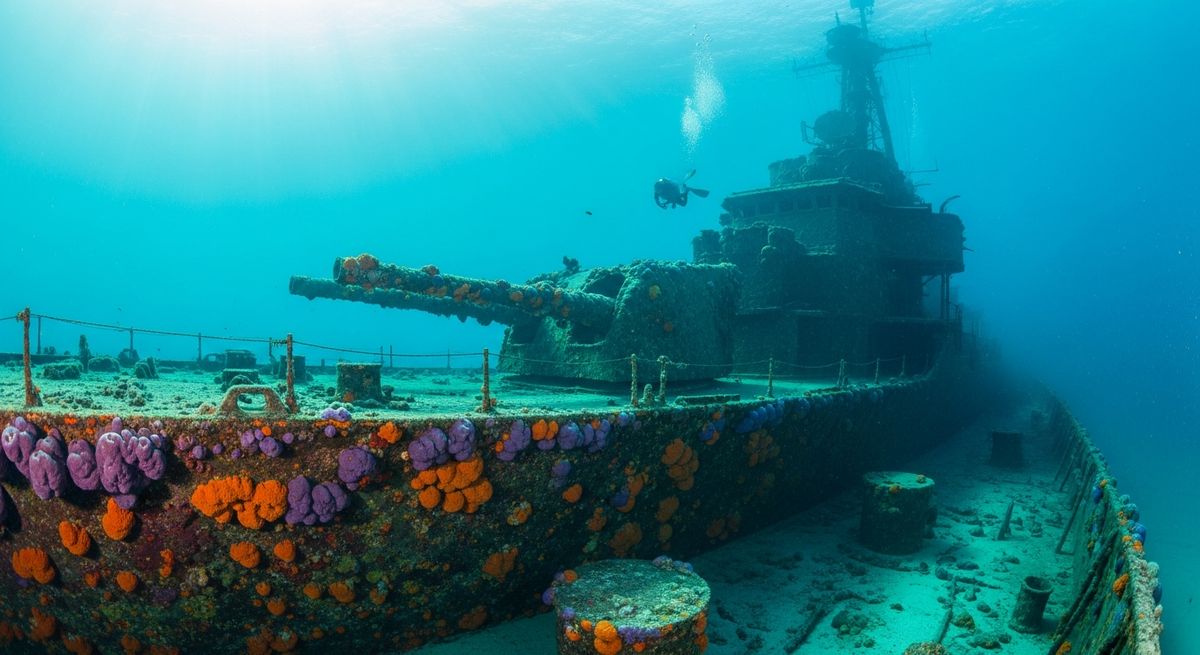
Anchor Wreck
Protected Area
Bali Barat
Why dive here
With 515+ marine species recorded in the area - including barracuda, blue-spotted stingrays, bull sharks, giant moray eels and manta rays - Anchor Wreck offers some of Bali's richest wreck diving. Water ranges 29-31°C, warmest April, May, November.
The Anchor Wreck is one of those sites we always try to fit in when we're diving Bali, especially if we've got a day to explore Amed's coastline. It’s a fishing boat, maybe 20 metres long, sitting upright on a sandy slope. The interesting bit is how completely it's been taken over by the reef. There are giant gorgonian fans perched on the bow, big schools of glassfish shimmering in the holds, and we've even seen pygmy seahorses tucked into the coral branches. What makes it a standout for us isn't just the wreck itself, but the way light plays through the water here, particularly in the mornings. You get these shafts of sunlight cutting through, illuminating all the soft corals and sponges that have plastered themselves to the hull. Keep an eye out for resident lionfish sheltering under ledges and moray eels poking their heads out from inside the engine room. It's a relaxed dive, usually minimal current, so it’s perfect for photographers or anyone who just wants to take their time exploring a smaller, intimate wreck. Best to hit it early before the day boats get too busy.
Typical Anchor Wreck Dive Profile
Illustrative profile based on site depth and type. Actual dive profiles vary - always follow your dive computer and training.
Safety Notes
Wreck site - avoid penetration without wreck diving certification. Watch for sharp metal and entanglement hazards.
Anchor Wreck Wreck History
Vessel Type
unknown
Cause
unknown
The "Anchor Wreck" off the coast of Bali is a dive site shrouded in mystery. The vessel's name, origin, and the story of its sinking have been lost to time, leaving only its most prominent feature-a large, coral-encrusted anchor-as a clue to its past. The anchor marks the start of a vibrant and dramatic underwater landscape, making it a favorite among local divers and visitors alike.
Beginning in a shallow, sunlit area of soft corals at just 5 meters, the site is perfect for all levels of divers. From there, a stunning wall plunges to a depth of approximately 35 meters. This vertical drop is a breathtaking canvas of marine life, covered in massive gorgonian sea fans, colorful sponges, and a diverse array of hard and soft corals. The currents that sweep past the wall bring nutrients that attract schools of fish, making every descent a dynamic and captivating experience.
Nearest Dive Centres to Anchor Wreck
Dive shops near Anchor Wreck
Banyuwangi Diving School
Extra Divers Naya Gawana-Bali
Nemo Diving
Bali Ocean Reef Dive Center
Bali Diving Academy Pemuteran
Easy Divers Bali
Reviews for Anchor Wreck
Conditions
Ocean conditions, forecast and tides for Anchor Wreck
Anchor Wreck Ocean Conditions
Monthly averages for Anchor Wreck, sourced from Open-Meteo marine data + Copernicus Marine (EU) - nearest station: Open-Meteo marine grid (-7.5, 113.18) (20km away)
October Averages
Sea Temperature
30°C
86°F · Range: 28.3–31.6°C
Current Speed
4 cm/s
Direction: E (90°)
Salinity
32.94 PSU
Based on 4 years of monitoring data · Data sources: Open-Meteo marine data + Copernicus Marine (EU)
Plan & book
Ways to dive Bali, from day trips to liveaboards.
Day trips & courses
via GetYourGuideGuided dives, courses and snorkel trips with instant booking.
Find dive trips in BaliPlaces to stay
via Booking.comHotels and dive resorts near Bali.
Search stays in BaliDive insurance
Most travel insurance excludes or limits scuba. Check what you need before you go.
Dive insurance explainedPartner links: we may earn a commission if you book, at no extra cost to you. How we make money
Where to Stay near Anchor Wreck
Prices from Booking.com. We may earn a commission at no extra cost to you.