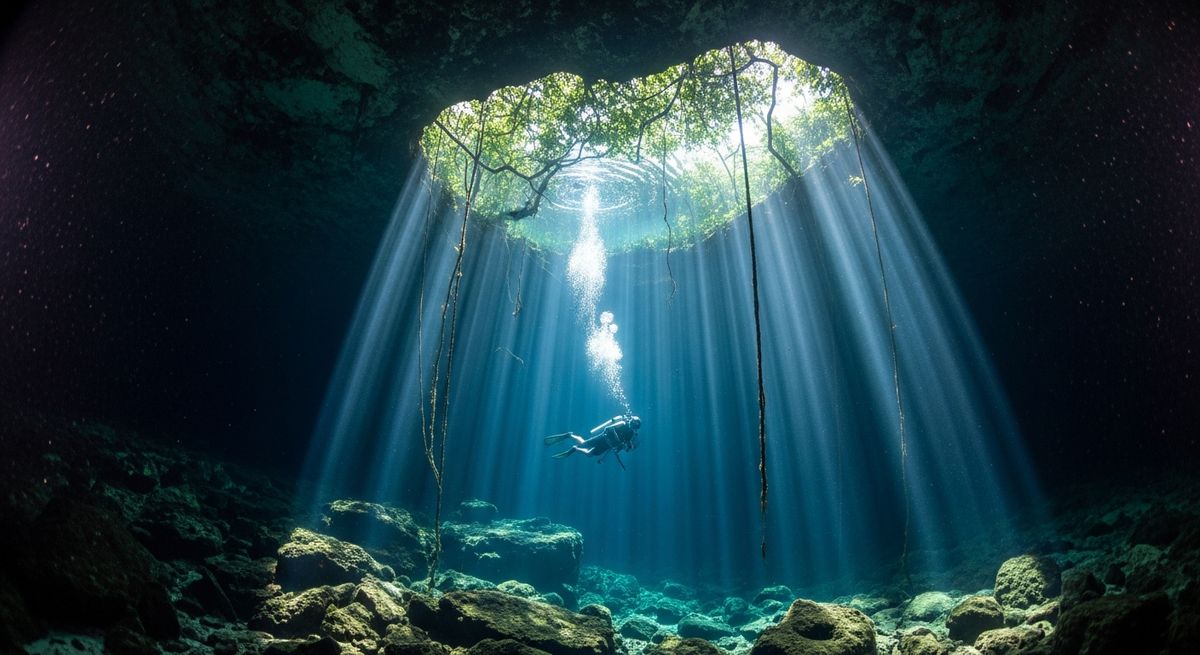
Anchor Wreck
Protected Area
Bali Barat
Why dive here
With 515+ marine species recorded in the area - including barracuda, blue-spotted stingrays, bull sharks, giant moray eels and manta rays - Anchor Wreck offers some of Bali's richest cenote diving. Water ranges 29-31°C, warmest April, May, November.
The Anchor Wreck is one of those sites that quietly delivers. It's not the biggest wreck in Bali, but we think it’s one of the most atmospheric. You start in a shallow, sandy patch at around five metres, which gives way to a gentle slope dotted with soft corals before you hit the main event. We’ve always found the visibility here to be reliably good, often pushing past 20 metres, which is a real bonus for photography. The wreck itself, a small wooden fishing boat, lies broken up across the slope, resting at its deepest point around 20 metres. It’s been down there long enough for the structure to become completely encrusted, a patchwork of orange and purple soft corals and some impressive sea fans. Look closely, and you’ll spot yellowstripe monocle bream schooling just above the deck, while red sea butterflyfish flit through the gaps. Our favourite part is peeking under the larger pieces of hull; it’s a good spot for finding moray eels tucked away, and sometimes a grumpy frogfish blending perfectly into the sponges. The resident banded sea krait often makes an appearance, too, slithering gracefully over the coral-covered timbers. This site is fantastic for macro lovers and photographers who appreciate a wreck that feels more like a living reef than an artificial structure. It’s generally a calm dive, making it suitable for newer divers looking for their first wreck experience without strong currents.
Typical Anchor Wreck Dive Profile
Illustrative profile based on site depth and type. Actual dive profiles vary - always follow your dive computer and training.
Safety Notes
Overhead environment - never enter without proper cave/cavern training, redundant equipment, and a guideline.
Nearest Dive Centres to Anchor Wreck
Dive shops near Anchor Wreck
Extra Divers Naya Gawana-Bali
Banyuwangi Diving School
Nemo Diving
Bali Ocean Reef Dive Center
Bali Diving Academy Pemuteran
Easy Divers Bali
Reviews for Anchor Wreck
Conditions
Ocean conditions, forecast and tides for Anchor Wreck
Anchor Wreck Ocean Conditions
Monthly averages for Anchor Wreck, sourced from Open-Meteo marine data + Copernicus Marine (EU) - nearest station: Open-Meteo marine grid (-7.5, 113.18) (20km away)
October Averages
Sea Temperature
30°C
86°F · Range: 28.3–31.6°C
Current Speed
4 cm/s
Direction: E (90°)
Salinity
32.94 PSU
Based on 4 years of monitoring data · Data sources: Open-Meteo marine data + Copernicus Marine (EU)
Plan & book
Ways to dive Bali, from day trips to liveaboards.
Day trips & courses
via GetYourGuideGuided dives, courses and snorkel trips with instant booking.
Find dive trips in BaliPlaces to stay
via Booking.comHotels and dive resorts near Bali.
Search stays in BaliDive insurance
Most travel insurance excludes or limits scuba. Check what you need before you go.
Dive insurance explainedPartner links: we may earn a commission if you book, at no extra cost to you. How we make money
Where to Stay near Anchor Wreck
Prices from Booking.com. We may earn a commission at no extra cost to you.