Blue Corner
Protected Area
Bali Barat
Why dive here
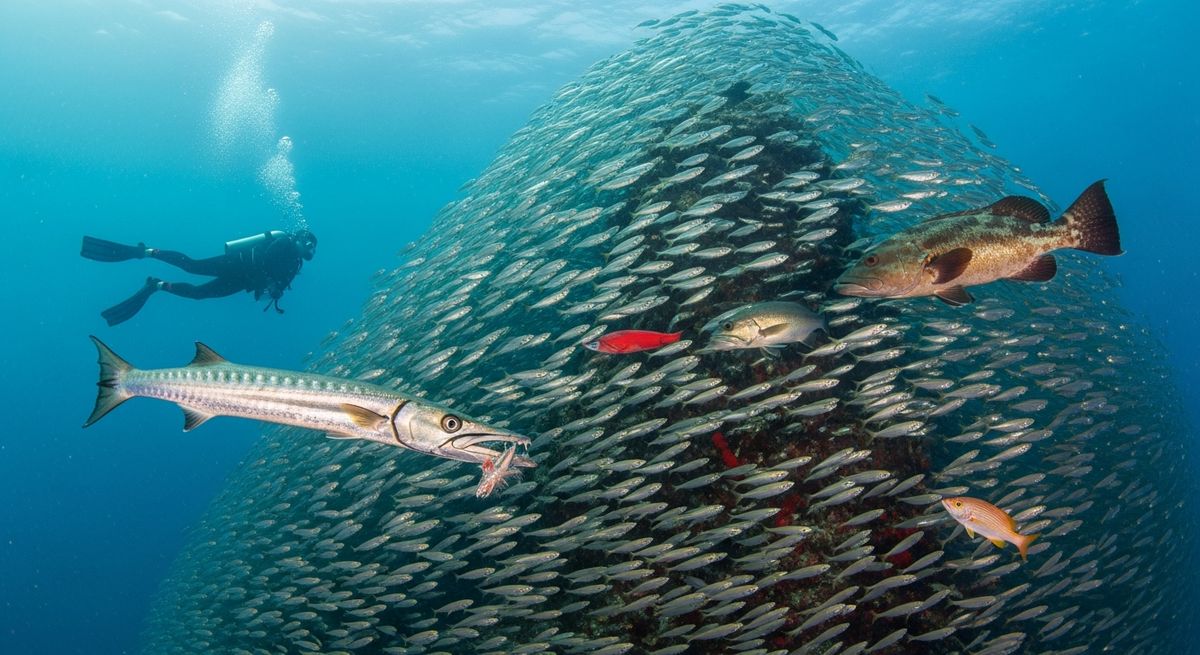
With 515+ marine species recorded in the area - including barracuda, blue-spotted stingrays, bull sharks, giant moray eels and manta rays - Blue Corner offers some of Bali's richest pinnacle diving. Water ranges 29-31°C, warmest April, May, November.
Blue Corner, just a quick boat ride east from the main drag, really shines on those days when the current picks up. We’re talking about a sloping coral garden here, running from a shallow 4 meters down to around 25. It's often billed as a macro photography spot, and sure, you’ll find plenty of damselfish, triggerfish, and nudibranchs tucked among the large sponges and hard corals. But for us, the real show starts when that conveyor belt of water gets moving. That’s when the bigger stuff cruises by. You'll often spot a reef shark or two patrolling the deeper edges. We’ve had some truly memorable dives here, just hanging in the blue, watching eagle rays glide past with that unmistakable wing-beat, or the occasional mola mola ghosting up from the depths in season. Visibility averages around 17 meters, which is decent enough to keep an eye on your buddies and soak in the vastness. It’s a site that rewards patience and a good drift, suited for those who appreciate both the tiny wonders and the possibility of a pelagic encounter.
Nearest Dive Centres to Blue Corner
Dive shops near Blue Corner
Extra Divers Naya Gawana-Bali
Nemo Diving
Easy Divers Bali
Bali Ocean Reef Dive Center
Masta Snorkeling
Bali Diving Academy Pemuteran
Reviews for Blue Corner
Conditions
Ocean conditions, forecast and tides for Blue Corner
Blue Corner Ocean Conditions
Monthly averages for Blue Corner, sourced from Open-Meteo marine data + Copernicus Marine (EU) - nearest station: Open-Meteo marine grid (-7.5, 113.18) (20km away)
October Averages
Sea Temperature
30°C
86°F · Range: 28.3–31.6°C
Current Speed
4 cm/s
Direction: E (90°)
Salinity
32.94 PSU
Based on 4 years of monitoring data · Data sources: Open-Meteo marine data + Copernicus Marine (EU)
Plan & book
Ways to dive Bali, from day trips to liveaboards.
Day trips & courses
via GetYourGuideGuided dives, courses and snorkel trips with instant booking.
Find dive trips in BaliPlaces to stay
via Booking.comHotels and dive resorts near Bali.
Search stays in BaliDive insurance
Most travel insurance excludes or limits scuba. Check what you need before you go.
Dive insurance explainedPartner links: we may earn a commission if you book, at no extra cost to you. How we make money
Where to Stay near Blue Corner
Prices from Booking.com. We may earn a commission at no extra cost to you.