Blue Lagoon
Protected Area
KK Karangasem
Why dive here
With 515+ marine species recorded in the area - including barracuda, blue-spotted stingrays, bull sharks, giant moray eels and manta rays - Blue Lagoon offers some of Bali's richest drift diving. Water ranges 29-31°C, warmest April, May, November.
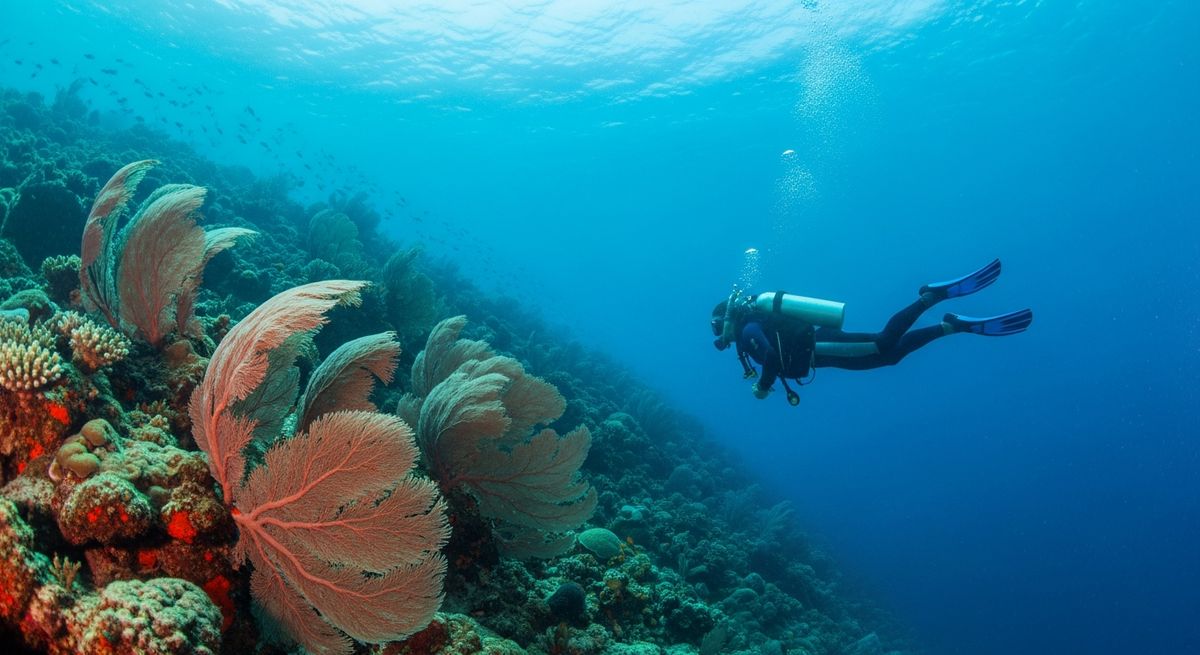
Bali's Blue Lagoon, just a quick boat ride from Padang Bai, offers a relaxed dive that’s often ideal for shaking off travel rust or getting comfortable in the water again. We've often found conditions to be calm and sheltered here, though don't let the "lagoon" name fool you – a bit of current can still sneak in, especially around the edges. Visibility can be a mixed bag; don’t come expecting Komodo levels, but it’s usually good enough for spotting the usual suspects. Look for the blue-spotted stingrays often resting on the sandy bottom, and keep an eye out for the colourful flashes of blue-ribbon wrasse and triangular butterflyfish darting through the coral patches. We’ve even seen green turtles munching on seagrass here. It's not a site for dramatic topography, but we've always enjoyed the easy pace and the chance to just drift and observe the smaller stuff. It’s a good choice for newer divers or those who prefer a less demanding experience.
Typical Blue Lagoon Dive Profile
Illustrative profile based on site depth and type. Actual dive profiles vary - always follow your dive computer and training.
Safety Notes
Drift dive - carry a surface marker buoy (SMB) and stay with your group. Brief the current direction before entry.
Reviews for Blue Lagoon
Conditions
Ocean conditions, forecast and tides for Blue Lagoon
Blue Lagoon Ocean Conditions
Monthly averages for Blue Lagoon, sourced from Open-Meteo marine data + Copernicus Marine (EU) - nearest station: Open-Meteo marine grid (-7.5, 113.18) (20km away)
October Averages
Sea Temperature
30°C
86°F · Range: 28.3–31.6°C
Current Speed
4 cm/s
Direction: E (90°)
Salinity
32.94 PSU
Based on 4 years of monitoring data · Data sources: Open-Meteo marine data + Copernicus Marine (EU)
Plan & book
Ways to dive Bali, from day trips to liveaboards.
Day trips & courses
via GetYourGuideGuided dives, courses and snorkel trips with instant booking.
Find dive trips in BaliPlaces to stay
via Booking.comHotels and dive resorts near Bali.
Search stays in BaliDive insurance
Most travel insurance excludes or limits scuba. Check what you need before you go.
Dive insurance explainedPartner links: we may earn a commission if you book, at no extra cost to you. How we make money
Where to Stay near Blue Lagoon
Prices from Booking.com. We may earn a commission at no extra cost to you.