BUANA SEJATI
Protected Area
PKK-003 Bangkalan
Why dive here
With 515+ marine species recorded in the area - including barracuda, blue-spotted stingrays, bull sharks, giant moray eels and manta rays - BUANA SEJATI offers some of Bali's richest wreck diving. Water ranges 29-31°C, warmest April, May, November.
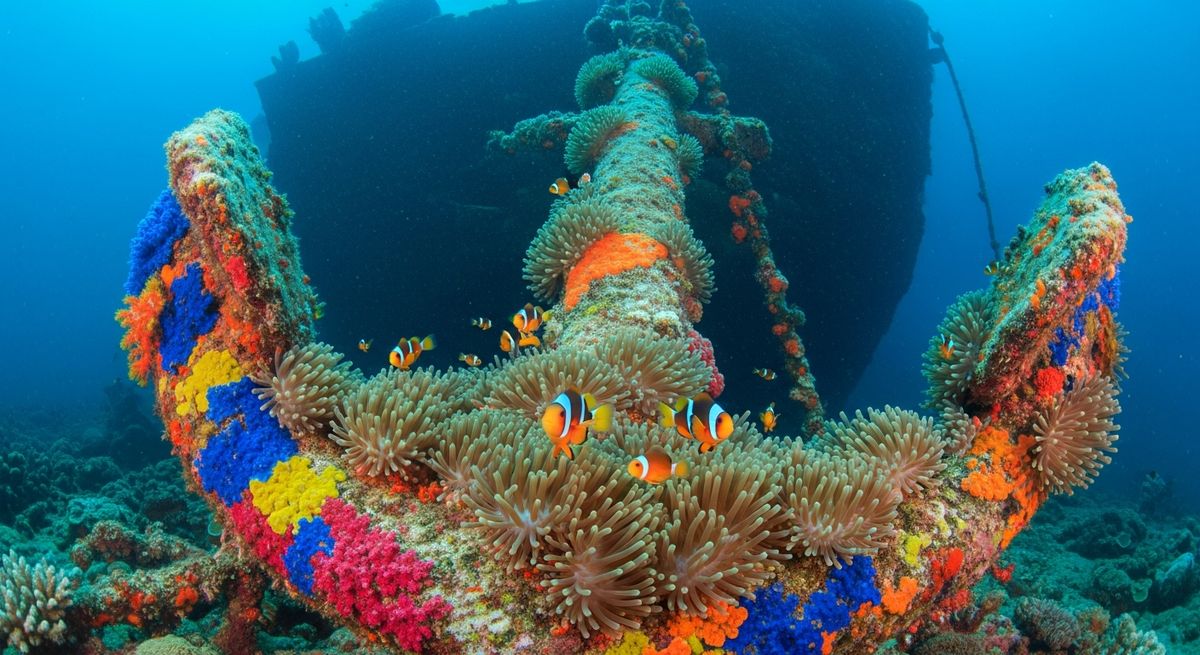
The Buana Sejati wreck is one of those dives that sticks with you, even if you’re not a hardcore wreck fanatic. We love that it’s still relatively intact, considering the strong currents it often faces. You’ll drop down onto the main deck at around 30 metres, where schooling fusiliers often swirl in such thick clouds they briefly blot out the sun. Our favourite part is navigating through the cargo holds; the light shafts filtering in create an almost ethereal glow, and you’ll often find giant moray eels peeking out from the darker corners. This isn’t a dive for beginners. The currents can be fierce, sweeping you along the deck if you're not careful, so good buoyancy control is essential. We’d suggest going with a guide who knows the site well, especially if you want to explore some of the slightly deeper, more sheltered parts of the wreck. Keep an eye out for nudibranchs on the superstructure and the occasional reef shark patrolling the perimeter. It’s a proper historical dive, full of atmosphere and an honest challenge.
Typical BUANA SEJATI Dive Profile
Illustrative profile based on site depth and type. Actual dive profiles vary - always follow your dive computer and training.
Safety Notes
Depth of 30m - Advanced Open Water certification recommended.
Wreck site - avoid penetration without wreck diving certification. Watch for sharp metal and entanglement hazards.
Always perform a 3-minute safety stop at 5m before surfacing.
BUANA SEJATI Wreck History
Vessel Type
unknown
Cause
unknown
Shrouded in mystery, the wreck of the "Buana Sejati" rests at 30 meters off the coast of Bali. Little is known about the vessel's history or the circumstances of its sinking, but its classification as a "Dangerous Wreck" makes it an intriguing and challenging dive for experienced adventurers. This designation suggests potential hazards such as sharp, twisted metal, entanglement risks from leftover lines or cargo nets, and possibly strong or unpredictable currents sweeping across the site.
For those with the requisite training and experience, the Buana Sejati offers a dive into the unknown. As you descend, the wreck's silhouette slowly emerges from the blue, its identity and final moments lost to time. Divers can explore the structure, now an artificial reef for Bali's vibrant marine life, but must maintain constant awareness of their surroundings. This is a dive that rewards caution and skill with a true sense of exploration and a glimpse into a forgotten piece of maritime history.
Nearest Dive Centres to BUANA SEJATI
Dive shops near BUANA SEJATI
View all dive centres in BaliReviews for BUANA SEJATI
Conditions
Ocean conditions, forecast and tides for BUANA SEJATI
BUANA SEJATI Ocean Conditions
Monthly averages for BUANA SEJATI, sourced from Open-Meteo marine data + Copernicus Marine (EU) - nearest station: Open-Meteo marine grid (-7.5, 113.18) (20km away)
October Averages
Sea Temperature
30°C
86°F · Range: 28.3–31.6°C
Current Speed
4 cm/s
Direction: E (90°)
Salinity
32.94 PSU
Based on 4 years of monitoring data · Data sources: Open-Meteo marine data + Copernicus Marine (EU)
Plan & book
Ways to dive Bali, from day trips to liveaboards.
Day trips & courses
via GetYourGuideGuided dives, courses and snorkel trips with instant booking.
Find dive trips in BaliPlaces to stay
via Booking.comHotels and dive resorts near Bali.
Search stays in BaliDive insurance
Most travel insurance excludes or limits scuba. Check what you need before you go.
Dive insurance explainedPartner links: we may earn a commission if you book, at no extra cost to you. How we make money
Where to Stay near BUANA SEJATI
Prices from Booking.com. We may earn a commission at no extra cost to you.