BUDI MURNI
Protected Area
PKK-003 Bangkalan
Why dive here
With 515+ marine species recorded in the area - including barracuda, blue-spotted stingrays, bull sharks, giant moray eels and manta rays - BUDI MURNI offers some of Bali's richest wreck diving. Water ranges 29-31°C, warmest April, May, November.
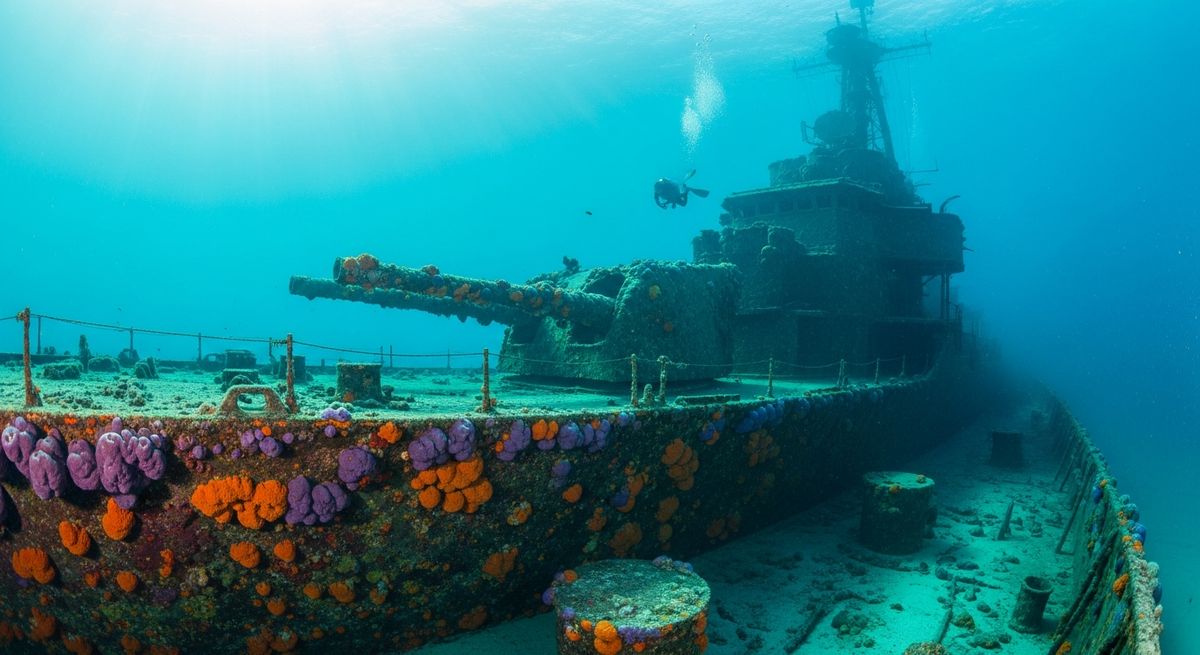
Budi Murni. There's a name that doesn't scream "amazing dive site," but trust us, this wreck is a quiet star in Bali's underwater line-up. It's a shallow ferry, sunk in 1992 after a collision in rough seas. We love it for how accessible it is, sitting upright at just 8 meters. You can spend a whole hour here, slowly circling, poking your head into the old passenger cabins. The wreck itself is a playground for macro life. Look closely at the deck, especially around the former bridge structure, and you'll spot nudibranchs, often several different species on a single sponge. Schools of yellow-striped snapper hover in the shade of the superstructure, and if you're patient, a grumpy stonefish might reveal itself camouflaged on a barnacle-encrusted beam. The visibility is usually decent, and because it's so shallow, you get fantastic natural light playing across the corroded metal. It’s perfect for new wreck divers or anyone who just wants a relaxed, interesting dive without the depth or current worries.
Typical BUDI MURNI Dive Profile
Illustrative profile based on site depth and type. Actual dive profiles vary - always follow your dive computer and training.
Safety Notes
Wreck site - avoid penetration without wreck diving certification. Watch for sharp metal and entanglement hazards.
BUDI MURNI Wreck History
Year Sunk
1992
Vessel Type
ferry
Cause
collision
The Budi Murni was an inter-island ferry that served the waters of Indonesia. Its career came to an abrupt and tragic end on July 6, 1992. While navigating the often-turbulent seas of the Bali Strait, the Budi Murni was involved in a serious collision with the Indonesian motor vessel Tjipta Rahardja. In the rough conditions, the damage proved fatal, and the ferry quickly succumbed to the sea, sinking beneath the waves.
Resting at a very accessible depth of just 8 meters, the Budi Murni is now an excellent wreck dive for novice divers and snorkelers in the Padang Bai area of Bali. Its shallow grave means it is bathed in natural light, accelerating the growth of a new coral reef on its superstructure. The wreck is broken up but provides a fascinating underwater playground, home to a burgeoning population of reef fish, moray eels, and countless macro critters. It serves as a perfect introduction to the world of wreck diving, combining recent history with the vibrant marine ecosystem of Bali.
Nearest Dive Centres to BUDI MURNI
Dive shops near BUDI MURNI
View all dive centres in BaliReviews for BUDI MURNI
Conditions
Ocean conditions, forecast and tides for BUDI MURNI
BUDI MURNI Ocean Conditions
Monthly averages for BUDI MURNI, sourced from Open-Meteo marine data + Copernicus Marine (EU) - nearest station: Open-Meteo marine grid (-7.5, 113.18) (20km away)
October Averages
Sea Temperature
30°C
86°F · Range: 28.3–31.6°C
Current Speed
4 cm/s
Direction: E (90°)
Salinity
32.94 PSU
Based on 4 years of monitoring data · Data sources: Open-Meteo marine data + Copernicus Marine (EU)
Plan & book
Ways to dive Bali, from day trips to liveaboards.
Day trips & courses
via GetYourGuideGuided dives, courses and snorkel trips with instant booking.
Find dive trips in BaliPlaces to stay
via Booking.comHotels and dive resorts near Bali.
Search stays in BaliDive insurance
Most travel insurance excludes or limits scuba. Check what you need before you go.
Dive insurance explainedPartner links: we may earn a commission if you book, at no extra cost to you. How we make money
Where to Stay near BUDI MURNI
Prices from Booking.com. We may earn a commission at no extra cost to you.