Deep Blue
Protected Area
Bali Barat
Why dive here
With 515+ marine species recorded in the area - including barracuda, blue-spotted stingrays, bull sharks, giant moray eels and manta rays - Deep Blue offers some of Bali's richest reef diving. Water ranges 29-31°C, warmest April, May, November.
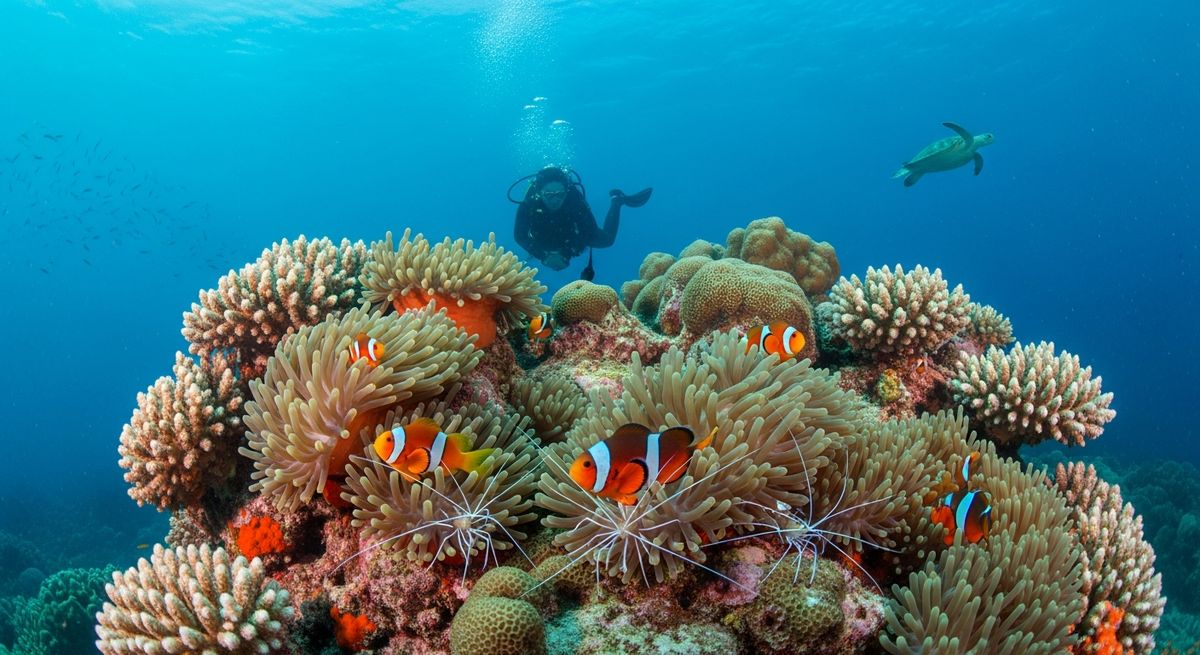
Deep Blue, just a short hop from Gawana Bay, is one of those sites we always recommend for a solid, rewarding dive without too much fuss. It's an easy five-minute boat ride, dropping you right onto a wall that starts around three metres and slopes down, though we usually keep it to 21m max here. The wall itself is lively, a proper hard coral garden as it merges eastwards. You'll spot plenty of staghorn corals clinging to the rock, creating little nooks for the smaller residents. Look closely and you might catch a belly-spotted pygmy-goby darting for cover, or a yellowstripe monocle bream cruising by. We’ve often seen twostripe eviotas peeking out from the coral, and the occasional orange convict reefgoby too. It's a relaxed drift along the wall, perfect for photographers who want to take their time, or anyone just wanting to unwind. Visibility averages a comfortable 19m, making it a great spot for enjoying the details.
Typical Deep Blue Dive Profile
Illustrative profile based on site depth and type. Actual dive profiles vary - always follow your dive computer and training.
Safety Notes
Depth of 25m - Advanced Open Water certification recommended.
Always perform a 3-minute safety stop at 5m before surfacing.
Nearest Dive Centres to Deep Blue
Dive shops near Deep Blue
Extra Divers Naya Gawana-Bali
Nemo Diving
Easy Divers Bali
Bali Ocean Reef Dive Center
Masta Snorkeling
Bali Diving Academy Pemuteran
Reviews for Deep Blue
Conditions
Ocean conditions, forecast and tides for Deep Blue
Deep Blue Ocean Conditions
Monthly averages for Deep Blue, sourced from Open-Meteo marine data + Copernicus Marine (EU) - nearest station: Open-Meteo marine grid (-7.5, 113.18) (20km away)
October Averages
Sea Temperature
30°C
86°F · Range: 28.3–31.6°C
Current Speed
4 cm/s
Direction: E (90°)
Salinity
32.94 PSU
Based on 4 years of monitoring data · Data sources: Open-Meteo marine data + Copernicus Marine (EU)
Plan & book
Ways to dive Bali, from day trips to liveaboards.
Day trips & courses
via GetYourGuideGuided dives, courses and snorkel trips with instant booking.
Find dive trips in BaliPlaces to stay
via Booking.comHotels and dive resorts near Bali.
Search stays in BaliDive insurance
Most travel insurance excludes or limits scuba. Check what you need before you go.
Dive insurance explainedPartner links: we may earn a commission if you book, at no extra cost to you. How we make money
Where to Stay near Deep Blue
Prices from Booking.com. We may earn a commission at no extra cost to you.