MANGGIS
Protected Area
PKK-003 Bangkalan
Why dive here
With 515+ marine species recorded in the area - including barracuda, blue-spotted stingrays, bull sharks, giant moray eels and manta rays - MANGGIS offers some of Bali's richest wreck diving. Water ranges 29-31°C, warmest April, May, November.
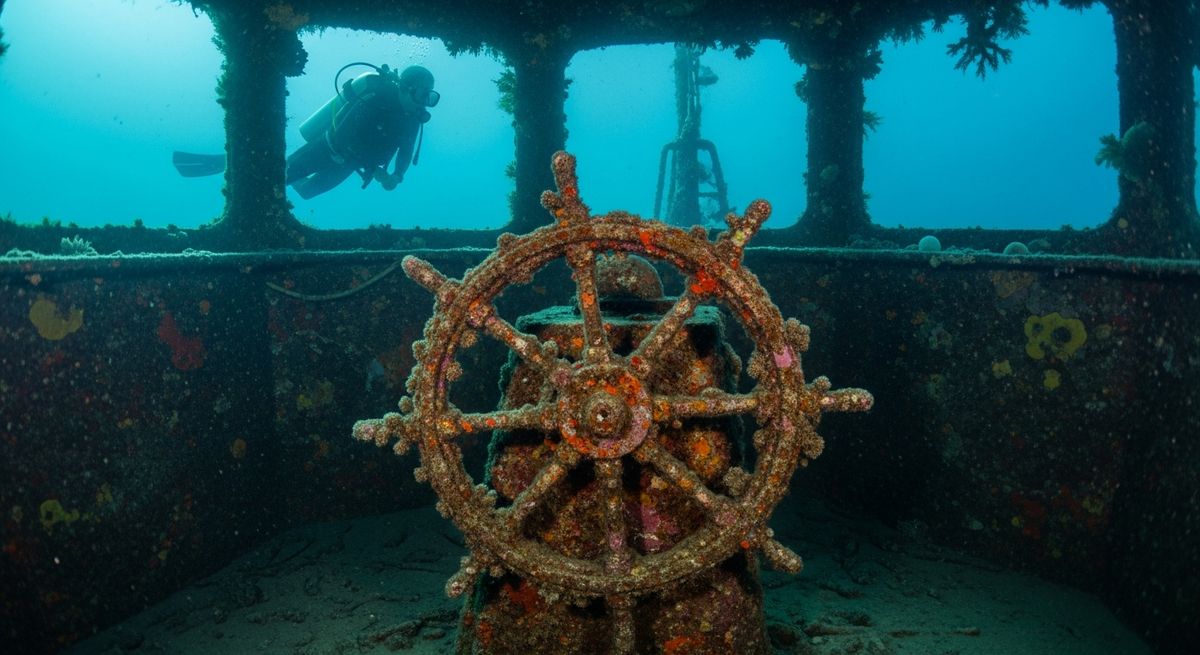
Manggis, for us, is one of those sites we always try to squeeze in, especially when we’re feeling a bit lazy and just want a simple, rewarding dive. It’s not deep, just 4 metres, but that’s the beauty of it – you can spend ages poking around without worrying about your computer. The wreck itself, a 65.5-metre motor vessel sunk in 1975, has settled nicely into the seabed, with its superstructure now a home for all sorts of critters. We love finning slowly over the deck, spotting nudibranchs clinging to the metalwork, or finding a moray eel peeking out from a darkened hold. The light penetration is fantastic at this depth, painting the corals and sponges that have colonised the ship in bright colours. It’s an easy, calm dive, perfect for photographers wanting to capture macro life without a strong current pushing them around, or for newer divers getting comfortable with wreck exploration. We’d suggest going in the morning; the water often feels clearest then, and the early light really makes the wreck pop.
Typical MANGGIS Dive Profile
Illustrative profile based on site depth and type. Actual dive profiles vary - always follow your dive computer and training.
Safety Notes
Wreck site - avoid penetration without wreck diving certification. Watch for sharp metal and entanglement hazards.
Nearest Dive Centres to MANGGIS
Dive shops near MANGGIS
View all dive centres in BaliReviews for MANGGIS
Conditions
Ocean conditions, forecast and tides for MANGGIS
MANGGIS Ocean Conditions
Monthly averages for MANGGIS, sourced from Open-Meteo marine data + Copernicus Marine (EU) - nearest station: Open-Meteo marine grid (-7.5, 113.18) (20km away)
October Averages
Sea Temperature
30°C
86°F · Range: 28.3–31.6°C
Current Speed
4 cm/s
Direction: E (90°)
Salinity
32.94 PSU
Based on 4 years of monitoring data · Data sources: Open-Meteo marine data + Copernicus Marine (EU)
Plan & book
Ways to dive Bali, from day trips to liveaboards.
Day trips & courses
via GetYourGuideGuided dives, courses and snorkel trips with instant booking.
Find dive trips in BaliPlaces to stay
via Booking.comHotels and dive resorts near Bali.
Search stays in BaliDive insurance
Most travel insurance excludes or limits scuba. Check what you need before you go.
Dive insurance explainedPartner links: we may earn a commission if you book, at no extra cost to you. How we make money
Where to Stay near MANGGIS
Prices from Booking.com. We may earn a commission at no extra cost to you.