TJILANTJAR
Why dive here
With 515+ marine species recorded in the area - including barracuda, blue-spotted stingrays, bull sharks, giant moray eels and manta rays - TJILANTJAR offers some of Bali's richest wreck diving. Water ranges 29-31°C, warmest April, May, November.
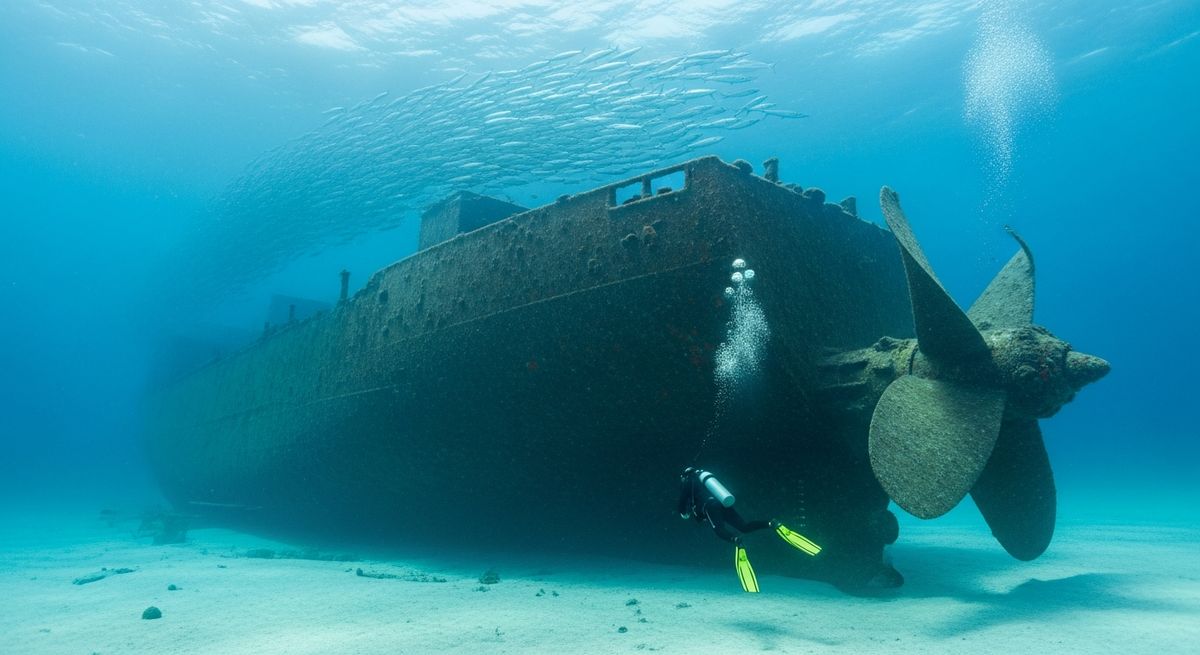
TJILANTJAR. Just the name sounds a bit mysterious, doesn't it? This isn't your average recreational dive. We're talking about a serious wreck, a deep one, and definitely for those with the training and a real appreciation for maritime history. Sunk in 1964, the Tjilantjar lies well beyond the typical limits, a motor vessel now fully given over to the ocean. What we love about this wreck is the sheer scale and the way it’s settled, upright and relatively intact despite the years. Dropping down, you feel the water cool, and the light changes, growing dimmer, until the dark silhouette of the ship emerges from the blue. It’s a proper expedition, and you’ll want to allow ample bottom time, managed carefully, to properly appreciate it. The superstructure is still discernible, and there are holds to peer into, though penetration requires specialist training and calm conditions. We've seen some impressive groupers lurking in the shadows, and schools of jacks often swirl around the mast, a stark contrast to the quiet permanence of the wreck itself. This site is for advanced technical divers, those who understand deep diving and want to experience a significant piece of Bali’s underwater past.
Typical TJILANTJAR Dive Profile
Illustrative profile based on site depth and type. Actual dive profiles vary - always follow your dive computer and training.
Safety Notes
Maximum depth 57m exceeds recreational limits (40m). Technical diving certification and equipment required.
Wreck site - avoid penetration without wreck diving certification. Watch for sharp metal and entanglement hazards.
Always perform a 3-minute safety stop at 5m before surfacing.
Reviews for TJILANTJAR
Conditions
Ocean conditions, forecast and tides for TJILANTJAR
TJILANTJAR Ocean Conditions
Monthly averages for TJILANTJAR, sourced from Open-Meteo marine data + Copernicus Marine (EU) - nearest station: Open-Meteo marine grid (-7.5, 113.18) (20km away)
October Averages
Sea Temperature
30°C
86°F · Range: 28.3–31.6°C
Current Speed
4 cm/s
Direction: E (90°)
Salinity
32.94 PSU
Based on 4 years of monitoring data · Data sources: Open-Meteo marine data + Copernicus Marine (EU)
Plan & book
Ways to dive Bali, from day trips to liveaboards.
Day trips & courses
via GetYourGuideGuided dives, courses and snorkel trips with instant booking.
Find dive trips in BaliPlaces to stay
via Booking.comHotels and dive resorts near Bali.
Search stays in BaliDive insurance
Most travel insurance excludes or limits scuba. Check what you need before you go.
Dive insurance explainedPartner links: we may earn a commission if you book, at no extra cost to you. How we make money
Where to Stay near TJILANTJAR
Prices from Booking.com. We may earn a commission at no extra cost to you.