The Crack at Pulau Babi
Protected Area
Teluk Maumere
Why dive here
With 163+ marine species recorded in the area - including blue-spotted stingrays, blue whales, seahorses, sperm whales and whale sharks - The Crack at Pulau Babi offers some of Flores's richest wall diving. Water ranges 28-31°C, warmest May, October, November.
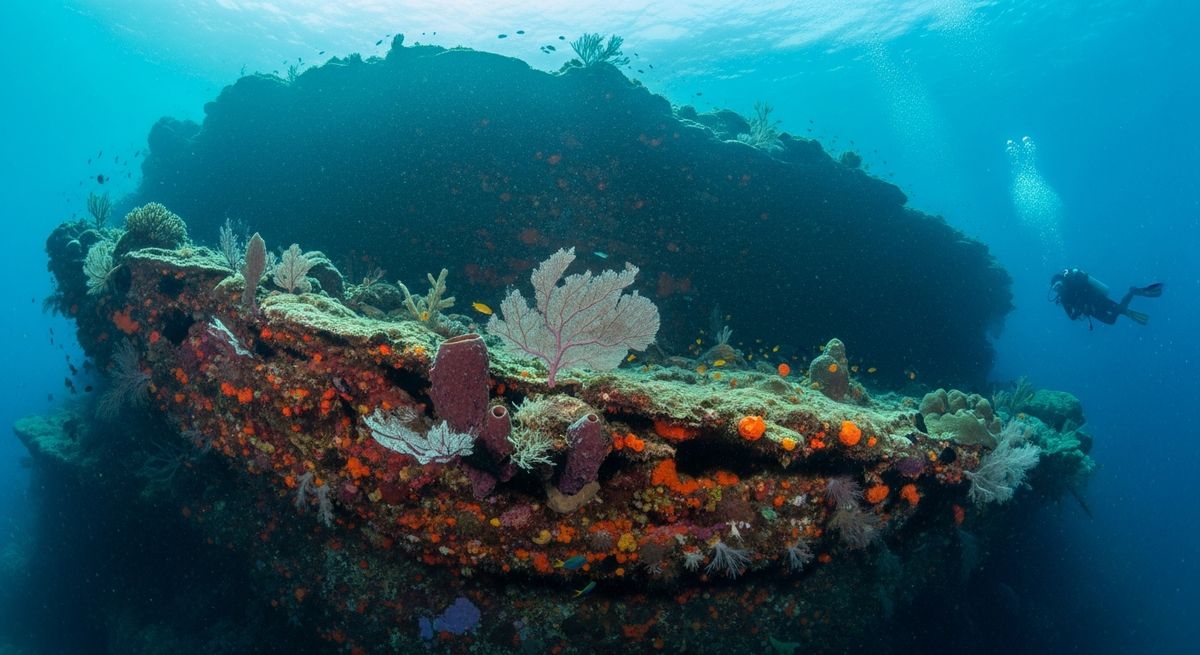
The Crack at Pulau Babi isn’t just a wall; it’s a living labyrinth, especially when you start exploring its namesake. We love dropping in here, letting the gentle current (it’s rarely a serious push) carry us along the face. Keep an eye out for those Blue-finned Rock Cod tucked into the crevices; they’re masters of camouflage. The wall itself is thick with whip corals and sea fans, but it's the smaller stuff that really shines. We’ve spent solid chunks of dives just poking around for Gardiner's Headshield Slugs and the tiny, grumpy-looking Blennies. Down deeper, around 18-20m, the wall develops these incredible fissures and overhangs, almost like the rock is peeling open. That's "The Crack." Slip inside and the light filters down in shafts, illuminating schools of Banded Blue Sprat that shimmer like a liquid curtain. It’s wonderfully atmospheric. We’ve seen reef sharks cruise by in the blue, though usually they're just passing through. This site is fantastic for macro photographers and anyone who enjoys a slow, detailed dive rather than a pelagic hunt. The maximum depth of 22m makes it accessible for most certifications.
Nearest Dive Centres to The Crack at Pulau Babi
Dive shops near The Crack at Pulau Babi
View all dive centres in FloresReviews for The Crack at Pulau Babi
Conditions
Ocean conditions, forecast and tides for The Crack at Pulau Babi
The Crack at Pulau Babi Ocean Conditions
Monthly averages for The Crack at Pulau Babi, sourced from Open-Meteo marine data - nearest station: Open-Meteo marine grid (-8.42, 122.42) (8km away)
October Averages
Sea Temperature
30°C
86°F · Range: 28.4–31°C
Air Temperature
29°C
85°F
Wind Speed
4.45 m/s
8.7 knots
Atmospheric Pressure
1010 hPa
Based on 4 years of monitoring data · Data sources: Open-Meteo marine data
Plan & book
Ways to dive Flores, from day trips to liveaboards.
Day trips & courses
via GetYourGuideGuided dives, courses and snorkel trips with instant booking.
Find dive trips in FloresPlaces to stay
via Booking.comHotels and dive resorts near Flores.
Search stays in FloresDive insurance
Most travel insurance excludes or limits scuba. Check what you need before you go.
Dive insurance explainedPartner links: we may earn a commission if you book, at no extra cost to you. How we make money
Where to Stay near The Crack at Pulau Babi
Prices from Booking.com. We may earn a commission at no extra cost to you.