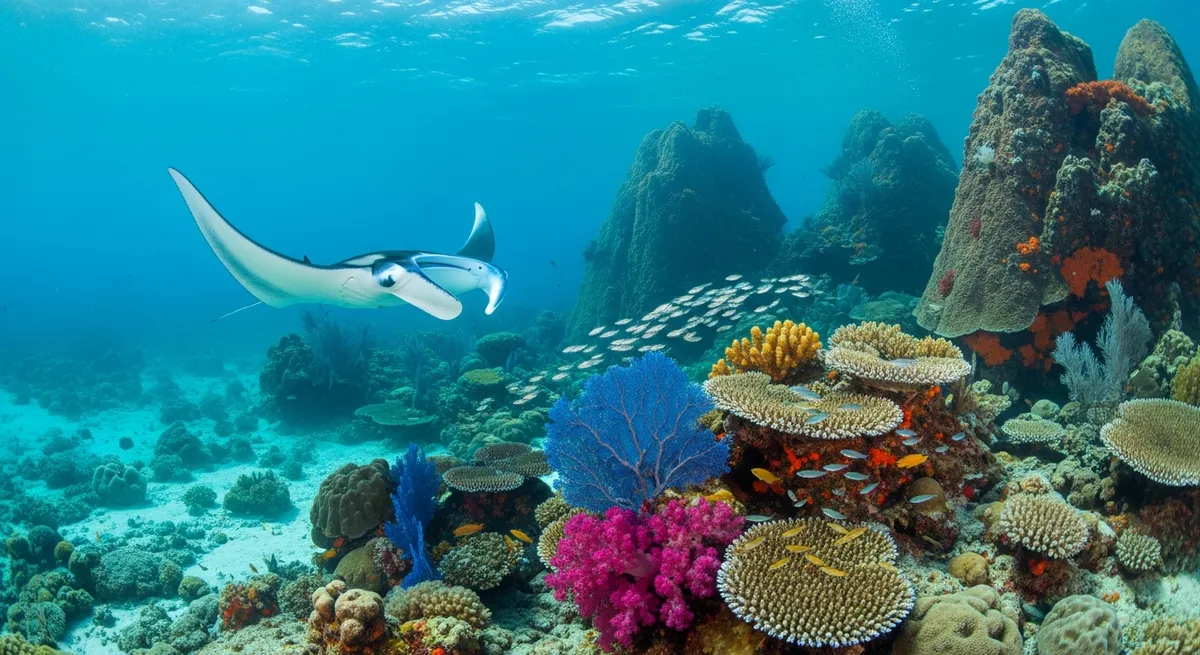
Diving in Flores
Why dive here
Flores offers some of Indonesia's richest diving, with 163+ marine species recorded in the area - including blue-spotted stingrays, blue whales, seahorses, sperm whales and whale sharks. Water ranges 28-31°C, warmest May, October, November.
Flores. What a place. We love it for its sheer variety, acting as a kind of buffer between the madness of Komodo and the deeper, more remote sites around Alor. You get everything here, from the gentle, sun-dappled slopes of coral gardens, thick with fusiliers and chromis, to some proper adrenaline-pumping drift dives. We’ve seen Allison’s tuna hunting here, a flash of silver in the blue. The diving around Flores often feels like a secret, even with its proximity to Komodo. Our favourite spots are the current-swept channels, where you can hook in and watch the show. Camouflage groupers seem to materialise from the reef, and if you’re lucky, you might spot a Stobbs' pygmygoby peeking from its coral home. We’d suggest diving early to catch the best light on the coral, especially the staghorn patches which just glow in the morning sun. Just remember, currents can be swift, so be ready for some serious motion.
Flores Dive Site Map
Dive sites and dive centres in Flores
Flores Dive Sites
20 dive sites in Flores
Adonara Island
Adonara Island, tucked away in Eastern Flores, feels like diving on the frontier. While its exact dive sites are still largely uncharted, the general area around Adonara is known for some real finds, like Magic Log, where we’ve often spotted ribbon eels and various frogfish playing hide-and-seek. Keep a keen eye out for the weedy scorpionfish, they’re masters of disguise here, and wonderpus octopuses sometimes make an appearance too. It’s a good spot for divers who enjoy a bit of exploratory diving and aren’t afraid of conditions that might be a little less predictable than established spots. Headlands and channels create a varied underwater landscape, perfect for those who appreciate the thrill of discovering something new.
Awalolong
Awalolong offers a solid coral reef experience in Flores. Expect to see a good mix of hard and soft corals, providing shelter for the usual suspects: reef fish, some nudibranchs if you’re looking close, and perhaps a turtle cruising past. It's a straightforward dive, well-suited for those looking for a relaxed exploration rather than big pelagics or challenging conditions.
Ayer Kosambe
Ayer Kosambe, off the coast of Flores, delivers a classic Indonesian coral reef dive. We've seen plenty of hard corals here, making for a robust backdrop to schools of smaller reef fish. It's a straightforward dive, generally calm and a good fit for divers who appreciate healthy coral formations without chasing big pelagics. Expect a pleasant, unhurried exploration.
Babi Island
Babi Island, off Flores, is a site that always makes us pause for thought. This place took a real hit in the 1992 tsunami, losing a thousand residents, but dive in and you'll find a wall that’s made a remarkable comeback. It drops down to around 50 metres, a healthy stretch of coral that's home to good numbers of snappers, parrotfish, angelfish, and damselfish. We've seen a few moray eels tucked into the crevices too. Visibility averages about 15 metres, though on a good day, you might even glimpse the seabed from the surface. It’s a solid wall dive, calm and reflective, suitable for most divers looking for a straightforward, pleasant exploration.
Flores Diving: Maumere Dive Adventures
Maumere offers a slower pace of diving compared to some of Indonesia's busier spots, which we appreciate. It’s got a bit of an ‘off the beaten track’ feel, and that means fewer other divers bumping elbows with you. You'll find plenty to keep your eyes busy with the macro stuff – nudibranchs, frogfish, the usual suspects hiding in the rubble and sponges. While it might not blow you away with pristine hard coral gardens, the sheer variety of smaller creatures makes it a solid pick for photographers or anyone keen to really slow down and observe. Both newer divers and those with more logged dives will find something to enjoy here.
HONGKONG SURETY
The Hongkong Surety isn't your average wreck dive. This behemoth, a 147-meter cargo vessel that ran aground on Angelica Shoal back in '77, offers an incredible sense of scale. We love how the bow juts out of the water, a stark skeletal reminder of its past, while the stern lies deeper, around 30 meters. It’s an interesting contrast. Dropping down, you’ll find the wreck itself is a thriving artificial reef. Expect to see schools of snappers and trevally circling the superstructure, often so thick they make the light shimmer. Look closely at the deck plates and cargo holds; they're covered in gorgonian fans and soft corals, with nudibranchs and flatworms tucked into every crevice. Our favourite sections are the expansive cargo holds, where you can swim through cavernous spaces now home to batfish and sweetlips, or explore the bridge area which is surprisingly intact, offering a glimpse into the ship's operational past. This site is best suited for experienced divers comfortable with deeper sections and potential currents, but even less experienced divers can enjoy the shallower parts of the wreck and the incredible marine life that has made it home.
Ibel D’Orange
Ibel D’Orange, just a five-minute boat ride from Tinabo Besar, is a standout pinnacle dive, a real favourite of ours in Flores. We drop in at about 18 metres, descending onto a vibrant reef that slopes down to 23 metres. This site really hums with activity, especially in the mornings. We love the soft corals here; they carpet the pinnacle in purples and oranges, swaying gently in the mild current. Keep an eye out for the white tip and black tip reef sharks, usually cruising the deeper sections. We’ve had incredible luck spotting marble rays gliding past, their spots almost iridescent against the blue. Schools of tuna often zip by, a silver flash in the periphery. For the macro enthusiasts, the nudibranchs here are surprisingly diverse, and we often find peacock-tail anemone shrimp tucked into their host anemones. It’s a fairly easy dive, perfect for advanced open water divers looking for a relaxing drift with plenty to see. The average 15-metre visibility is good enough to appreciate the larger pelagics and the intricate coral formations. We’d suggest going early; the light hitting the pinnacle around 8 AM really makes the colours pop.
Karang Taka Basi
Karang Taka Basi in Flores offers a classic Indonesian reef dive. Expect healthy hard and soft corals, forming a busy backdrop for reef fish. It’s a solid pick for divers looking for a reliable, unhurried afternoon in the water without too much current. We’d suggest it for divers who appreciate colourful reefscapes and don’t need the big pelagic action.
Kojadoi Diving Exotic Coral
Kojadoi Exotic Coral, even just the name gets us excited. It’s a riot of colour and form, a place where the coral itself becomes the main event. We’re talking about massive staghorn thickets that stretch for metres, interrupted by dinner-plate sized table corals, all of it buzzing with activity. It’s hard to pick a favourite, but the sheer density of coral here makes it special. You’ll find yourself floating through archways of branch coral, looking for the tiny Redlined Pygmygobies hiding within, or watching the Blue and Gold Fusiliers stream past. The wrasse population here seems particularly diverse too, with Scarlet Wrasse and Hoeven's Wrasse darting amongst the coral heads. We always suggest taking it slow, maybe even bringing a macro lens, because the smaller stuff, like the Ghost Cardinalfish or the Largemouth Triplefin, are really worth seeking out. Don't rush past the Pinda Moray peeking from its hideaway either. This site is for divers who appreciate the intricate beauty of a healthy reef, who want to just drift and absorb the sheer vibrancy of it all.
Lambata Island
Lambata Island in Flores always delivers. Head to the tip near Lamalera Village; it’s a spot we could dive for days, finding something new each time. We’ve often seen reef shark shadows in the blue, drawing us deeper before working our way back up through the coral slopes and giant boulders. Expect plenty of fusiliers, angelfish, and a good variety of parrotfish – and keep an eye out on the gorgonian fans for pygmy seahorses. This site is excellent for divers who appreciate a slow drift and want to spot smaller critters alongside regular reef action.
LOUISANDA
Louisanda, oh Louisanda. We’re still not sure why this ferry went down in 1990, but we’re glad it did. This isn’t one of those wrecks where you need to imagine what it once was. She sits upright, largely intact, with her bow pointing to the surface, almost like she’s trying to break free. We love swimming through the car deck, the light shafts piercing the gloom, and then pushing further into the superstructure. It feels like a proper ghost ship, and the way the fusiliers school around the mast, flickering like silver coins, is just spectacular. The coral growth here is surprisingly good for a wreck from the 90s, especially on the upper decks. Keep an eye out for batfish and resident snappers. Our favourite part is lingering on the wheelhouse, imagining the last moments, before drifting down the hull where the deeper sections hold big groupers. This site is definitely for those who appreciate a bit of history with their dive, and while it's a deep one, the shallower parts offer plenty to see, making it suitable for experienced wreck divers looking for a good explore rather than just a quick look.
Maumere
Maumere Bay on Flores’ north coast offers a real mixed bag. We’ve seen everything from the smallest critters to big pelagics here. Keep an eye out for larger visitors like pilot whales and sperm whales passing through, especially during migration season, and don’t be surprised if a whaleshark cruises by. For the macro enthusiasts, the muck diving near the shore can be surprisingly good, full of nudibranchs and frogfish. It’s a great spot if you appreciate variety and don't mind a bit of a hunt for the bigger stuff.
Flores Dive Centres
3 dive shops and operators in Flores
Ocean Wildlife in Flores
163 species recorded in Flores
Flores Daylight & Sunrise/Sunset
Sunrise and sunset times for Flores, calculated from coordinates
Today - Sunday 11 October
Sunrise
05:31
Sunset
17:45
Daylight
12h 15m
Golden Hour
17:18
First light (dawn) at 05:09 · Last light (dusk) at 18:06
Monthly Averages
| Month | Sunrise | Sunset | Daylight |
|---|---|---|---|
| Jan | 05:44 | 18:17 | 12h 33m |
| Feb | 05:54 | 18:17 | 12h 22m |
| Mar | 05:56 | 18:05 | 12h 9m |
| Apr | 05:53 | 17:49 | 11h 55m |
| May | 05:55 | 17:40 | 11h 44m |
| JunShortest | 06:02 | 17:41 | 11h 38m |
| Jul | 06:07 | 17:47 | 11h 41m |
| Aug | 06:01 | 17:51 | 11h 50m |
| Sep | 05:45 | 17:48 | 12h 3m |
| OctNow | 05:29 | 17:45 | 12h 17m |
| Nov | 05:21 | 17:51 | 12h 29m |
| DecLongest | 05:28 | 18:04 | 12h 36m |
Times are approximate local times based on longitude. Actual times may vary slightly depending on the exact timezone observed in Flores.
Where to Stay near Flores
Prices from Booking.com. We may earn a commission at no extra cost to you.
Marine Protected Areas near Flores
13 protected areas near Flores - please respect local regulations when diving
KK Laut Sawu dan Sekitarnya
KK Lembata II
KK Kepulauan Alor
Laut Dalam Flores Timur
KK Lembata
Laut Dalam Alor
KK Flores Timur
Ende
KK Sikka
Teluk Maumere
KK di Perairan di Wilayah Kayuadi
Tujuh Belas Pulau
Showing 12 largest of 13
Getting to Flores
Oecussi-Ambeno
Dili
Makassar
Plan & book
Ways to dive Flores, from day trips to liveaboards.
Day trips & courses
via GetYourGuideGuided dives, courses and snorkel trips with instant booking.
Find dive trips in FloresPlaces to stay
via Booking.comHotels and dive resorts near Flores.
Search stays in FloresDive insurance
Most travel insurance excludes or limits scuba. Check what you need before you go.
Dive insurance explainedPartner links: we may earn a commission if you book, at no extra cost to you. How we make money