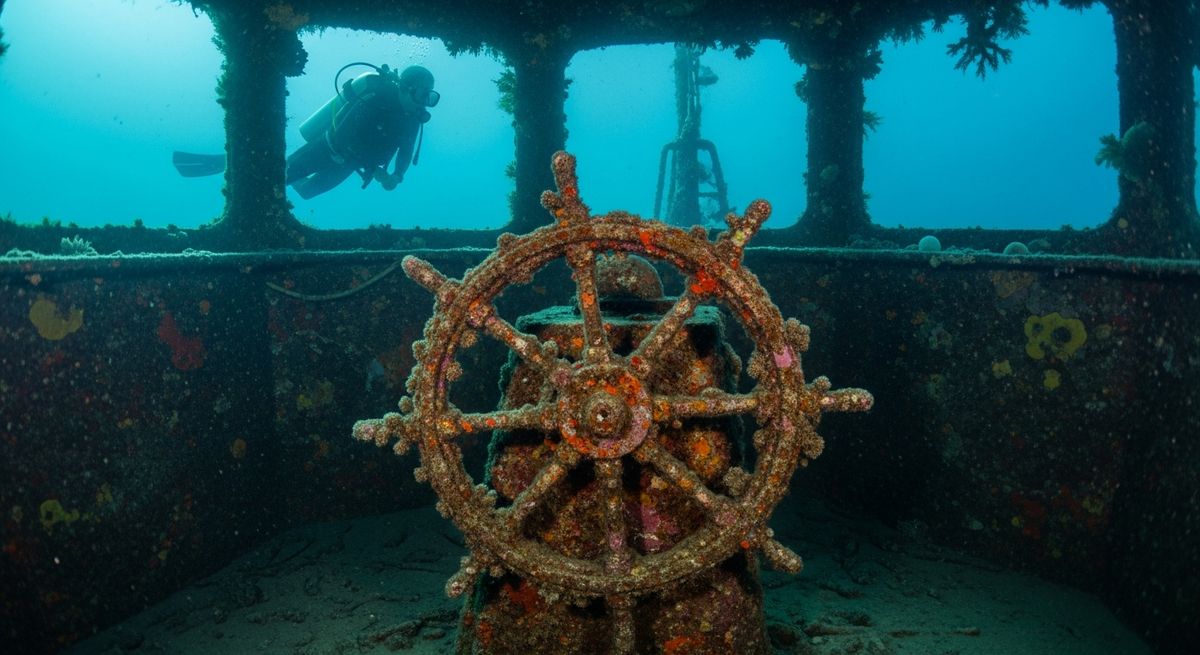
Wairterang Wreck
Protected Area
Teluk Maumere
Why dive here
With 163+ marine species recorded in the area - including blue-spotted stingrays, blue whales, seahorses, sperm whales and whale sharks - Wairterang Wreck offers some of Flores's richest wreck diving. Water ranges 28-31°C, warmest May, October, November.
Wairterang Wreck in Flores is a proper exploration dive, a sunken Japanese cargo ship from WWII that’s really come into its own as a marine habitat. We love this site for its character; the wreck itself is about 50 metres long, lying between 12 and 26 metres, making it accessible but still deep enough to feel like a proper wreck dive. It’s not one of those pristine wrecks you find in museums, but a beautifully colonised skeleton, covered in corals and home to some fascinating creatures. Visibility here averages around 9 metres, which isn't gin-clear, but it adds to the atmosphere, giving the wreck a wonderfully eerie feel as you descend. Look closely, and you'll spot garrupa and various dottybacks darting among the corroded metal plates. We've seen some fantastic nudibranchs and frogfish tucked into crevices. The real delight comes at the end of the dive, when you drift over the adjacent seagrass beds. This is prime hunting ground for seahorses and a huge variety of small critters; we always dedicate time here for some macro photography. It suits divers who appreciate a wreck with a story and the joy of a good treasure hunt for tiny creatures.
Safety Notes
Wreck site - avoid penetration without wreck diving certification. Watch for sharp metal and entanglement hazards.
Nearest Dive Centres to Wairterang Wreck
Dive shops near Wairterang Wreck
View all dive centres in FloresReviews for Wairterang Wreck
Conditions
Ocean conditions, forecast and tides for Wairterang Wreck
Wairterang Wreck Ocean Conditions
Monthly averages for Wairterang Wreck, sourced from Open-Meteo marine data - nearest station: Open-Meteo marine grid (-8.42, 122.42) (8km away)
October Averages
Sea Temperature
30°C
86°F · Range: 28.4–31°C
Air Temperature
29°C
85°F
Wind Speed
4.45 m/s
8.7 knots
Atmospheric Pressure
1010 hPa
Based on 4 years of monitoring data · Data sources: Open-Meteo marine data
Plan & book
Ways to dive Flores, from day trips to liveaboards.
Day trips & courses
via GetYourGuideGuided dives, courses and snorkel trips with instant booking.
Find dive trips in FloresPlaces to stay
via Booking.comHotels and dive resorts near Flores.
Search stays in FloresDive insurance
Most travel insurance excludes or limits scuba. Check what you need before you go.
Dive insurance explainedPartner links: we may earn a commission if you book, at no extra cost to you. How we make money
Where to Stay near Wairterang Wreck
Prices from Booking.com. We may earn a commission at no extra cost to you.