Kusu East Two Coconut - Halmahera

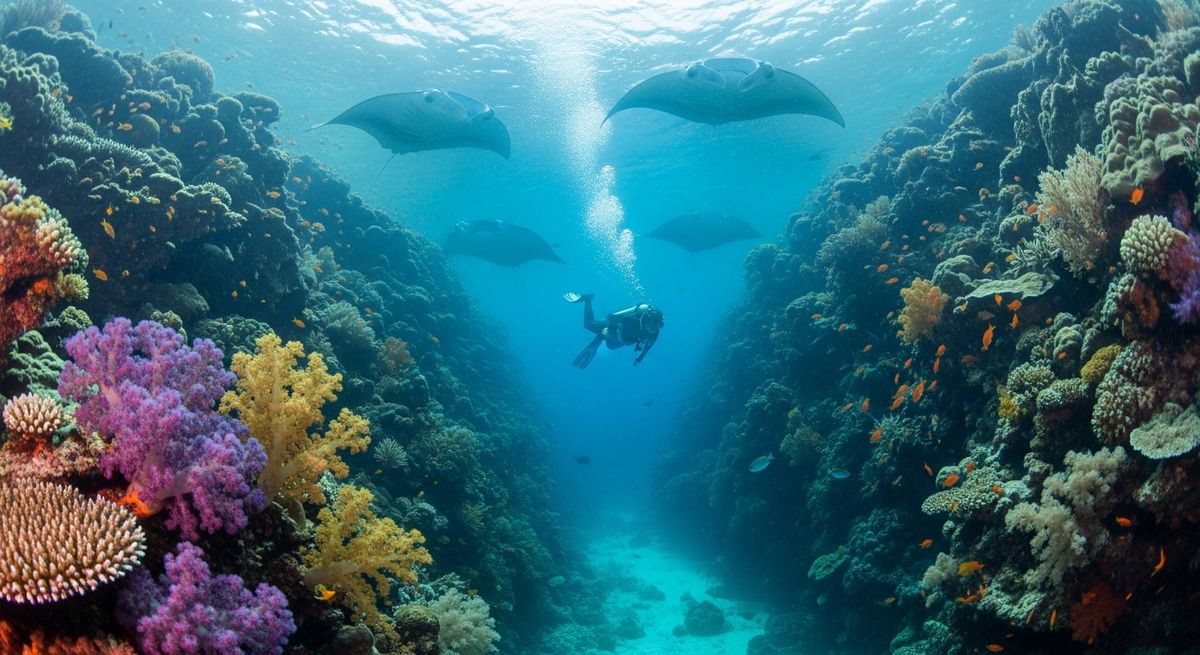
Moya Reef, just a quick hop from Barefoot Kuata, is one of those sites we always recommend for a relaxed, easy dive with a solid chance of seeing something special. It’s not deep, just 11 metres at the most, but the winding wall holds your attention. We love the swim-throughs here, feeling the cool water shift as you duck under an overhang, and the way the light filters down to the sandy bottom, giving everything that incredible turquoise glow. You’ll often spot reef sharks cruising by, maybe a cheeky remora trying to make friends, and plenty of colourful damsels zipping around the stony and staghorn corals. It's a fantastic spot for photographers or anyone who just wants to take it slow and soak it all in.

Location
Halmahera, Indonesia, Southeast Asia
Coordinates
-0.452700, 127.709400
Type
reef

Marine Protected Area: KKP3K Pulau Sali, Gane Barat Utara

Best Time to Dive in Halmahera

The warmest water temperatures in Halmahera occur in November, averaging 30.1°C. The coolest conditions are in August at 28.5°C.

Monthly Water Temperatures

  • January: 29.0°C
  • February: 28.8°C
  • March: 29.1°C
  • April: 29.5°C
  • May: 29.9°C
  • June: 29.6°C
  • July: 29.0°C
  • August: 28.5°C
  • September: 28.6°C
  • October: 29.4°C
  • November: 30.1°C
  • December: 29.8°C

Nearby Dive Sites in Halmahera

Nearest Dive Centres to Kusu East Two Coconut

Marine Life in Halmahera

Home to 141 recorded species including 69 reef fish, 48 hard corals, 7 seagrass & algae, 4 clams & mussels, 3 crabs & lobsters, 2 sea cucumbers.

Notable Species

Recommended Packing List for Kusu East Two Coconut

Based on average water temperature of 29.3°C, currents 7 cm/s.

  • Shorty or Rashguard - warm 29°C water needs minimal exposure protection
  • Mask - essential for every dive
  • Fins
  • BCD - buoyancy compensator
  • Regulator - your most safety-critical piece of gear
  • Dive Computer - tracks depth, time, and NDL
  • Surface Marker Buoy (SMB) - essential for boat pickups
  • Dive Torch - useful for crevices and colour at depth
  • Underwater Camera - capture your diving memories

Frequently Asked Questions

What is the typical maximum depth for diving at Kusu East Two Coconut?
The typical maximum depth for diving at Kusu East Two Coconut is 22 meters. This depth, combined with sometimes strong currents, contributes to its intermediate difficulty rating. Divers should be comfortable with these conditions to fully enjoy the site.
What kind of marine life and coral formations can divers expect to see at Kusu East Two Coconut?
Divers at Kusu East Two Coconut can expect a vibrant display of marine life and coral formations. You'll often encounter Black Tip Reef Sharks patrolling among the coral blocks, alongside Humphead Parrotfish and Titan Triggerfish. The reef boasts a beautiful variety of soft and hard corals, complemented by impressive Gorgonias. For more information on marine species, visit our wildlife database.
How challenging are the currents and overall conditions for diving at Kusu East Two Coconut?
Diving at Kusu East Two Coconut is rated as intermediate due to the currents, which can sometimes be fairly strong. Divers should be prepared for these conditions and possess adequate experience to navigate them safely. The varied landscape, particularly further East, makes managing these currents worthwhile.
What is the best time of year to dive Kusu East Two Coconut for optimal conditions and marine encounters?
The provided data for Kusu East Two Coconut does not specify the best time of year for optimal conditions or marine encounters. For general information on diving seasons in the region, we recommend consulting our When to Dive section.
What dive certifications are recommended or required to dive Kusu East Two Coconut?
While no specific dive certifications are explicitly required in the provided data for Kusu East Two Coconut, its intermediate difficulty and sometimes strong currents suggest that an Advanced Open Water certification or equivalent experience is highly recommended. This ensures divers are comfortable and capable of handling the conditions and depth of 22 meters.
Are there any specific hazards or unique topographical features, like downdrafts, that divers should be aware of at Kusu East Two Coconut?
The primary hazard divers should be aware of at Kusu East Two Coconut is the current, which can sometimes be fairly strong. While no specific downdrafts are mentioned, the varied landscape, particularly further East, adds to the dynamic nature of the dive. Always consult with local dive guides for the most up-to-date conditions.