HOCK HAI LEE
Protected Area
Peramu Soil Reclamation Forest
Why dive here
With 143+ marine species recorded in the area - including sea turtles and whale sharks - HOCK HAI LEE offers some of Redang Island's richest wreck diving. Water ranges 28-31°C, warmest April, May, October.
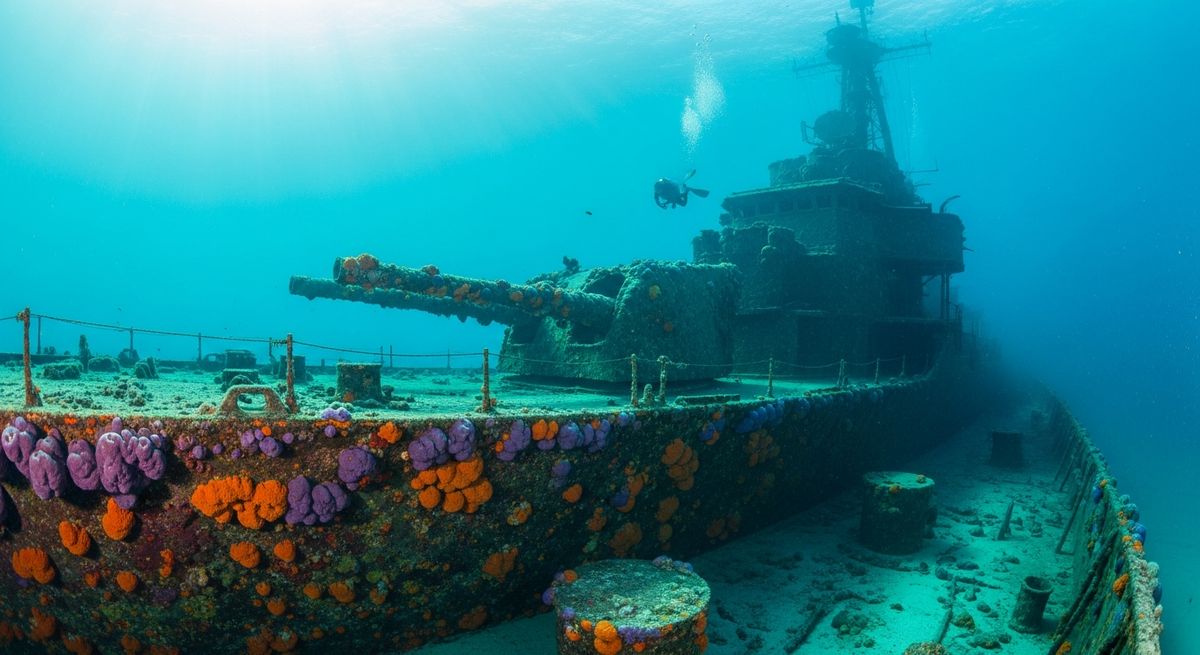
Hock Hai Lee is one of our favourite Redang wrecks, a cargo carrier that’s been down since 1991. The boat is fairly intact, lying on its starboard side at around 15 metres. We love dropping down onto the deck, which is now a riot of cup corals, nudibranchs, and schools of yellowtail snappers. The hold is open and easy to penetrate, a real playground for moray eels and lionfish. We’d suggest exploring the bow first, then making your way along the length of the vessel, keeping an eye out for batfish hanging around the mast. The wheelhouse is a bit of a squeeze but worth checking out if you’re comfortable with tight spaces. Visibility here can sometimes be a bit murky, especially after heavy rain, but even then, the wreck’s silhouette against the greenish light is quite dramatic. It’s an accessible wreck for most open water divers, offering plenty to see without needing to go too deep or navigate strong currents.
Typical HOCK HAI LEE Dive Profile
Illustrative profile based on site depth and type. Actual dive profiles vary - always follow your dive computer and training.
Safety Notes
Wreck site - avoid penetration without wreck diving certification. Watch for sharp metal and entanglement hazards.
Always perform a 3-minute safety stop at 5m before surfacing.
Nearest Dive Centres to HOCK HAI LEE
Dive shops near HOCK HAI LEE
View all dive centres in Redang IslandReviews for HOCK HAI LEE
Conditions
Ocean conditions, forecast and tides for HOCK HAI LEE
HOCK HAI LEE Ocean Conditions
Monthly averages for HOCK HAI LEE, sourced from Open-Meteo marine data + Copernicus Marine (EU) - nearest station: Open-Meteo marine grid (4.76, 103.68) (15km away)
October Averages
Sea Temperature
30°C
86°F · Range: 29.1–31.2°C
Current Speed
11.66 cm/s
Direction: SE (149°)
Salinity
31.94 PSU
Based on 4 years of monitoring data · Data sources: Open-Meteo marine data + Copernicus Marine (EU)
Plan & book
Ways to dive Redang Island, from day trips to liveaboards.
Day trips & courses
via GetYourGuideGuided dives, courses and snorkel trips with instant booking.
Find dive trips in Redang IslandPlaces to stay
via Booking.comHotels and dive resorts near Redang Island.
Search stays in Redang IslandDive insurance
Most travel insurance excludes or limits scuba. Check what you need before you go.
Dive insurance explainedPartner links: we may earn a commission if you book, at no extra cost to you. How we make money
Where to Stay near HOCK HAI LEE
Prices from Booking.com. We may earn a commission at no extra cost to you.