LAT DA
Protected Area
Pulau Tenggol Marine Park
Why dive here
With 143+ marine species recorded in the area - including sea turtles and whale sharks - LAT DA offers some of Redang Island's richest wreck diving. Water ranges 28-31°C, warmest April, May, October.
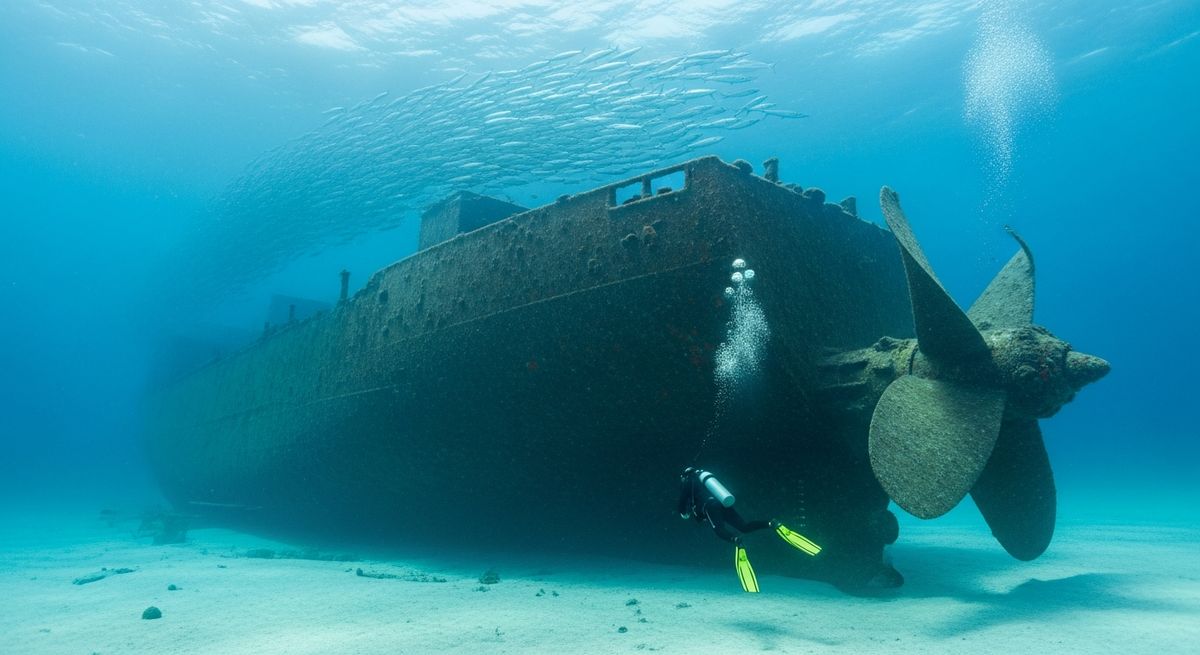
Lat Da is our pick for a proper wreck dive in Redang, sitting pretty upright at 50 metres. It’s a carrier vessel, built in the Netherlands back in '55, and she went down in '83 during some heavy weather on a run from Singapore. You can really feel that history when you’re down there; it’s a big girl, over 70 metres long, and the sheer scale of her is impressive. The wreck itself is mostly intact, offering some interesting penetration points if you’re appropriately trained and equipped. We’d suggest a sidemount configuration for tighter spots inside. Outside, you’ll find the deck has become home to plenty of schooling fusiliers and yellowback snappers, often swirling so thick they dim the ambient light. Keep an eye out for resident groupers peering out from shadowed compartments. This dive is definitely for experienced wreck enthusiasts comfortable with deeper profiles and potentially strong currents, which can pick up around the site, particularly on tide changes. It’s a good idea to time your descent for slack water if you want a more relaxed exploration.
Typical LAT DA Dive Profile
Illustrative profile based on site depth and type. Actual dive profiles vary - always follow your dive computer and training.
Safety Notes
Maximum depth 50m exceeds recreational limits (40m). Technical diving certification and equipment required.
Wreck site - avoid penetration without wreck diving certification. Watch for sharp metal and entanglement hazards.
Always perform a 3-minute safety stop at 5m before surfacing.
Nearest Dive Centres to LAT DA
Dive shops near LAT DA
View all dive centres in Redang IslandReviews for LAT DA
Conditions
Ocean conditions, forecast and tides for LAT DA
LAT DA Ocean Conditions
Monthly averages for LAT DA, sourced from Open-Meteo marine data + Copernicus Marine (EU) - nearest station: Open-Meteo marine grid (4.76, 103.68) (15km away)
October Averages
Sea Temperature
30°C
86°F · Range: 29.1–31.2°C
Current Speed
11.66 cm/s
Direction: SE (149°)
Salinity
31.94 PSU
Based on 4 years of monitoring data · Data sources: Open-Meteo marine data + Copernicus Marine (EU)
Plan & book
Ways to dive Redang Island, from day trips to liveaboards.
Day trips & courses
via GetYourGuideGuided dives, courses and snorkel trips with instant booking.
Find dive trips in Redang IslandPlaces to stay
via Booking.comHotels and dive resorts near Redang Island.
Search stays in Redang IslandDive insurance
Most travel insurance excludes or limits scuba. Check what you need before you go.
Dive insurance explainedPartner links: we may earn a commission if you book, at no extra cost to you. How we make money
Where to Stay near LAT DA
Prices from Booking.com. We may earn a commission at no extra cost to you.