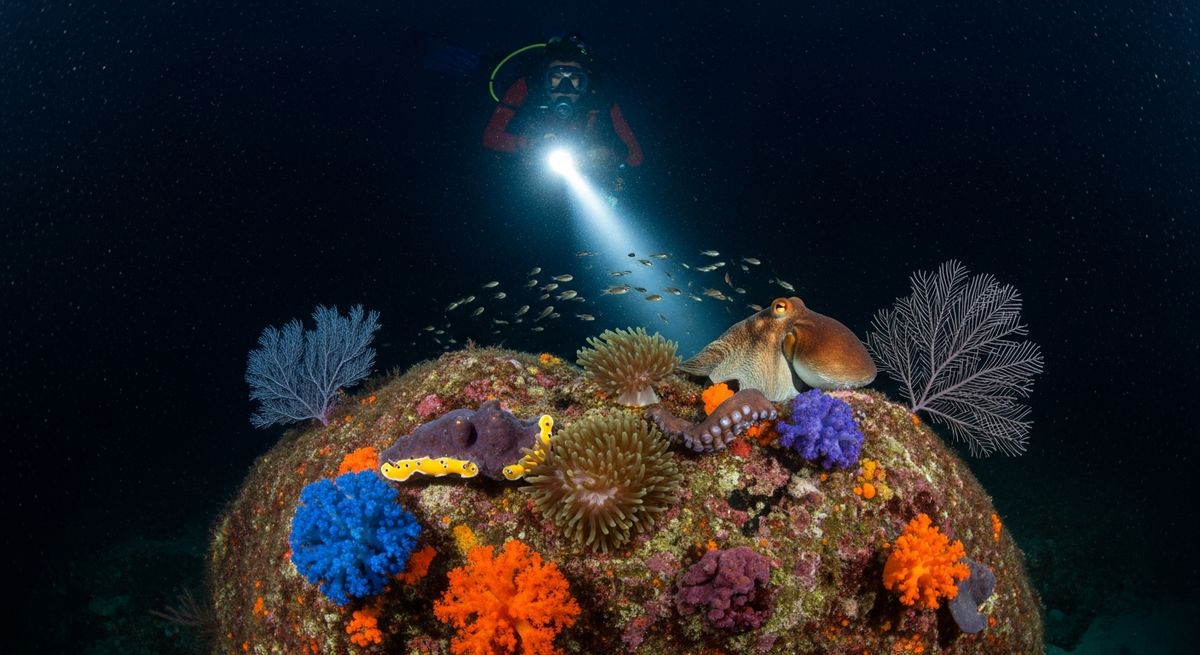
Hin Rap - Mergui Archipelago

Hin Rap sits a bit offshore from Surin Nua, and we like it for a deeper wall dive, particularly on the east side. That’s where the boulders drop off to a good 25 meters, creating a proper wall for us to explore. Keep an eye out for bigger pelagics cruising by in the blue here, it’s not uncommon to spot them. If you’re not keen on depth, or just fancy a surface interval with a view, the shallower reef on the west side is usually great for snorkelling and has a good chance of turtle sightings. It’s a solid pick for those who appreciate a bit of vertical relief and the chance to spot larger fish.

Location
Mergui Archipelago, Myanmar, Southeast Asia
Coordinates
9.430000, 97.880000

Best Time to Dive in Mergui Archipelago

The warmest water temperatures in Mergui Archipelago occur in May, averaging 30.8°C. The coolest conditions are in January at 28.5°C.

Monthly Water Temperatures

  • January: 28.5°C
  • February: 28.9°C
  • March: 29.6°C
  • April: 30.7°C
  • May: 30.8°C
  • June: 29.9°C
  • July: 29.5°C
  • August: 29.2°C
  • September: 28.9°C
  • October: 29.0°C
  • November: 29.2°C
  • December: 28.7°C

Nearby Dive Sites in Mergui Archipelago

Nearest Dive Centres to Hin Rap

Marine Life in Mergui Archipelago

Home to 173 recorded species including 106 reef fish, 49 hard corals, 8 seagrass & algae, 3 sharks & rays, 2 other, 2 octopus & squid.

Notable Species

Recommended Packing List for Hin Rap

Based on average water temperature of 29.4°C, currents 7 cm/s.

  • Shorty or Rashguard - warm 29°C water needs minimal exposure protection
  • Mask - essential for every dive
  • Fins
  • BCD - buoyancy compensator
  • Regulator - your most safety-critical piece of gear
  • Dive Computer - tracks depth, time, and NDL
  • Surface Marker Buoy (SMB) - essential for boat pickups
  • Dive Torch - useful for crevices and colour at depth
  • Underwater Camera - capture your diving memories

Frequently Asked Questions

What is the maximum depth for diving at Hin Rap?
At Hin Rap, the boulders on the east side drop off to depths of 25 meters. While the overall maximum depth is not explicitly stated, this site is renowned as one of the deeper dive sites in the Surin area. Divers should be prepared for deeper profiles, especially when exploring the east side.
What kind of marine life and corals can divers expect to see at Hin Rap?
Divers at Hin Rap can anticipate encountering a variety of marine life, including larger pelagics on the deeper east side. The shallow reef areas on the west side are excellent for spotting turtles. As a reef dive site, you can also expect to see a diverse array of reef fish and corals. For more information on specific species, check our wildlife database.
Is Hin Rap a suitable dive site for beginner scuba divers?
Hin Rap is classified as an intermediate difficulty dive site, making it generally unsuitable for beginner scuba divers. The site features deeper sections, particularly on the east side where boulders drop to 25 meters, which may require more advanced diving skills and experience. We recommend beginners gain more experience before attempting dives here.
What are the best months to dive at Hin Rap for optimal conditions?
Information regarding the best months to dive at Hin Rap for optimal conditions is not available in the provided data. We recommend checking local dive operators or our when to dive section for general guidance on the Mergui Archipelago.
What scuba diving certifications are required to dive at Hin Rap?
Given that Hin Rap is an intermediate difficulty dive site with depths reaching 25 meters, divers typically need at least an Advanced Open Water certification or equivalent experience. This ensures divers have the necessary skills for deeper dives and potentially more challenging conditions. Always confirm specific certification requirements with your chosen dive operator.
What are the typical current conditions and visibility like at Hin Rap dive site?
The provided data does not contain specific information about the typical current conditions or visibility at Hin Rap dive site. Divers should consult with local dive centers for up-to-date information on conditions before planning their dive.