Little Torres Islands - Mergui Archipelago

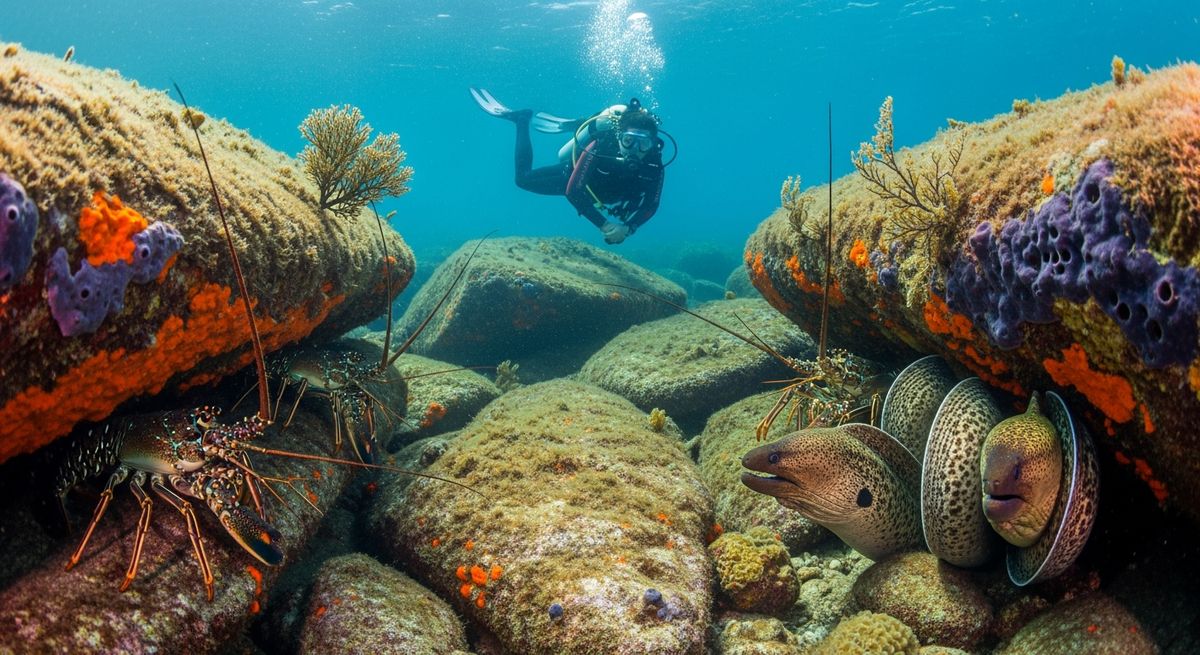
The Little Torres Islands offer a welcome change of pace in the Mergui Archipelago. We found it’s a good spot to slow down and appreciate the details, with soft corals, red whips, and mosaic corals growing in amongst the rocky formations. Keep an eye out for the round batfish and ornate butterflyfish, plus the occasionally clumsy, but striking, azure moon wrasse. It’s also a reliable place to spot leopard sharks and stingrays, making it a solid choice for a relaxed dive with consistent sightings.

Location
Mergui Archipelago, Myanmar, Southeast Asia
Coordinates
10.050000, 98.000000

Best Time to Dive in Mergui Archipelago

The warmest water temperatures in Mergui Archipelago occur in May, averaging 30.8°C. The coolest conditions are in January at 28.5°C.

Monthly Water Temperatures

  • January: 28.5°C
  • February: 28.9°C
  • March: 29.6°C
  • April: 30.7°C
  • May: 30.8°C
  • June: 29.9°C
  • July: 29.5°C
  • August: 29.2°C
  • September: 28.9°C
  • October: 29.0°C
  • November: 29.2°C
  • December: 28.7°C

Nearby Dive Sites in Mergui Archipelago

Nearest Dive Centres to Little Torres Islands

Marine Life in Mergui Archipelago

Home to 173 recorded species including 106 reef fish, 49 hard corals, 8 seagrass & algae, 3 sharks & rays, 2 other, 2 octopus & squid.

Notable Species

Recommended Packing List for Little Torres Islands

Based on average water temperature of 29.4°C, currents 7 cm/s.

  • Shorty or Rashguard - warm 29°C water needs minimal exposure protection
  • Mask - essential for every dive
  • Fins
  • BCD - buoyancy compensator
  • Regulator - your most safety-critical piece of gear
  • Dive Computer - tracks depth, time, and NDL
  • Surface Marker Buoy (SMB) - essential for boat pickups
  • Dive Torch - useful for crevices and colour at depth
  • Underwater Camera - capture your diving memories

Frequently Asked Questions

What are the typical diving depths around the Little Torres Islands dive sites?
The typical diving depths around the Little Torres Islands dive sites are not specified in the available data. Divers should consult with their dive operator or guide for the most current and accurate depth information for specific dive plans.
What kind of marine life and underwater topography can divers expect to see when diving the Little Torres Islands?
Divers exploring the Little Torres Islands can expect to encounter a vibrant reef topography, characterized by rocks adorned with a variety of corals including soft corals, red whip corals, mosaic corals, and table corals. Marine life highlights often include round batfish, long-nose and ornate butterfly fish, and the unique azure moon wrasse. Furthermore, divers frequently spot impressive leopard sharks and sting rays, adding to the excitement of these dives.
How challenging are the dive sites in the Little Torres Islands for recreational divers, considering currents and other factors?
The dive sites in the Little Torres Islands are rated as intermediate difficulty for recreational divers. This suggests that while not overly challenging, divers should possess a good level of experience and comfort in various underwater conditions. It's a site designed for divers to 'catch their breath and take in the finer parts of diving'.
What is the best time of year to visit the Little Torres Islands for optimal diving conditions?
Information regarding the best time of year to visit the Little Torres Islands for optimal diving conditions is not available in the provided data. For general guidance on seasonal diving conditions in the Mergui Archipelago, we recommend consulting our When to Dive resource.
What scuba diving certifications are typically required or recommended for diving in the Little Torres Islands area?
Given the intermediate difficulty rating for diving in the Little Torres Islands, divers are typically expected to hold at least an Open Water Diver certification. For enhanced comfort and skill in varying conditions, an Advanced Open Water Diver certification or equivalent experience is often recommended. Always check with your specific dive operator for their exact certification requirements.
What are the usual current strengths and underwater visibility conditions like when diving around the Little Torres Islands?
The provided data does not specify the usual current strengths or underwater visibility conditions when diving around the Little Torres Islands. Divers planning a trip should consult local dive operators or recent dive reports for the most up-to-date information on these factors. Always be prepared for varying conditions at any dive site.