South Twin Island - Mergui Archipelago

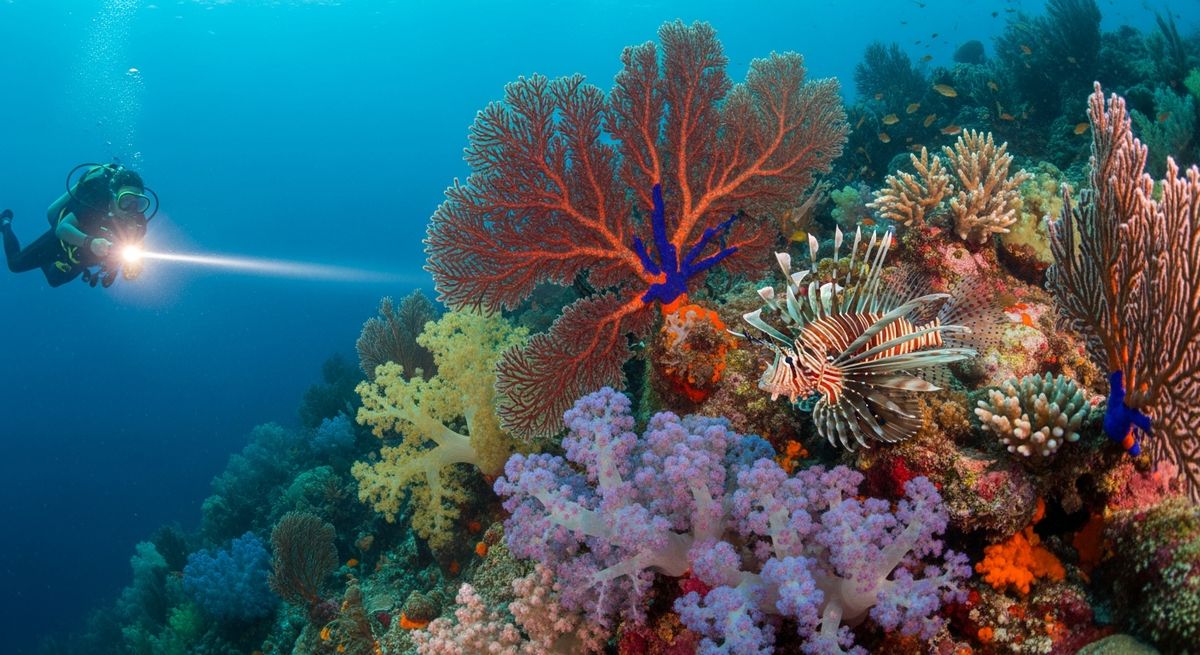
South Twin feels a lot like diving in Thailand's Similans, but with far fewer divers. The granite island drops away into deep, intricate rock structures, creating gullies and long swim-throughs you can spend a good chunk of your dive exploring. In the shallower sections, among the larger boulders, we found some surprisingly delicate table corals, usually buzzing with anthias and damsel fish. It’s a great spot for divers who enjoy navigating dramatic underwater topography, rather than just drifting along a reef.

Location
Mergui Archipelago, Myanmar, Southeast Asia
Coordinates
10.200000, 98.000000
Type
reef
Maximum Depth
5-30m

Best Time to Dive in Mergui Archipelago

The warmest water temperatures in Mergui Archipelago occur in May, averaging 30.8°C. The coolest conditions are in January at 28.5°C.

Monthly Water Temperatures

  • January: 28.5°C
  • February: 28.9°C
  • March: 29.6°C
  • April: 30.7°C
  • May: 30.8°C
  • June: 29.9°C
  • July: 29.5°C
  • August: 29.2°C
  • September: 28.9°C
  • October: 29.0°C
  • November: 29.2°C
  • December: 28.7°C

Nearby Dive Sites in Mergui Archipelago

Nearest Dive Centres to South Twin Island

Marine Life in Mergui Archipelago

Home to 173 recorded species including 106 reef fish, 49 hard corals, 8 seagrass & algae, 3 sharks & rays, 2 other, 2 octopus & squid.

Notable Species

Recommended Packing List for South Twin Island

Based on average water temperature of 29.4°C, currents 7 cm/s.

  • Shorty or Rashguard - warm 29°C water needs minimal exposure protection
  • Mask - essential for every dive
  • Fins
  • BCD - buoyancy compensator
  • Regulator - your most safety-critical piece of gear
  • Dive Computer - tracks depth, time, and NDL
  • Surface Marker Buoy (SMB) - essential for boat pickups
  • Dive Torch - useful for crevices and colour at depth
  • Underwater Camera - capture your diving memories

Frequently Asked Questions

What is the typical diving depth range at South Twin Island?
The typical diving depth range at South Twin Island is not specified in our current data. However, the site features deep, large rock structures, forming gullies, long swim-through passages, and overhangs. In the shallows, divers will find fine table corals among boulders.
What kind of marine life and underwater topography can divers expect to encounter at South Twin Island?
Divers at South Twin Island can expect a rich underwater topography, featuring deep, large rock structures that create impressive gullies, long swim-through passages, and overhangs. In the shallows, fine table corals thrive among the boulders, providing a home for vibrant anthias and damsel fish. The site's structure is topographically similar to the Similan Islands.
How challenging are the dive conditions and currents at South Twin Island?
Dive conditions at South Twin Island are rated as intermediate difficulty. While specific details on currents are not provided, divers should be prepared for conditions typical of an intermediate site. This suggests that some currents may be present, requiring good buoyancy control and dive experience.
When is the best season or time of year to plan a dive trip to South Twin Island?
Our current data for South Twin Island does not specify the best season or time of year for diving. For general information on diving seasons in the Mergui Archipelago or Myanmar, we recommend consulting our When to Dive guide. This will help you plan your trip to this unique destination.
What diving certifications are recommended or required for diving at South Twin Island?
While specific certification requirements for South Twin Island are not explicitly stated, the site is rated as intermediate difficulty. This typically suggests that an Advanced Open Water certification or equivalent experience is recommended. Divers should be comfortable with varied conditions and potentially deeper sections of the reef.
What are the typical visibility and current conditions at South Twin Island?
Information regarding typical visibility conditions at South Twin Island is not available in our current data. The dive site is rated as intermediate difficulty, which suggests that divers may encounter varying current conditions. It is always advisable to check with local dive operators for the most up-to-date conditions before your dive.