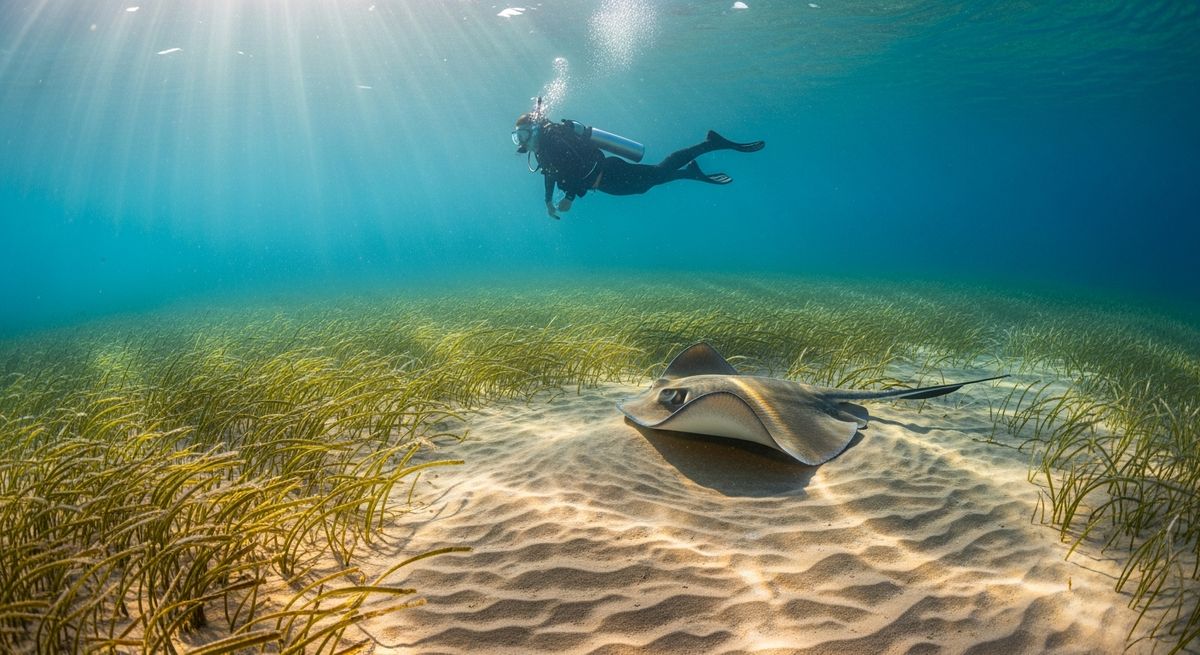
Marine Protected Area - Malapascua

You’ll likely hear the Marine Protected Area called something else by the local dive shops; it’s one of those spots that’s often just lumped in with the general diving around Malapascua. We find it’s a good choice for an afternoon dive, especially if you’ve spent the morning at Monad Shoal. The visibility here can vary, but generally, it’s a comfortable dive, not too deep, maybe 15-20 meters. You’ll spot a decent range of species, we’ve logged amberfish, and it’s a good spot for brittle stars, particularly Savigny’s. Keep an eye out for the different seagrass beds, too – halodule and thalassia are pretty common. It’s a gentle dive, good for stretching out your bottom time and appreciating the smaller things.

Location
Malapascua, Philippines, Southeast Asia
Coordinates
11.347289, 124.105620

Marine Protected Area: Mabini, Higatangan Marine Sanctuary

Best Time to Dive in Malapascua

The warmest water temperatures in Malapascua occur in June, averaging 29.9°C. The coolest conditions are in February at 27.1°C.

Monthly Water Temperatures

  • January: 27.5°C
  • February: 27.1°C
  • March: 27.6°C
  • April: 28.3°C
  • May: 29.6°C
  • June: 29.9°C
  • July: 29.6°C
  • August: 29.6°C
  • September: 29.8°C
  • October: 29.6°C
  • November: 29.2°C
  • December: 28.6°C

Nearby Dive Sites in Malapascua

Nearest Dive Centres to Marine Protected Area

Marine Life in Malapascua

Home to 88 recorded species including 72 reef fish, 5 crabs & lobsters, 5 sharks & rays, 2 other, 2 sea snails & nudibranchs, 1 seagrass & algae.

Notable Species

Recommended Packing List for Marine Protected Area

Based on average water temperature of 28.9°C, currents 15 cm/s.

  • Shorty or Rashguard - warm 29°C water needs minimal exposure protection
  • Mask - essential for every dive
  • Fins
  • BCD - buoyancy compensator
  • Regulator - your most safety-critical piece of gear
  • Dive Computer - tracks depth, time, and NDL
  • Surface Marker Buoy (SMB) - essential for boat pickups
  • Dive Torch - useful for crevices and colour at depth
  • Underwater Camera - capture your diving memories

Frequently Asked Questions

What are the typical maximum and average depths for recreational diving within Marine Protected Areas?
For the Marine Protected Area in Malapascua, the typical maximum and average depths for recreational diving are currently unknown based on our available data. Marine Protected Areas (MPAs) are established to protect diverse marine environments, and their depths can vary greatly depending on the specific location and conservation objectives. Always check with local dive centers for the most accurate depth information for the particular MPA you plan to visit.
What specific types of marine life and underwater habitats can divers expect to see in Marine Protected Areas?
The Marine Protected Area in Malapascua is characterized as a reef habitat. While specific marine life details are not provided, MPAs are established to protect natural resources, meaning divers can generally expect to encounter a diverse array of marine species thriving within these protected environments. For more information on general marine life, you can explore our wildlife database.
What is the general difficulty level for scuba diving within Marine Protected Areas?
The general difficulty level for scuba diving within the Marine Protected Area in Malapascua is rated as intermediate. This suggests that divers should possess a good understanding of buoyancy control and be comfortable with various underwater conditions. While suitable for many certified divers, beginners may find certain aspects challenging.
When is the best time of year to dive in Marine Protected Areas for optimal visibility and marine encounters?
Information regarding the best time of year for optimal visibility and marine encounters specifically for the Marine Protected Area in Malapascua is not available in our current data. Optimal diving conditions can vary significantly by location and season, even within a single region. For general guidance on dive seasons, please refer to our When to Dive section.
What diving certifications or experience levels are typically required or recommended for diving in Marine Protected Areas?
Given the intermediate difficulty level for diving in the Marine Protected Area in Malapascua, divers are typically recommended to have more than just entry-level certification. It is advisable to have experience with various dive conditions and good buoyancy control. Advanced Open Water certification or equivalent experience is often beneficial for intermediate sites.
What are the common current strengths and water conditions divers might encounter in Marine Protected Areas?
Specific data on common current strengths and water conditions for the Marine Protected Area in Malapascua is not provided in our current context. Water conditions, including currents and visibility, can be highly variable and are influenced by local weather patterns, tides, and topography. Divers should always consult with local dive operators for up-to-date information on prevailing conditions before planning their dives.