Unity Reef
Protected Area
Trinity Inlet
Why dive here
With 154+ marine species recorded in the area - including hammerhead sharks, sea turtles, tiger sharks and napoleon wrasse - Unity Reef offers some of Great Barrier Reef's richest reef diving. Water ranges 24-30°C, warmest January, February, March.
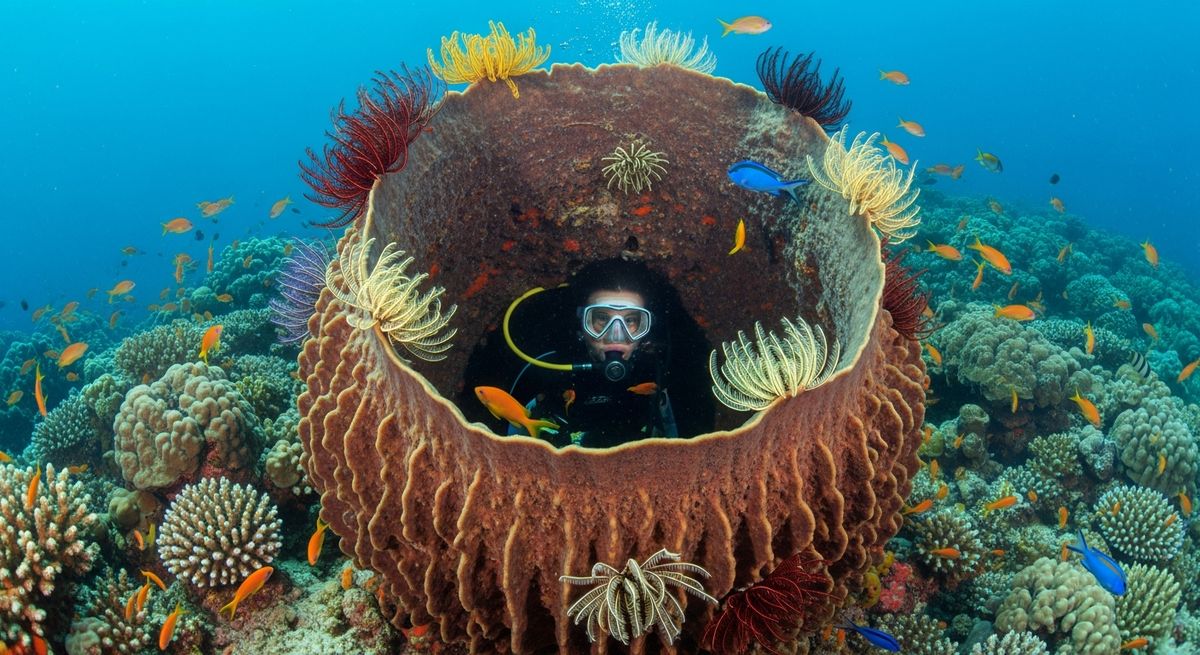
Unity Reef, for us, is one of those places that reminds you why you got into diving. It’s not about huge pelagics every time, though we have seen a Great Hammerhead cruise through on a deep drift here. What we really love is the sheer density of the smaller stuff. We’re talking about finding Sleepy Gobies peering out from every nook, and the colourful distraction of Ward's Damsels darting amongst the coral – the Frigid Cone shells are surprisingly beautiful, too. The coral itself is a patchwork of textures. You’ll see plenty of robust Staghorn, sure, but keep an eye out for the delicate Branched Sandpaper and the almost architectural Pagoda coral. We always try to hit it on a rising tide. The visibility tends to be at its best then, and the current, while present, helps you glide along effortlessly, letting you focus on the detail. It’s a site for the observant diver, someone who finds as much joy in a cleverly camouflaged Flathead Sleeper as they do in a passing turtle.
Safety Notes
Strong currents typical this month (avg 30 cm/s). Good buoyancy control essential.
Nearest Dive Centres to Unity Reef
Dive shops near Unity Reef
ABC Dive & Snorkel
Quicksilver Connections
Blue-Cruise Pty.Ltd
Ocean Free & Ocean Freedom
Divers Den
Pro Dive Cairns
Reviews for Unity Reef
Conditions
Ocean conditions, forecast and tides for Unity Reef
Unity Reef Ocean Conditions
Monthly averages for Unity Reef, sourced from Open-Meteo marine data + Copernicus Marine (EU) - nearest station: Open-Meteo marine grid (-15.65, 145.72) (5km away)
October Averages
Sea Temperature
26°C
80°F · Range: 24.5–29°C
Current Speed
30.07 cm/s
Direction: S (183.8°)
Chlorophyll-a
0.057 mg/m³
Very clear (oligotrophic)
Salinity
35.08 PSU
Based on 4 years of monitoring data · Data sources: Open-Meteo marine data + Copernicus Marine (EU)
Plan & book
Ways to dive Great Barrier Reef, from day trips to liveaboards.
Day trips & courses
via GetYourGuideGuided dives, courses and snorkel trips with instant booking.
Find dive trips in Great Barrier ReefPlaces to stay
via Booking.comHotels and dive resorts near Great Barrier Reef.
Search stays in Great Barrier ReefDive insurance
Most travel insurance excludes or limits scuba. Check what you need before you go.
Dive insurance explainedPartner links: we may earn a commission if you book, at no extra cost to you. How we make money
Where to Stay near Unity Reef
Prices from Booking.com. We may earn a commission at no extra cost to you.