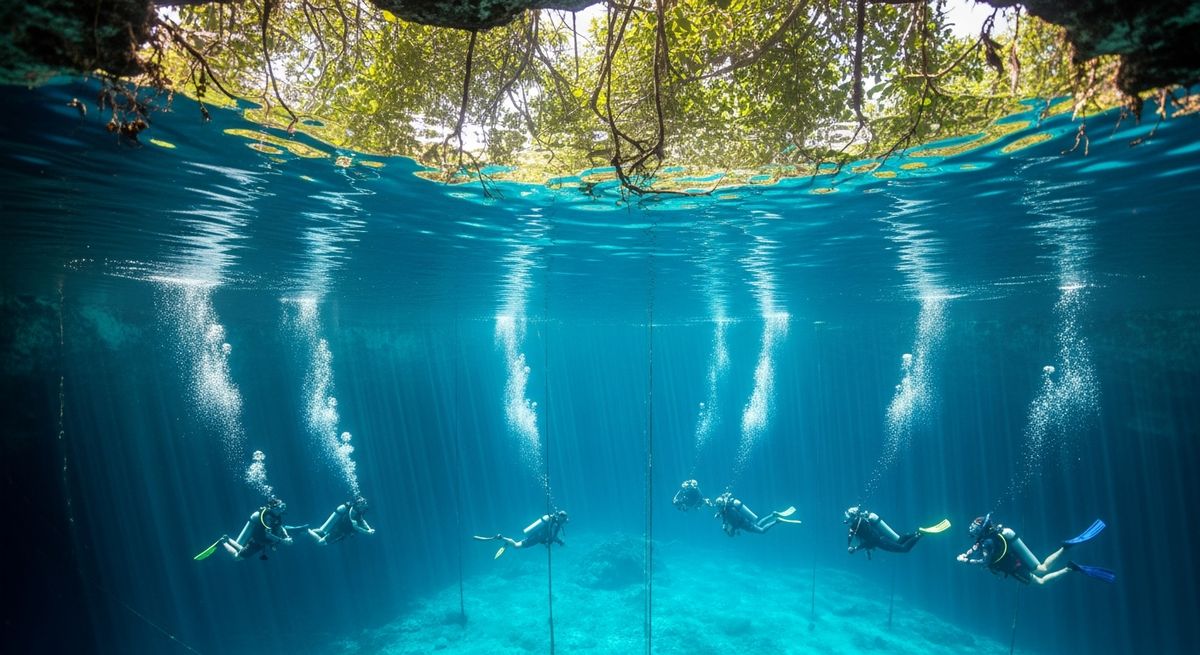
Great Blue Hole - Bahamas
Protected Area
Andros Southern Marine Park
Why dive here
With 391+ marine species recorded in the area - including barracuda, dolphins, humpback whales, octopuses and seahorses - Great Blue Hole - Bahamas offers some of Andros's richest cenote diving. Water ranges 24-31°C, warmest July, August, September.
Andros is dotted with blue holes, but the Great Blue Hole is arguably the most famous. Dropping to 30 meters, it's an intermediate dive into the darkness. You'll descend past the lip, often seeing schools of jacks circling just at the entrance, then feel the temperature drop as you go deeper. The real draw is the unique environment, that transition from open ocean to an enclosed cenote, with light shafts cutting through the gloom on sunny days. It’s a dive for those curious about geological formations and the quiet solitude of a cave system, rather than a bustling reef.
Typical Great Blue Hole - Bahamas Dive Profile
Illustrative profile based on site depth and type. Actual dive profiles vary - always follow your dive computer and training.
Safety Notes
Depth of 30m - Advanced Open Water certification recommended.
Overhead environment - never enter without proper cave/cavern training, redundant equipment, and a guideline.
Always perform a 3-minute safety stop at 5m before surfacing.
Nearest Dive Centres to Great Blue Hole - Bahamas
Dive shops near Great Blue Hole - Bahamas
Small Hope Bay Lodge
The Bahamas Agriculture & Marine Science Insti
Stuart Cove's Dive Bahamas
Jan’s Dive Supplies
Reviews for Great Blue Hole - Bahamas
Conditions
Ocean conditions, forecast and tides for Great Blue Hole - Bahamas
Great Blue Hole - Bahamas Ocean Conditions
Monthly averages for Great Blue Hole - Bahamas, sourced from Open-Meteo marine data - nearest station: Open-Meteo marine grid (25.05, -77.93) (16km away)
October Averages
Sea Temperature
29°C
84°F · Range: 27.5–30.6°C
Based on 4 years of monitoring data · Data sources: Open-Meteo marine data
Plan & book
Ways to dive Andros, from day trips to liveaboards.
Day trips & courses
via GetYourGuideGuided dives, courses and snorkel trips with instant booking.
Find dive trips in AndrosPlaces to stay
via Booking.comHotels and dive resorts near Andros.
Search stays in AndrosDive insurance
Most travel insurance excludes or limits scuba. Check what you need before you go.
Dive insurance explainedPartner links: we may earn a commission if you book, at no extra cost to you. How we make money
Where to Stay near Great Blue Hole - Bahamas
Prices from Booking.com. We may earn a commission at no extra cost to you.