Candyland
Protected Area
Bonaire
Why dive here
With 192+ marine species recorded in the area - including barracuda, blue sharks, orcas, sea turtles and sperm whales - Candyland offers some of Klein Bonaire's richest reef diving. Water ranges 27-30°C, warmest September, October, November.
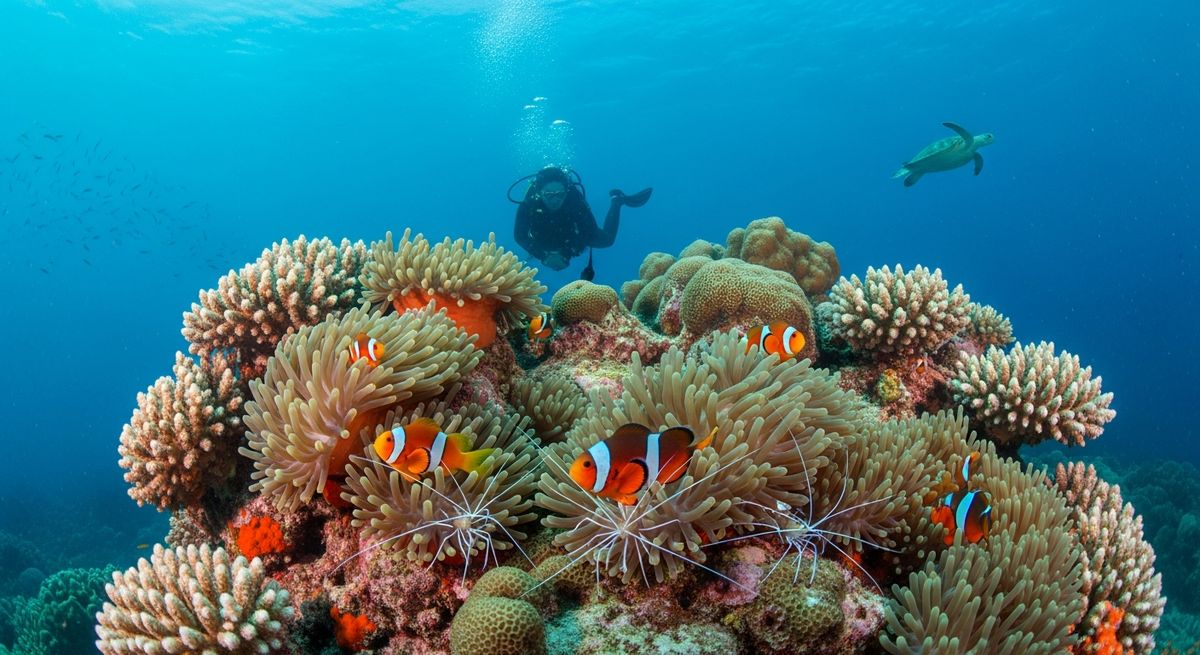
Candyland on Klein Bonaire truly lives up to its name. We love dropping in here, especially on a sunny morning. The reef starts shallow, maybe 5 meters, and just glows with color. You’ll see big heads of blushing star coral, their polyps extended, alongside golden fern hydroids that shimmer in the current. We usually drift along the main reef wall, which slopes gently down to around 20-22 meters. Look closely in the cracks and overhangs for mottled conger morays. They’re shy but often pop their heads out. Schools of blue parrotfish graze across the finger corals, and we’ve spotted a few green turtles munching away too. The visibility is usually excellent, around 20-25 meters, letting that sunlight really penetrate the shallows. Entry can be a bit tricky, especially if there's any swell. You’ll need to navigate a patch of broken coral, so take your time and watch your footing. Our tip? Go early to avoid the crowds, especially if you're shore diving. It’s a pretty easy drift, making it perfect for newer divers or those who just want a relaxed, beautiful dive with plenty to see without going too deep.
Nearest Dive Centres to Candyland
Dive shops near Candyland
Dive Friends
SMED Divers
Bonaire Scuba School
Dive Friends Bonaire @ SD
Dive Friends Bonaire Retail
Wannadive Scubadiving
Reviews for Candyland
Conditions
Ocean conditions, forecast and tides for Candyland
Candyland Ocean Conditions
Monthly averages for Candyland, sourced from Open-Meteo marine data + Copernicus Marine (EU) - nearest station: Open-Meteo marine grid (12.14, -68.3) (0km away)
October Averages
Sea Temperature
30°C
86°F · Range: 28.9–31.5°C
Current Speed
21.1 cm/s
Direction: NW (328.6°)
Chlorophyll-a
0.068 mg/m³
Very clear (oligotrophic)
Salinity
34.64 PSU
Based on 4 years of monitoring data · Data sources: Open-Meteo marine data + Copernicus Marine (EU)
Plan & book
Ways to dive Klein Bonaire, from day trips to liveaboards.
Day trips & courses
via GetYourGuideGuided dives, courses and snorkel trips with instant booking.
Find dive trips in Klein BonairePlaces to stay
via Booking.comHotels and dive resorts near Klein Bonaire.
Search stays in Klein BonaireDive insurance
Most travel insurance excludes or limits scuba. Check what you need before you go.
Dive insurance explainedPartner links: we may earn a commission if you book, at no extra cost to you. How we make money
Where to Stay near Candyland
Prices from Booking.com. We may earn a commission at no extra cost to you.