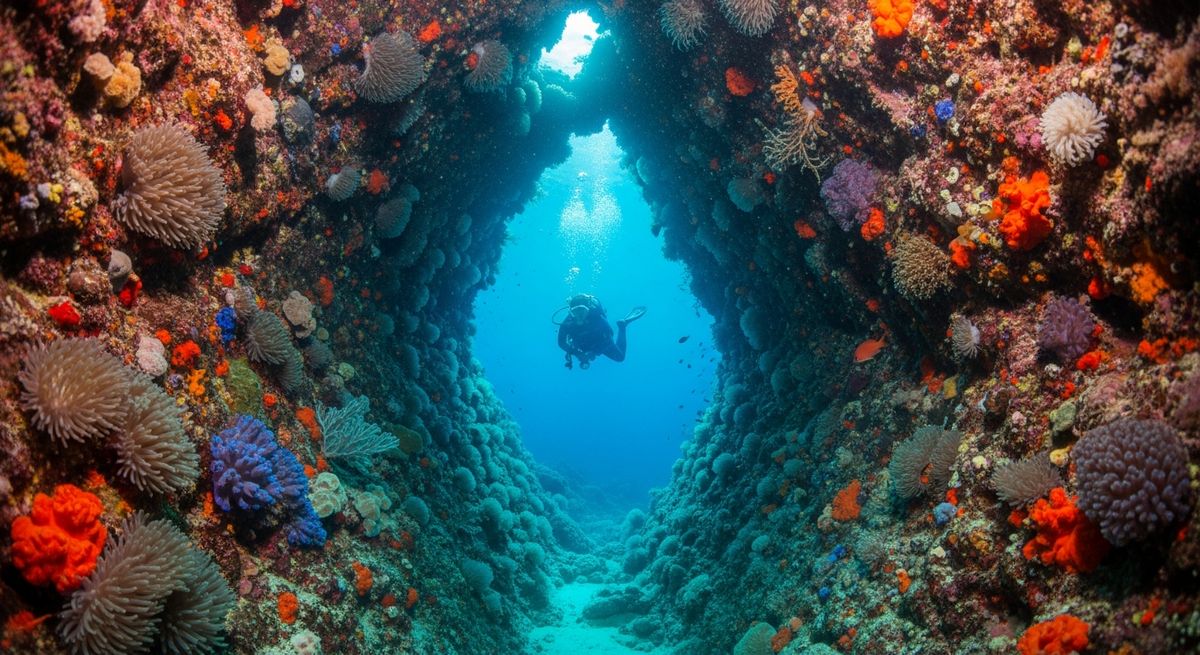
Snapper Point - Cayman Brac
Protected Area
Cayman Brac East
Why dive here
With 140+ marine species recorded in the area - including barracuda, orcas, sea turtles and pufferfish - Snapper Point - Cayman Brac offers some of Cayman Brac's richest cave diving. Water ranges 27-31°C, warmest August, September, October.
Snapper Point in Cayman Brac always delivers a good dive, especially when the conditions line up. We love this site for its distinctive finger formations, dropping down to about 17 metres. You’ll find healthy coral here, especially those soft corals swaying on the reef top, catching the light. Look for the lettuce corals – they’re particularly vibrant here, and we've seen some impressive massive starlet coral heads too. Our favourite part is cruising along the sandy channels between the fingers. This is where you might spot a lemon ray settled on the bottom or a curious trumpetfish hovering nearby. Keep an eye out for jawfish peeking from their burrows in the rubble – they’re masters of disguise. While there can be a current, it often means more pelagics moving through. We've encountered schools of horse-eyed jacks here, a real thrill when they come into view. Visibility is usually excellent, around 27 metres, which lets you really appreciate the scale of the reef. This spot is great for divers who enjoy a drift and like exploring varied reef topography.
Safety Notes
Overhead environment - never enter without proper cave/cavern training, redundant equipment, and a guideline.
Nearest Dive Centres to Snapper Point - Cayman Brac
Dive shops near Snapper Point - Cayman Brac
Reef Divers II - Cayman Brac
Scuba Shack
Reef Divers
Little Cayman Divers
Reviews for Snapper Point - Cayman Brac
Conditions
Ocean conditions, forecast and tides for Snapper Point - Cayman Brac
Snapper Point - Cayman Brac Ocean Conditions
Monthly averages for Snapper Point - Cayman Brac, sourced from Open-Meteo marine data + Copernicus Marine (EU) - nearest station: Open-Meteo marine grid (19.68, -79.9) (4km away)
October Averages
Sea Temperature
31°C
87°F · Range: 29.5–31.7°C
Current Speed
3.61 cm/s
Direction: SW (213.7°)
Chlorophyll-a
0.043 mg/m³
Very clear (oligotrophic)
Salinity
36.19 PSU
Based on 4 years of monitoring data · Data sources: Open-Meteo marine data + Copernicus Marine (EU)
Plan & book
Ways to dive Cayman Brac, from day trips to liveaboards.
Day trips & courses
via GetYourGuideGuided dives, courses and snorkel trips with instant booking.
Find dive trips in Cayman BracPlaces to stay
via Booking.comHotels and dive resorts near Cayman Brac.
Search stays in Cayman BracDive insurance
Most travel insurance excludes or limits scuba. Check what you need before you go.
Dive insurance explainedPartner links: we may earn a commission if you book, at no extra cost to you. How we make money
Where to Stay near Snapper Point - Cayman Brac
Prices from Booking.com. We may earn a commission at no extra cost to you.