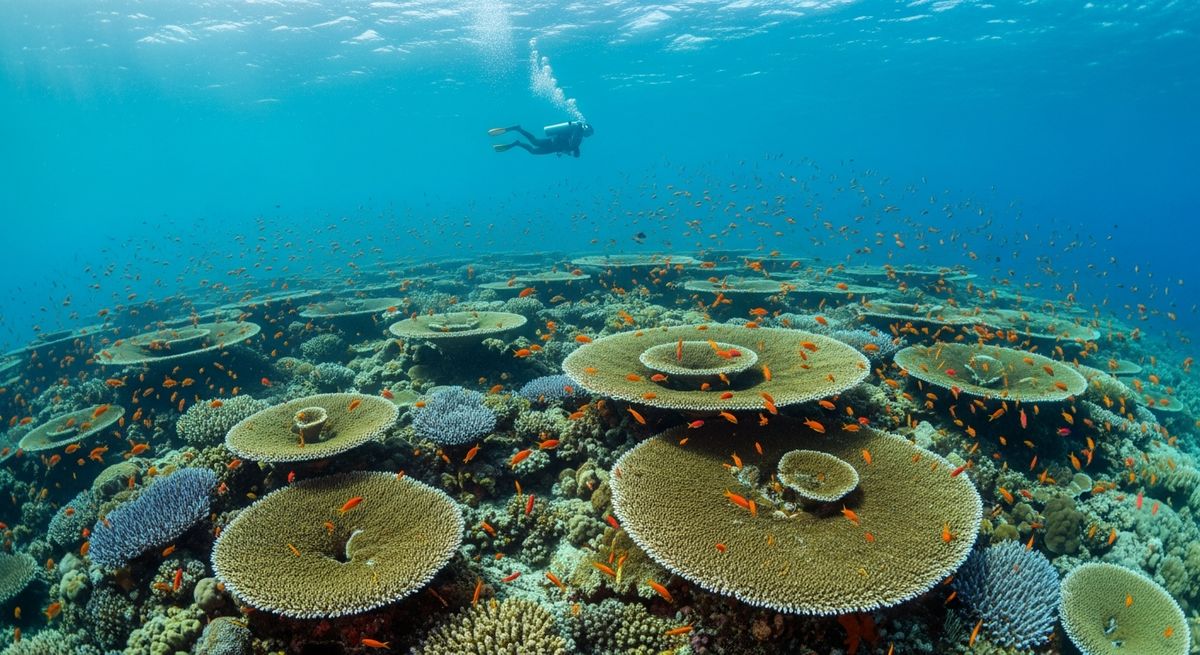
Bloody Bay Wall
Protected Area
Bloody Bay - Jackson Point (Little Cayman)
Why dive here
With 140+ marine species recorded in the area - including barracuda, orcas, sea turtles and pufferfish - Bloody Bay Wall offers some of Cayman Brac's richest reef diving. Water ranges 27-31°C, warmest August, September, October.
Bloody Bay Wall is one of those places that sticks with you. We love dropping in over that shallow reef, maybe 6 or 7 metres deep, and then just gliding out over the edge. The wall itself starts at about 10 metres and just disappears into a deep blue that feels endless. Visibility here is consistently excellent, often well over 25 metres, so you really get that feeling of floating in space. We’ve spent entire dives just hovering, watching angelfish and parrotfish graze the reef top before looking out into the blue. Keep an eye out for turtles drifting by, and those big mutton snapper often hang around the deeper ledges. Our favourite part is the sheer scale of it, and the way the light filters down the wall. It’s not a drift dive, usually, so you can take your time exploring the cracks and crevices along the drop-off, looking for those tiny blennies and gobies. It’s an easy dive for anyone comfortable with depth, and perfect for photographers wanting that dramatic wall shot.
Typical Bloody Bay Wall Dive Profile
Illustrative profile based on site depth and type. Actual dive profiles vary - always follow your dive computer and training.
Safety Notes
Always perform a 3-minute safety stop at 5m before surfacing.
Nearest Dive Centres to Bloody Bay Wall
Dive shops near Bloody Bay Wall
Reef Divers
Little Cayman Divers
Reef Divers II - Cayman Brac
Scuba Shack
Reviews for Bloody Bay Wall
Conditions
Ocean conditions, forecast and tides for Bloody Bay Wall
Bloody Bay Wall Ocean Conditions
Monthly averages for Bloody Bay Wall, sourced from Open-Meteo marine data + Copernicus Marine (EU) - nearest station: Open-Meteo marine grid (19.68, -79.9) (4km away)
October Averages
Sea Temperature
31°C
87°F · Range: 29.5–31.7°C
Current Speed
3.61 cm/s
Direction: SW (213.7°)
Chlorophyll-a
0.043 mg/m³
Very clear (oligotrophic)
Salinity
36.19 PSU
Based on 4 years of monitoring data · Data sources: Open-Meteo marine data + Copernicus Marine (EU)
Plan & book
Ways to dive Cayman Brac, from day trips to liveaboards.
Day trips & courses
via GetYourGuideGuided dives, courses and snorkel trips with instant booking.
Find dive trips in Cayman BracPlaces to stay
via Booking.comHotels and dive resorts near Cayman Brac.
Search stays in Cayman BracDive insurance
Most travel insurance excludes or limits scuba. Check what you need before you go.
Dive insurance explainedPartner links: we may earn a commission if you book, at no extra cost to you. How we make money
Where to Stay near Bloody Bay Wall
Prices from Booking.com. We may earn a commission at no extra cost to you.