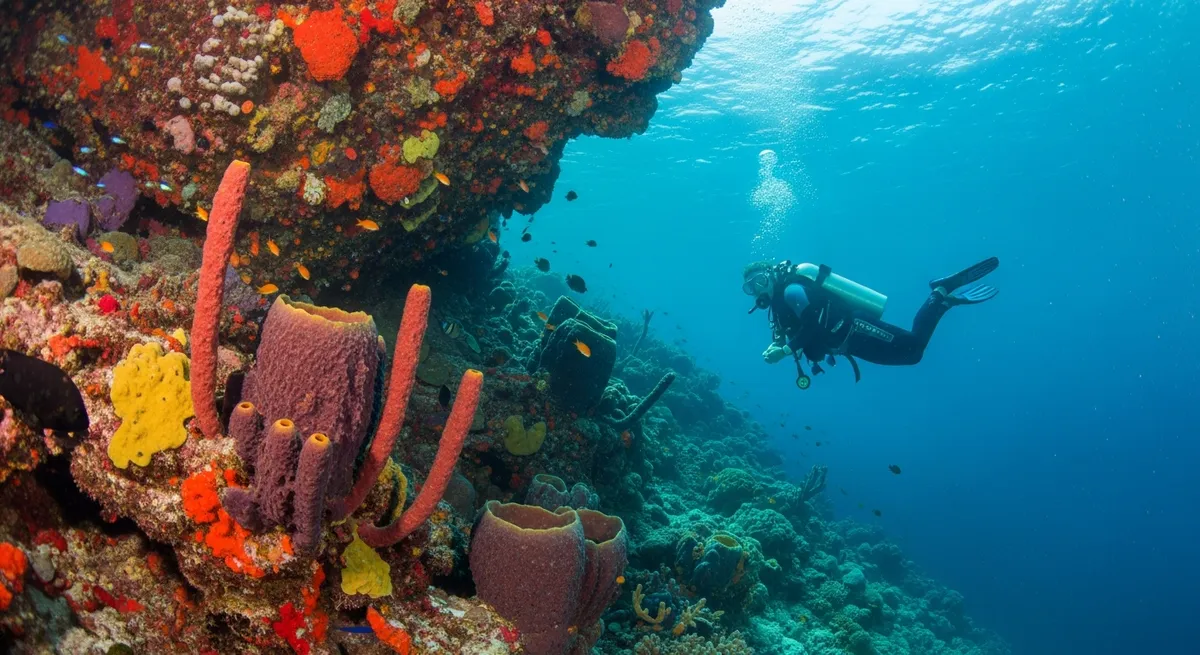
Diving in Cayman Brac
Why dive here
Cayman Brac offers some of Cayman Islands's richest diving, with 140+ marine species recorded in the area - including barracuda, orcas, sea turtles and pufferfish. Water ranges 27-31°C, warmest August, September, October.
Cayman Brac feels like a throwback, a diver's island where the focus stays squarely on the water. We love the uncrowded sites; you rarely share a mooring. The MV *Captain Keith Tibbetts* is, of course, the main event, a proper Russian frigate broken into two sections after a hurricane, resting at 30 metres. Swimming through the bow section, with light shafts cutting through the gloom, is a deeply satisfying experience. Beyond the wreck, the Bluff Wall is our favourite. It just drops, a sheer face into the deep blue, often with schools of Longspine Squirrelfish hanging in the current. Keep an eye out for Flasher Wrasse on the shallower parts of the reef - their colour changes are captivating. We'd suggest going early morning for the best light on the walls, and the currents tend to be gentler then. While the larger pelagics like Dorado and Allison's Tuna are less common, the sheer density of colourful reef fish, like the Dusky and Threespot Damselfish, keeps every dive interesting. It’s a place for divers who appreciate calm, consistent diving without the crowds.
Cayman Brac Dive Site Map
Dive sites and dive centres in Cayman Brac
Cayman Brac Dive Sites
25 dive sites in Cayman Brac
Bloody Bay Wall
Bloody Bay Wall is one of those places that sticks with you. We love dropping in over that shallow reef, maybe 6 or 7 metres deep, and then just gliding out over the edge. The wall itself starts at about 10 metres and just disappears into a deep blue that feels endless. Visibility here is consistently excellent, often well over 25 metres, so you really get that feeling of floating in space. We’ve spent entire dives just hovering, watching angelfish and parrotfish graze the reef top before looking out into the blue. Keep an eye out for turtles drifting by, and those big mutton snapper often hang around the deeper ledges. Our favourite part is the sheer scale of it, and the way the light filters down the wall. It’s not a drift dive, usually, so you can take your time exploring the cracks and crevices along the drop-off, looking for those tiny blennies and gobies. It’s an easy dive for anyone comfortable with depth, and perfect for photographers wanting that dramatic wall shot.
Bloody Bay Wall
Bloody Bay Wall is one of those places that sticks with you. We love dropping in over that shallow reef, maybe 6 or 7 metres deep, and then just gliding out over the edge. The wall itself starts at about 10 metres and just disappears into a deep blue that feels endless. Visibility here is consistently excellent, often well over 25 metres, so you really get that feeling of floating in space. We’ve spent entire dives just hovering, watching angelfish and parrotfish graze the reef top before looking out into the blue. Keep an eye out for turtles drifting by, and those big mutton snapper often hang around the deeper ledges. Our favourite part is the sheer scale of it, and the way the light filters down the wall. It’s not a drift dive, usually, so you can take your time exploring the cracks and crevices along the drop-off, looking for those tiny blennies and gobies. It’s an easy dive for anyone comfortable with depth, and perfect for photographers wanting that dramatic wall shot.
Buccaneer Reef
Buccaneer Reef, on Brac’s west end, feels like a warm hug underwater. It’s a shallow, easy shore dive, topping out around 15 metres, which we think makes it perfect for a relaxed afternoon. We’ve spent hours here just hovering, watching the schools of French grunts and bluestriped grunts swirl around the mustard hill corals. Keep an eye out for the nassau groupers, they’re usually a bit shy but we’ve seen some real characters here. Visibility averages a comfortable 23 metres, so you’re never squinting, and the light just floods the reef. We love it for its calm, almost zen-like atmosphere. You’ll spot plenty of blue parrotfish munching away, and if you’re patient, a hogfish might come investigate you. It's a great spot to practice buoyancy or just soak in the Caribbean colours without any pressure.
Buccaneer Reef
Buccaneer Reef, on Brac’s west end, feels like a warm hug underwater. It’s a shallow, easy shore dive, topping out around 15 metres, which we think makes it perfect for a relaxed afternoon. We’ve spent hours here just hovering, watching the schools of French grunts and bluestriped grunts swirl around the mustard hill corals. Keep an eye out for the nassau groupers, they’re usually a bit shy but we’ve seen some real characters here. Visibility averages a comfortable 23 metres, so you’re never squinting, and the light just floods the reef. We love it for its calm, almost zen-like atmosphere. You’ll spot plenty of blue parrotfish munching away, and if you’re patient, a hogfish might come investigate you. It's a great spot to practice buoyancy or just soak in the Caribbean colours without any pressure.
Capt. K. Tibbets
The Capt. K. Tibbets wreck, a 330-foot Russian frigate, sits upright in about 30 metres of water. We love the way she’s transformed over the years, from a stark metal hull into a genuine habitat. Drop down the bow line and you’ll often find schools of French grunts and schoolmasters swirling around the mast, so thick they almost obscure the sunlight filtering through. The bridge is our favourite section to explore; it’s fairly intact, offering plenty of swim-throughs where you might spot a shy mimic blenny peering out. We’ve seen Nassau groupers lurking in the shadows of the deeper holds, and the colourful parrotfish, particularly the yellowtail, are always busy grazing on the coral growth along the deck. The currents here can be a bit frisky sometimes, especially on a north swell, so check with the local shops before you head out. It’s a site that really rewards patience and a good torch, letting you peek into every crevice. This wreck offers a fantastic combination of historical intrigue and marine life, a perfect blend for divers who appreciate both structural exploration and vibrant reef ecosystems.
Cayman Brac
We love Cayman Brac for its laid-back vibe, and the wreck of the M/V Tibbetts is a big reason why divers come back. It's a proper wreck, purpose-sunk, sitting upright in manageable depths, with its deepest point at 21 meters. We always suggest exploring the bridge first; it's still quite intact, and you can swim through the wheelhouse to see the gauges. Below deck, the cargo holds are open, offering easy penetration for those comfortable with overhead environments, where you might spot a sleeping nurse shark tucked away. The wreck itself is a magnet for fish, swarming with schools of grunts and snapper. Keep an eye out for angelfish and parrotfish picking at the coral growth that’s steadily taking over the metal. Visibility is usually excellent, around 25-30 meters, making it a great spot for photographers, especially in the late morning sun when the light streams into the holds.
Cemetery Reef
Cemetery Reef on Cayman Brac is the kind of easy, rewarding dive we’re always looking for when we just want to relax and enjoy the reef. We love this site for its chilled-out vibe and surprising density of interesting critters, especially for macro enthusiasts. Keep an eye out for the aptly named Sand Stargazers peeking out from the sandy patches, and if you’re patient, you might spot an Atlantic Yellow Cowrie navigating the Elkhorn coral. We’ve had great luck here with juvenile Angelfish and Hogfish, often sheltering in the crevices. The main draw here is the sheer number of smaller, fascinating species. We’ve spent whole dives just combing the reef for everything from Dwarf Planaxis snails to the colourful Broad-ribbed Cardita. Look closely at the reef structure itself, because the Mustard Hill and Finger corals provide excellent shelter. Our tip? Go slow, really slow. Don't rush past those sandy areas or the base of the coral heads, that’s where the real magic often hides. It’s a perfect site for photographers wanting to practice their macro skills without battling strong currents, or for any diver who enjoys a leisurely poke around a healthy, vibrant Caribbean reef.
Coral Anchors
Coral Anchors is one of those sites we always try to hit when we're in Brac. It’s a great easy dive, maxing out around 30m, and the name gives away the main attraction: two old anchors. One is right there at 24m, another slightly deeper at 27m, both half-buried in the reef, which gives them a real sense of history. What we really love about Coral Anchors, though, isn't just the iron. The reef here, a series of coral "knuckles" separated by stretches of sand, is incredibly pretty. You get some impressive colonies of Smooth Star Coral and massive starlets, especially when the light hits them just right – they almost shimmer. We've spent ages just watching the parrotfish, particularly the Dark Green ones, methodically munching away. It's also a fantastic spot for spotting smaller stuff. Keep your eyes peeled in the sand for stingrays, and we’ve even found a Sand Stargazer here a couple of times, which is always a treat. For a relaxed afternoon dive, maybe your last of the day, Coral Anchors is a reliable pick. It's a gentle drift if there’s any current, and it just always delivers a pleasant, unhurried experience.
Double Wall
Double Wall is a cracking way to kick off a Brac dive trip, especially if you’re staying up on the northwest end. We love dropping in here first. It’s got a classic Caribbean wall feel, starting shallow and just… dropping. We often find the visibility here can be truly exceptional, sometimes pushing past that 20m average, giving you this incredible sense of scale as you peer down the blue. Keep an eye out for the big barrel sponges clinging to the wall, they’re impressive, and often have a couple of cleaner shrimp busy at work inside. The corals are healthy, lots of star corals and rose coral formations, providing shelter for plenty of smaller stuff. You’ll definitely see schools of fusiliers and snapper, particularly the mutton snapper, hugging the wall, and the resident parrotfish are always munching away, creating those little puffs of sand. We’ve had some fantastic encounters with Caribbean reef sharks here, just cruising by in the deeper water, and it’s a reliable spot for turtles too. For a relaxed but undeniably beautiful wall dive, Double Wall delivers.
East Chute
East Chute offers more than your typical Brac wall dive; it throws in a neat little wreck for good measure. We love dropping onto the sandy plateau at about 15 metres, where those channels lead you straight to the wall's edge. But before you get there, tucked into the sand at around 17 metres, sits the Cayman Mariner. It’s not a huge wreck, more like a small, broken-up cargo vessel, but it’s completely encrusted. We’ve found massive starlet corals growing right out of the hull and seen mimic blennies peeking from every crevice. You can fin right over the top, maybe even peek into a small open hatch if you’re nimble. The Mariner just feels like a natural part of the reef now, totally colonised. From the wreck, the wall drops off into that familiar Brac blue. We always spot great barracuda here, just hanging motionless, eyeing us up. Look for the orangespotted filefish flitting around the sponges covering the wall; they’re pretty distinctive. It's a forgiving dive, good for anyone comfortable with a little depth. Our favourite way to do it is to spend a good chunk of time exploring the wreck and its immediate surroundings, then drift along the wall for the ascent. The visibility usually holds strong, giving you a clear view of both the wreck and the deeper wall.
Fisheries
Fisheries is one of those spots on Brac that just keeps giving, especially if you’re into the smaller, more elusive critters. We’ve always found it best to drop in and head west from the mooring, letting the mini wall guide you along. The reef crest, sitting around 9 metres, often has a gentle current pushing you, which makes for a nice drift. You’ll weave past sandy chutes, each one a potential hiding spot for a resting stingray, so keep an eye out there. The real showstopper here, though, is that big pillar coral. It’s a genuine landmark, reaching up from the 15-metre reef floor, absolutely covered in little blennies and sponges. We love to take our time here, circling it slowly, watching the Saddled Blennies dart in and out. This site is fantastic for macro photographers; we often spot Imitator Blennies and tiny Nodulose Miters tucked into crevices. While you’ll certainly see your share of Angelfish and Sharpnose Pufferfish, it’s the hunt for the Kwab or an Orangespotted Filefish that really makes Fisheries our pick. It’s a pretty mellow dive, generally good visibility, and perfect for anyone who enjoys a slower pace and wants to focus on the details.
Jackson Wall and Reef - Grand Cayman
Jackson Wall and Reef is one of our favourite spots on Cayman Brac. We love dropping in here, feeling the slight current pull you gently along the mini wall, past dense patches of finger coral and massive heads of grooved brain coral. It’s a super relaxed drift, perfect for just watching the show. You’ll weave through swim-throughs carved into the main wall, sunlight dappling the sand below, often finding nurse sharks tucked into crevices. Keep an eye out for foraging parrotfish – the midnight and dark green varieties are particularly striking – and the occasional cruising eagle ray out in the blue. The sandy boulevard is a good place to spot a spaghetti eel poking its head from the substrate or a curious whitespotted filefish flitting by. We’d suggest going in the late morning when the sun angle really brings out the colours on the wall. It’s an easy, rewarding dive for any skill level, offering a real taste of classic Caribbean reef life without feeling rushed.
Cayman Brac Dive Centres
6 dive shops and operators in Cayman Brac
Ocean Wildlife in Cayman Brac
140 species recorded in Cayman Brac
Cayman Brac Daylight & Sunrise/Sunset
Sunrise and sunset times for Cayman Brac, calculated from coordinates
Today - Sunday 11 October
Sunrise
06:13
Sunset
18:01
Daylight
11h 48m
Golden Hour
17:32
First light (dawn) at 05:51 · Last light (dusk) at 18:23
Monthly Averages
| Month | Sunrise | Sunset | Daylight |
|---|---|---|---|
| Jan | 06:58 | 18:01 | 11h 4m |
| Feb | 06:50 | 18:20 | 11h 29m |
| Mar | 06:30 | 18:30 | 12h 0m |
| Apr | 06:03 | 18:38 | 12h 34m |
| May | 05:45 | 18:48 | 13h 3m |
| JunLongest | 05:42 | 19:00 | 13h 19m |
| Jul | 05:50 | 19:03 | 13h 13m |
| Aug | 06:01 | 18:50 | 12h 49m |
| Sep | 06:08 | 18:25 | 12h 17m |
| OctNow | 06:15 | 17:58 | 11h 44m |
| Nov | 06:28 | 17:42 | 11h 13m |
| DecShortest | 06:47 | 17:44 | 10h 57m |
Times are approximate local times based on longitude. Actual times may vary slightly depending on the exact timezone observed in Cayman Brac.
Where to Stay near Cayman Brac
Prices from Booking.com. We may earn a commission at no extra cost to you.
Marine Protected Areas near Cayman Brac
39 protected areas near Cayman Brac - please respect local regulations when diving
North Sound (Grand Cayman)
Little Sound (Grand Cayman)
Sandbar Wildlife Interaction Zone
Victoria House- Treasure Island Resort (Grand Cayman)
South Hole Sound (Little Cayman)
Head of Barkers - Flats (Grand Cayman)
Mary's Bay - East Point (Little Cayman)
12 - Mile Bank West
Little Cayman East
South Sound (Grand Cayman)
Grand Cayman West
12 - Mile Bank East
Showing 12 largest of 39
Getting to Cayman Brac
West End
George Town
Montego Bay
Plan & book
Ways to dive Cayman Brac, from day trips to liveaboards.
Day trips & courses
via GetYourGuideGuided dives, courses and snorkel trips with instant booking.
Find dive trips in Cayman BracPlaces to stay
via Booking.comHotels and dive resorts near Cayman Brac.
Search stays in Cayman BracDive insurance
Most travel insurance excludes or limits scuba. Check what you need before you go.
Dive insurance explainedPartner links: we may earn a commission if you book, at no extra cost to you. How we make money