East Chute
Protected Area
Scotts Anchorage - White Bay (Cayman Brac)
Why dive here
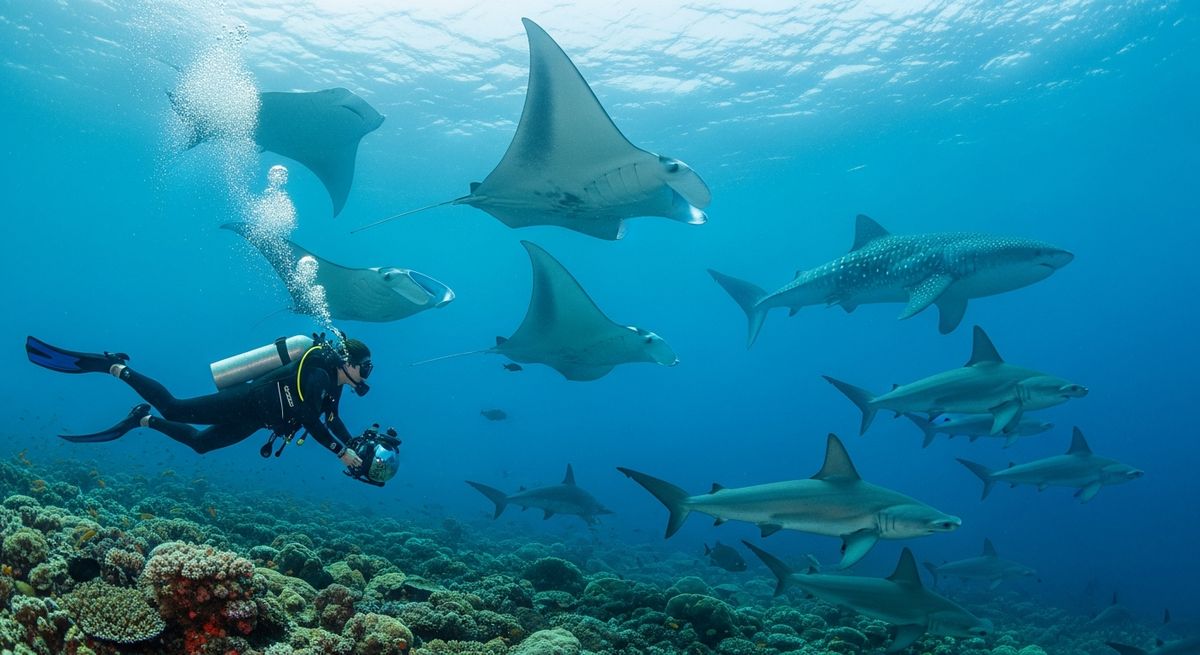
With 140+ marine species recorded in the area - including barracuda, orcas, sea turtles and pufferfish - East Chute offers some of Cayman Brac's richest drift diving. Water ranges 27-31°C, warmest August, September, October.
East Chute offers more than your typical Brac wall dive; it throws in a neat little wreck for good measure. We love dropping onto the sandy plateau at about 15 metres, where those channels lead you straight to the wall's edge. But before you get there, tucked into the sand at around 17 metres, sits the Cayman Mariner. It’s not a huge wreck, more like a small, broken-up cargo vessel, but it’s completely encrusted. We’ve found massive starlet corals growing right out of the hull and seen mimic blennies peeking from every crevice. You can fin right over the top, maybe even peek into a small open hatch if you’re nimble. The Mariner just feels like a natural part of the reef now, totally colonised. From the wreck, the wall drops off into that familiar Brac blue. We always spot great barracuda here, just hanging motionless, eyeing us up. Look for the orangespotted filefish flitting around the sponges covering the wall; they’re pretty distinctive. It's a forgiving dive, good for anyone comfortable with a little depth. Our favourite way to do it is to spend a good chunk of time exploring the wreck and its immediate surroundings, then drift along the wall for the ascent. The visibility usually holds strong, giving you a clear view of both the wreck and the deeper wall.
Typical East Chute Dive Profile
Illustrative profile based on site depth and type. Actual dive profiles vary - always follow your dive computer and training.
Safety Notes
Drift dive - carry a surface marker buoy (SMB) and stay with your group. Brief the current direction before entry.
Always perform a 3-minute safety stop at 5m before surfacing.
Nearest Dive Centres to East Chute
Dive shops near East Chute
Reef Divers II - Cayman Brac
Scuba Shack
Reef Divers
Little Cayman Divers
Reviews for East Chute
Conditions
Ocean conditions, forecast and tides for East Chute
East Chute Ocean Conditions
Monthly averages for East Chute, sourced from Open-Meteo marine data + Copernicus Marine (EU) - nearest station: Open-Meteo marine grid (19.68, -79.9) (4km away)
October Averages
Sea Temperature
31°C
87°F · Range: 29.5–31.7°C
Current Speed
3.61 cm/s
Direction: SW (213.7°)
Chlorophyll-a
0.043 mg/m³
Very clear (oligotrophic)
Salinity
36.19 PSU
Based on 4 years of monitoring data · Data sources: Open-Meteo marine data + Copernicus Marine (EU)
Plan & book
Ways to dive Cayman Brac, from day trips to liveaboards.
Day trips & courses
via GetYourGuideGuided dives, courses and snorkel trips with instant booking.
Find dive trips in Cayman BracPlaces to stay
via Booking.comHotels and dive resorts near Cayman Brac.
Search stays in Cayman BracDive insurance
Most travel insurance excludes or limits scuba. Check what you need before you go.
Dive insurance explainedPartner links: we may earn a commission if you book, at no extra cost to you. How we make money
Where to Stay near East Chute
Prices from Booking.com. We may earn a commission at no extra cost to you.