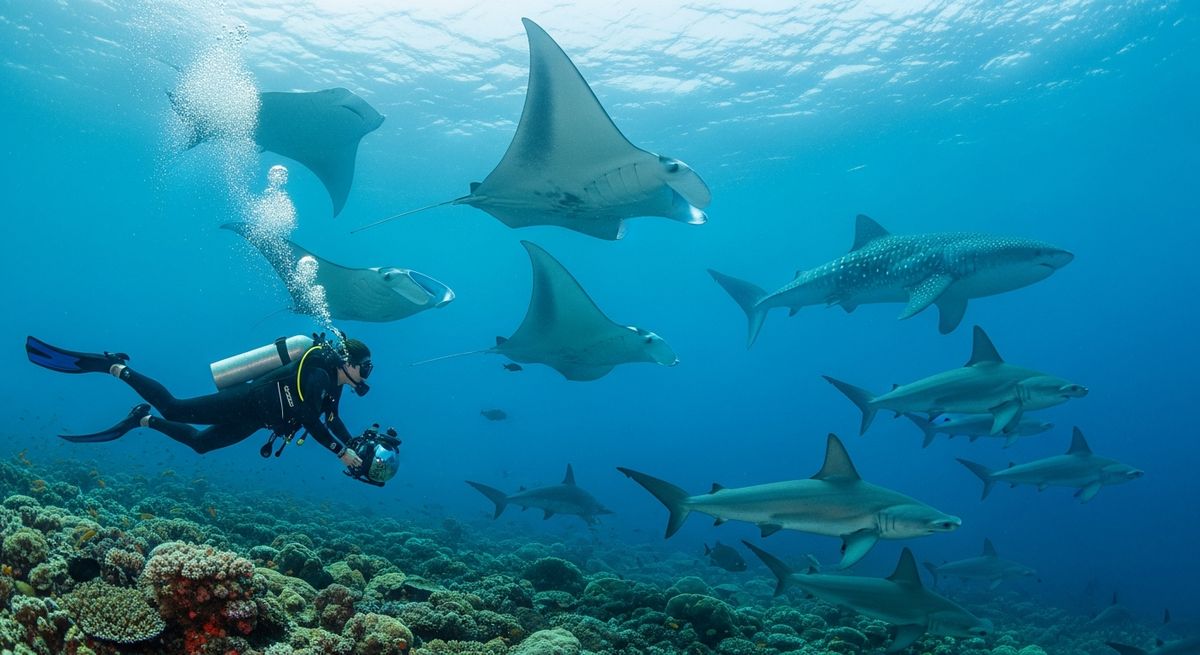
Black Rock Reef - Grand Cayman

Don Quickset feels like a secret handshake on Roatán’s west end. No mooring means you’ll be drifting, which we love for the effortless glide over the sand channels and scattered coral heads. It’s not a riot of colour like some of the deeper wall dives, but for us, the magic here is in the macro life and the sheer volume of smaller fish. Look closely in the sand for Kuna Gobies popping in and out of their burrows and the iridescent flash of Slender Filefish trying to blend in. We often spot groups of Horse-eye Jacks circling, and it’s a site where you’re almost guaranteed to find a few Lionfish, which helps with local conservation efforts. The real joy of Don Quickset is in slowing down, letting the current carry you, and focusing on the details. This site suits divers who appreciate the subtler beauty of the reef and enjoy hunting for the smaller creatures rather than chasing pelagics. It’s a relaxed dive, perfect for a long bottom time, especially if you’re into underwater photography.

Location
Grand Cayman, Cayman Islands, Caribbean
Coordinates
19.356300, -81.105000
Type
drift

Marine Protected Area: Spotter Bay - Anchors Point (Grand Cayman)

Best Time to Dive in Grand Cayman

The warmest water temperatures in Grand Cayman occur in September, averaging 30.4°C. The coolest conditions are in February at 26.9°C.

Monthly Water Temperatures

  • January: 27.3°C
  • February: 26.9°C
  • March: 27.0°C
  • April: 27.7°C
  • May: 28.7°C
  • June: 29.2°C
  • July: 29.8°C
  • August: 30.3°C
  • September: 30.4°C
  • October: 30.0°C
  • November: 29.0°C
  • December: 28.0°C

Nearby Dive Sites in Grand Cayman

Nearest Dive Centres to Black Rock Reef

Marine Life in Grand Cayman

Home to 332 recorded species including 276 reef fish, 30 hard corals, 5 other, 5 seagrass & algae, 4 whales & dolphins, 4 sharks & rays.

Notable Species

Recommended Packing List for Black Rock Reef

Based on average water temperature of 28.7°C, currents 9 cm/s.

  • Shorty or Rashguard - warm 29°C water needs minimal exposure protection
  • Mask - essential for every dive
  • Fins
  • BCD - buoyancy compensator
  • Regulator - your most safety-critical piece of gear
  • Dive Computer - tracks depth, time, and NDL
  • Surface Marker Buoy (SMB) - essential for boat pickups
  • Dive Torch - useful for crevices and colour at depth
  • Underwater Camera - capture your diving memories

Frequently Asked Questions

What is the typical depth range for diving at Black Rock Reef?
Black Rock Reef offers diving to a maximum depth of 21 meters, providing ample opportunity to explore its diverse underwater landscape. Within this depth range, divers can discover fascinating features such as sandy channels, vibrant coral gardens, and impressive freestanding coral heads. This depth makes it accessible for a wide range of certified divers.
What kind of marine life and coral formations can divers expect to see at Black Rock Reef?
Divers at Black Rock Reef will encounter vibrant coral gardens, sandy channels, and impressive freestanding coral heads with narrow passages. Keep an eye out for species like Bermuda Chub, Yellowtail Snapper, Barracudas, and Caribbean Reef Squid thriving amid the corals. Lobsters, crabs, and shrimp often hide under overhangs, and a massive barrel sponge along with distinct ridges further mark this lively site. For more on marine species, visit our wildlife database.
How challenging is diving at Black Rock Reef, and what skill level is recommended?
Diving at Black Rock Reef is rated as intermediate difficulty, making it suitable for divers with some prior experience. As a drift dive, it requires comfort with current conditions and appropriate buoyancy control. Divers should be confident in their skills to fully enjoy the unique features of this site.
What is the best time of year to dive Black Rock Reef for optimal conditions?
The provided data does not specify the best time of year for optimal diving conditions at Black Rock Reef. However, you can generally find more information about seasonal conditions for the Cayman Islands on our When to Dive page. This resource can help you plan your trip for the best possible experience.
Are there any specific certifications or experience levels required to dive Black Rock Reef?
While specific certifications aren't explicitly listed, the intermediate difficulty rating for Black Rock Reef suggests that divers should have experience beyond entry-level. Comfort with drift diving techniques and good buoyancy control would be highly beneficial for safely and enjoyably exploring this site. It is recommended to have advanced open water certification or equivalent experience.
What are the typical current conditions and visibility like at Black Rock Reef?
Black Rock Reef is characterized as a drift dive, indicating that currents are typically present and contribute to the dive experience. Divers can also expect excellent visibility, averaging around 23 meters. This superb visibility offers clear and expansive views of the vibrant marine life and intricate coral formations throughout the reef.