McCurly’s Wall
Protected Area
No Diving Zone (East)
Why dive here
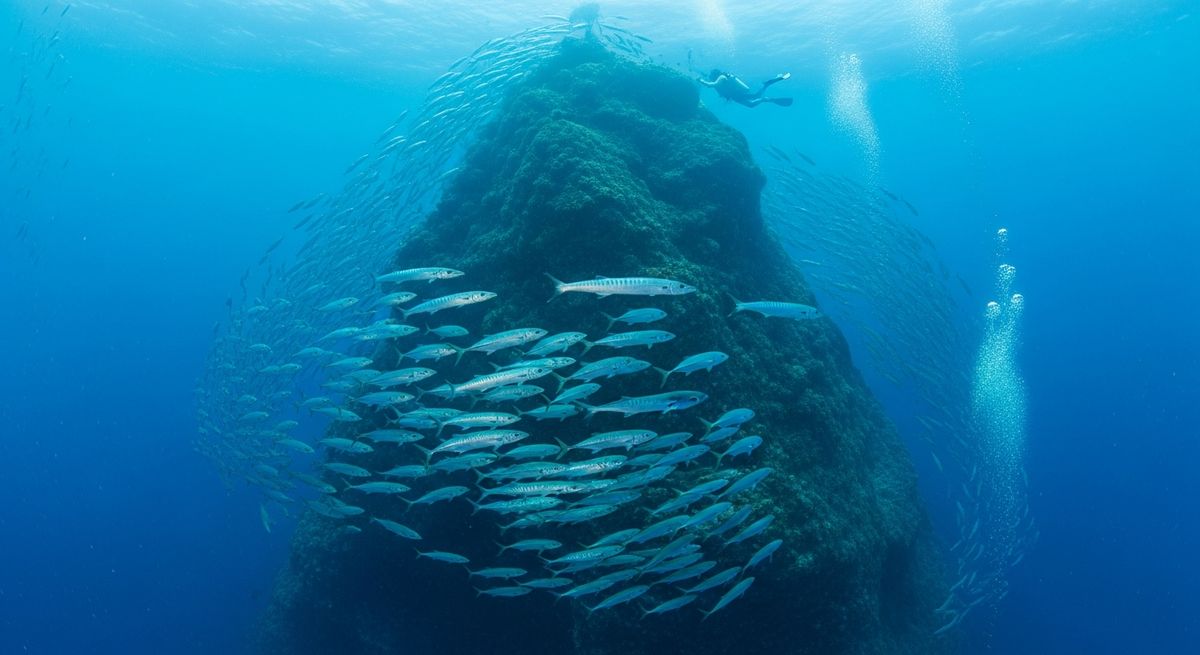
With 327+ marine species recorded in the area - including barracuda, bull sharks, oceanic whitetip sharks, orcas and sea turtles - McCurly’s Wall offers some of Grand Cayman's richest pinnacle diving. Water ranges 27-31°C, warmest August, September, October.
McCurly’s Wall holds a special place for us. It’s got that classic Cayman wall vibe, but with a few twists that make it feel fresh every time. We usually start out shallow, maybe 12 metres, just cruising over the reef top, which is a kaleidoscope of Lettuce Coral and Lamarck's sheet coral. Then, the whole world drops away. You’re suddenly on the edge of this vertical face, peering into the blue. What makes McCurly’s a standout for us is that chimney. Around 24 metres, there’s this narrow slot, just wide enough to fin your way up. It’s a proper squeeze, and when you pop out onto the shallow reef again, it feels like you’ve been transported. We always spot Flamefish darting amongst the black coral, and if you’re patient, you might see a Mottled Conger Moray tucked away. Keep an eye out for those camouflaged neck crabs too, they blend in perfectly. The contrast between the deep wall and the shallower reef is what really sells it. One minute you’re looking for a Black Moray in the shadows, the next you’re watching Yellowtail Parrotfish grazing in the sunlit shallows. It's an ideal dive for anyone who loves a bit of dramatic topography and a good mix of macro and wide-angle scenery.
Nearest Dive Centres to McCurly’s Wall
Dive shops near McCurly’s Wall
Silver Thatch Watersports
Tortuga Divers
Ocean Frontiers
Living the Dream Divers
OCTOPUS
Divers Supply
Reviews for McCurly’s Wall
Conditions
Ocean conditions, forecast and tides for McCurly’s Wall
McCurly’s Wall Ocean Conditions
Monthly averages for McCurly’s Wall, sourced from Open-Meteo marine data + Copernicus Marine (EU) - nearest station: Open-Meteo marine grid (19.38, -81.32) (5km away)
October Averages
Sea Temperature
30°C
87°F · Range: 29.1–31.8°C
Current Speed
4.47 cm/s
Direction: NW (296.6°)
Chlorophyll-a
0.045 mg/m³
Very clear (oligotrophic)
Salinity
36.14 PSU
Based on 4 years of monitoring data · Data sources: Open-Meteo marine data + Copernicus Marine (EU)
Plan & book
Ways to dive Grand Cayman, from day trips to liveaboards.
Day trips & courses
via GetYourGuideGuided dives, courses and snorkel trips with instant booking.
Find dive trips in Grand CaymanPlaces to stay
via Booking.comHotels and dive resorts near Grand Cayman.
Search stays in Grand CaymanDive insurance
Most travel insurance excludes or limits scuba. Check what you need before you go.
Dive insurance explainedPartner links: we may earn a commission if you book, at no extra cost to you. How we make money
Where to Stay near McCurly’s Wall
Prices from Booking.com. We may earn a commission at no extra cost to you.