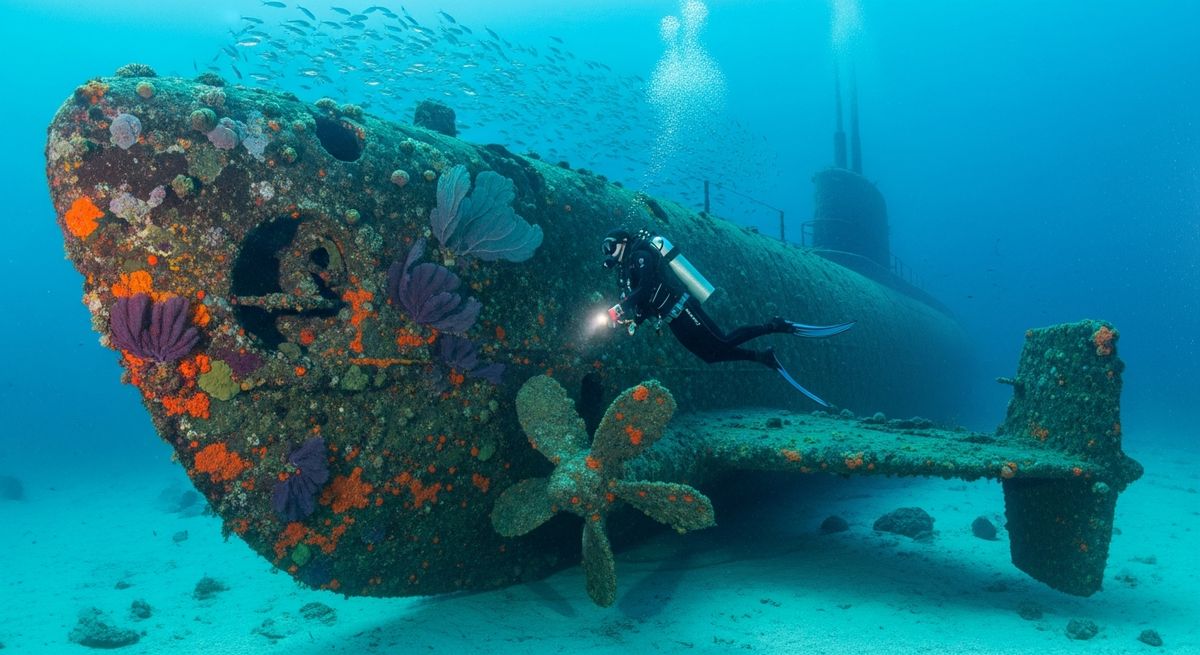
Rainbow Reef
Protected Area
North West Point - West Bay Cemetery (Grand Cayman)
Why dive here
With 327+ marine species recorded in the area - including barracuda, bull sharks, oceanic whitetip sharks, orcas and sea turtles - Rainbow Reef offers some of Grand Cayman's richest wreck diving. Water ranges 27-31°C, warmest August, September, October.
Rainbow Reef on Grand Cayman is one of those shallower spots we always recommend, especially if you’re looking to really slow down and appreciate the details. At a maximum depth of 9m, it’s a site for lingering, for spotting the smaller stuff that often gets overlooked when you’re deeper. We love how the light plays on the coral formations here, especially around midday. You’ll find some great examples of grooved brain coral and great star coral, creating plenty of nooks and crannies. Keep your eyes peeled for the resident long-snout seahorses, they’re often tucked away. We’ve also had some excellent encounters with goldspot gobies and checkerboard frillfins here. It’s not about huge pelagics, it’s about the intricate ecosystem within the reef itself. Visibility often sits around 18m, making it perfect for photography or just soaking in the colours. It’s a brilliant dive for newer divers, but seasoned pros will appreciate the chance to really explore without the pressure of depth limits.
Typical Rainbow Reef Dive Profile
Illustrative profile based on site depth and type. Actual dive profiles vary - always follow your dive computer and training.
Safety Notes
Wreck site - avoid penetration without wreck diving certification. Watch for sharp metal and entanglement hazards.
Nearest Dive Centres to Rainbow Reef
Dive shops near Rainbow Reef
Indepth Watersports Ltd
Divetech
Living the Dream Divers
OCTOPUS
Divers Supply
Divers Down
Reviews for Rainbow Reef
Conditions
Ocean conditions, forecast and tides for Rainbow Reef
Rainbow Reef Ocean Conditions
Monthly averages for Rainbow Reef, sourced from Open-Meteo marine data + Copernicus Marine (EU) - nearest station: Open-Meteo marine grid (19.38, -81.32) (5km away)
October Averages
Sea Temperature
30°C
87°F · Range: 29.1–31.8°C
Current Speed
4.47 cm/s
Direction: NW (296.6°)
Chlorophyll-a
0.045 mg/m³
Very clear (oligotrophic)
Salinity
36.14 PSU
Based on 4 years of monitoring data · Data sources: Open-Meteo marine data + Copernicus Marine (EU)
Plan & book
Ways to dive Grand Cayman, from day trips to liveaboards.
Day trips & courses
via GetYourGuideGuided dives, courses and snorkel trips with instant booking.
Find dive trips in Grand CaymanPlaces to stay
via Booking.comHotels and dive resorts near Grand Cayman.
Search stays in Grand CaymanDive insurance
Most travel insurance excludes or limits scuba. Check what you need before you go.
Dive insurance explainedPartner links: we may earn a commission if you book, at no extra cost to you. How we make money
Where to Stay near Rainbow Reef
Prices from Booking.com. We may earn a commission at no extra cost to you.