RIMANDI MIBAJU
Protected Area
Radio Mast - Sand Bluff (Grand Cayman)
Why dive here
With 327+ marine species recorded in the area - including barracuda, bull sharks, oceanic whitetip sharks, orcas and sea turtles - RIMANDI MIBAJU offers some of Grand Cayman's richest wreck diving. Water ranges 27-31°C, warmest August, September, October.
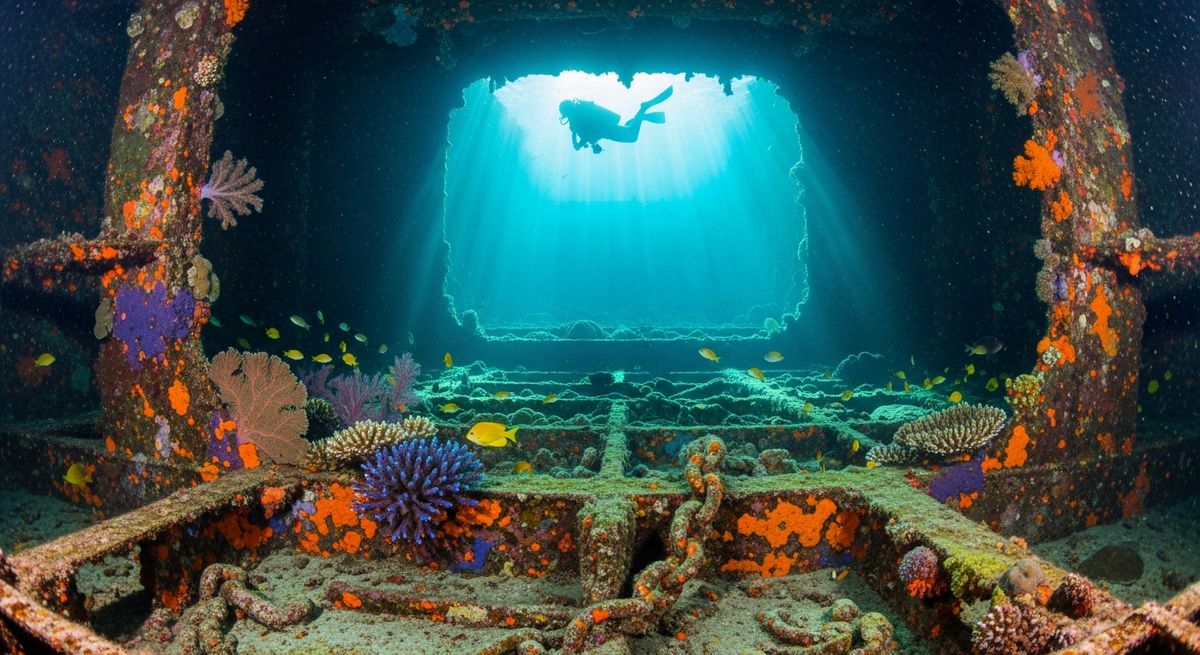
The Rimandi Mibaju, a steamship built in '43, met its end on Grand Cayman's eastern reef in '64. What’s left now are the widely scattered remains of a fairly large wreck. You’re not getting one intact vessel, but instead, a series of metal plates and engine parts that create an artificial reef. At just 3 meters deep, this site works for just about anyone comfortable in the water. We usually spot plenty of small reef fish darting between the rusty beams, and often a few inquisitive trumpetfish. It’s a good spot for a relaxed shallow dive, especially if you like exploring history that’s been thoroughly reclaimed by the sea.
Typical RIMANDI MIBAJU Dive Profile
Illustrative profile based on site depth and type. Actual dive profiles vary - always follow your dive computer and training.
Safety Notes
Wreck site - avoid penetration without wreck diving certification. Watch for sharp metal and entanglement hazards.
Nearest Dive Centres to RIMANDI MIBAJU
Dive shops near RIMANDI MIBAJU
Ocean Frontiers
Tortuga Divers
Silver Thatch Watersports
OCTOPUS
Living the Dream Divers
Divers Supply
Reviews for RIMANDI MIBAJU
Conditions
Ocean conditions, forecast and tides for RIMANDI MIBAJU
RIMANDI MIBAJU Ocean Conditions
Monthly averages for RIMANDI MIBAJU, sourced from Open-Meteo marine data + Copernicus Marine (EU) - nearest station: Open-Meteo marine grid (19.38, -81.32) (5km away)
October Averages
Sea Temperature
30°C
87°F · Range: 29.1–31.8°C
Current Speed
4.47 cm/s
Direction: NW (296.6°)
Chlorophyll-a
0.045 mg/m³
Very clear (oligotrophic)
Salinity
36.14 PSU
Based on 4 years of monitoring data · Data sources: Open-Meteo marine data + Copernicus Marine (EU)
Plan & book
Ways to dive Grand Cayman, from day trips to liveaboards.
Day trips & courses
via GetYourGuideGuided dives, courses and snorkel trips with instant booking.
Find dive trips in Grand CaymanPlaces to stay
via Booking.comHotels and dive resorts near Grand Cayman.
Search stays in Grand CaymanDive insurance
Most travel insurance excludes or limits scuba. Check what you need before you go.
Dive insurance explainedPartner links: we may earn a commission if you book, at no extra cost to you. How we make money
Where to Stay near RIMANDI MIBAJU
Prices from Booking.com. We may earn a commission at no extra cost to you.